Asking to see the god’s true form
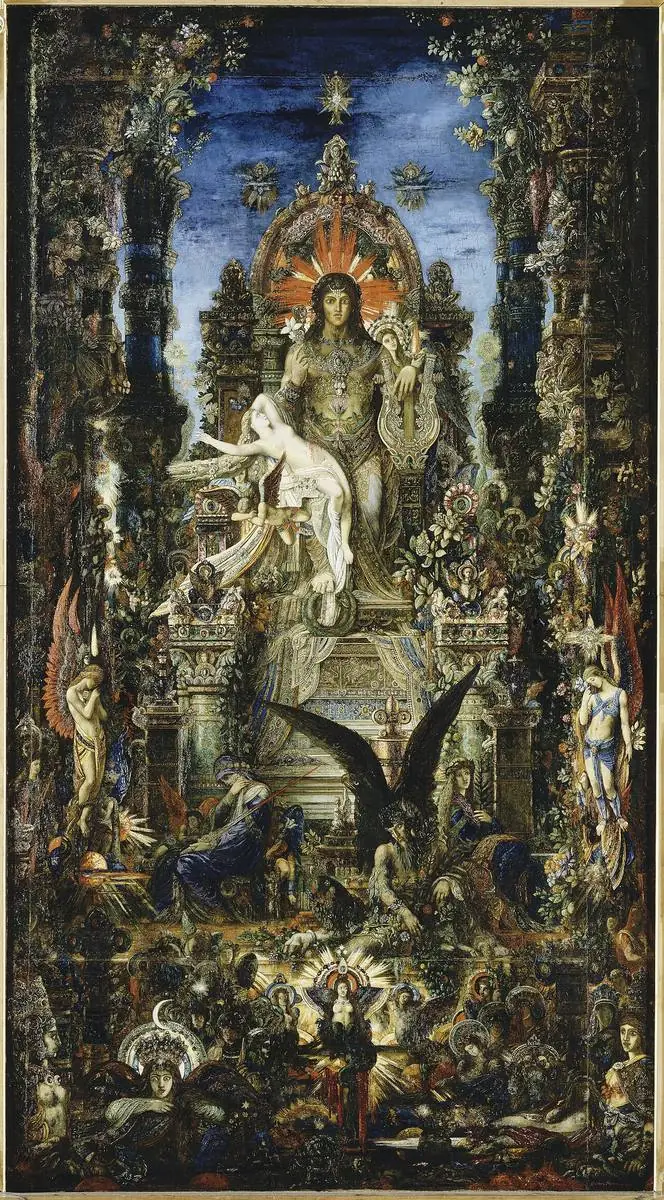
Book III of Ovid’s Metamorphoses places the birth of Dionysus within the story of the Theban royal family. Semele falls in love with Jupiter and becomes pregnant. Juno takes the form of an old woman familiar to Semele, makes her doubt whether her visitor really is a god, and advises her to ask him to appear in the same majesty he shows his wife. Semele secures Jupiter’s promise before revealing her request. He swears by the River Styx; once he hears her specific wish, he understands the danger but cannot readily withdraw his promise.
The difference between Semele and the god is not whether she can see the light, but whether she can withstand the power of his divine appearance. She seeks confirmation of her lover’s identity, yet receives the full majesty that a mortal body cannot contain. The child’s survival does not undo his mother’s death, and the later recognition of Dionysus always carries this absence. The miracle of birth and the family’s trauma remain part of the same memory.
A mortal body cannot withstand it
Jupiter tries to use less powerful thunder and lightning, but still cannot turn his divine appearance into something a mortal can safely behold. Semele burns to death, but the unborn child is rescued from her body and sewn into the god’s thigh to continue his gestation. When the time comes, the child is born again and entrusted to a caregiver. Later readers explain Dionysus’ passage across different boundaries through these two births: he has a mortal mother, yet also enters the world from the body of an immortal god.
Seeing is not always safe proof
The story’s desire is not simply an ambition for power. Semele tries to establish her beloved’s identity, and this need for verification is exploited. The oath guarantees that its speaker will keep his word, while making a fatal request difficult to change. This article follows Ovid’s Roman narrative and uses Greek names to help readers identify the corresponding gods; other Greek texts offer different arrangements for the caregivers, birthplace, and mother’s later fate. Reading the second birth as the beginning of a passage across boundaries preserves these differences better than imposing a single chronology of his childhood.