Greed mistakes his identity
The seventh Homeric Hymn describes a handsome young man standing on the shore. Pirates take him for a nobleman’s son and plan to abduct him for ransom. They drag him aboard and try to bind him, but the ropes cannot remain around his hands and feet and fall away of their own accord. The helmsman realizes that the stranger may be a god and urges his companions to release him. The captain refuses to stop, treating the warning as an obstacle to profit. Before any miracle unfolds, the story sets discernment against greed.
The helmsman controls the vessel’s course, but not necessarily the captain’s decisions, so his warning has clear limits. He has seen the ropes fall away, yet the others continue to interpret the boy through the familiar calculations of kidnappers seeking wealth. The difference lies in a willingness to revise judgment when new evidence appears, rather than in skill at handling a ship. In this sense, the transformation begins long before plants grow over the hull.
The ship is transformed
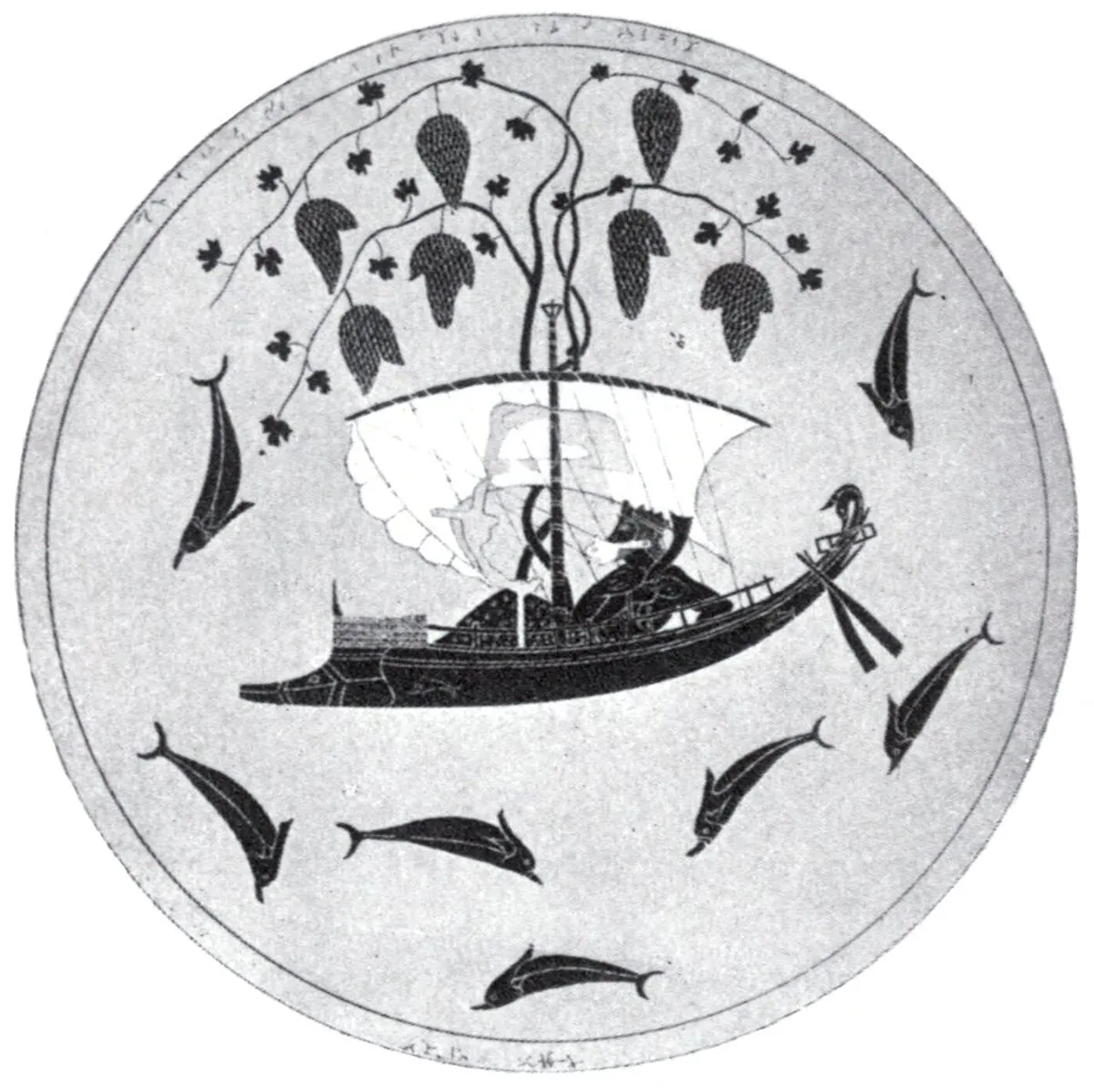
Sweet wine flows through the ship, while vines and ivy climb its sails and mast. A space meant for transport and plunder becomes a place belonging to Dionysus. The god takes the form of a lion and causes a bear to appear, and the pirates finally lose control of their actions. The captain is attacked; the others leap into the sea in fear and become dolphins. Ship, plants, and animals change together. The god’s identity needs no formal introduction, because the loss of control throughout the surroundings reveals who commands them.
Why the helmsman is spared
The helmsman is spared the final punishment. Dionysus comforts him and reveals his name and parentage. This survivor is not the strongest man: he simply acknowledges early that he does not understand the power before him, and is willing to discourage a mistake. This article follows the short hymn without importing the sailor Acoetes and the different details of Dionysus’ appearance in Ovid’s account. The ancient wine cup combining the god’s ship, vines, and dolphins can be read alongside the poem. Its reclining figure also turns the frightening conclusion into an image that can be contemplated while drinking.