A fleet can be motionless and still be in danger
In Book Four of the Odyssey, Menelaus tells Telemachus about being detained near Egypt on the island of Pharos. A lack of favourable wind becomes a crisis as supplies diminish and the men search for food. The scene gives waiting a material weight: time ashore consumes what a voyage requires. Menelaus cannot solve the problem simply by announcing his determination to sail. He needs to discover why the journey has stopped. Because he tells this story after reaching Sparta, we already know that he survived, but his remembered uncertainty still allows us to see how little the stranded sailors could confidently arrange for themselves.
A daughter's knowledge makes an encounter possible
Proteus' daughter Eidothea approaches Menelaus and explains her father's daily habits. She supplies the plan, the hiding place and the seal skins beneath which the men wait. Even the unbearable smell receives practical attention through ambrosia placed near their noses. The successful ambush therefore depends on knowledge of another being's routine and on help that makes a difficult position bearable. Choosing three companions and holding on will matter, but these actions do not originate the whole solution. Before a king can confront the sea god, someone else has made his approach possible. The episode gives preparation and bodily discomfort as much narrative work as the eventual struggle.
Hold through the changes, then listen
When seized, Proteus changes into animals, water and a tree. Menelaus and his companions maintain their grip until the god returns to his earlier form and speaks. The sequence makes persistence useful under specific instructions, rather than turning every refusal by another person into something a hero should overcome. Proteus is an immortal figure within this encounter, and the poem's physical coercion remains part of the scene. The aim is information that can change the sailors' conduct. Once speech begins, strength must give way to listening. A struggle that never reached that transition would leave the question of the voyage unanswered, however impressive the holding might appear.
The answer sends the traveller backwards
Proteus says that Menelaus must return to Egypt and offer proper sacrifices before sailing home. The answer requires an unwelcome reversal instead of a convenient shortcut. Questions about other returning Greeks also bring painful news of Agamemnon and information about Odysseus on Calypso's island. Knowledge arrives with grief as well as direction. Menelaus later performs the sacrifices and raises a memorial mound for his brother. His improved route therefore includes actions for gods and for the dead. Getting an answer does not simply remove delay: it changes what must be done during it, and gives obligations a place within the journey's practical work.
A changing god carries different stories
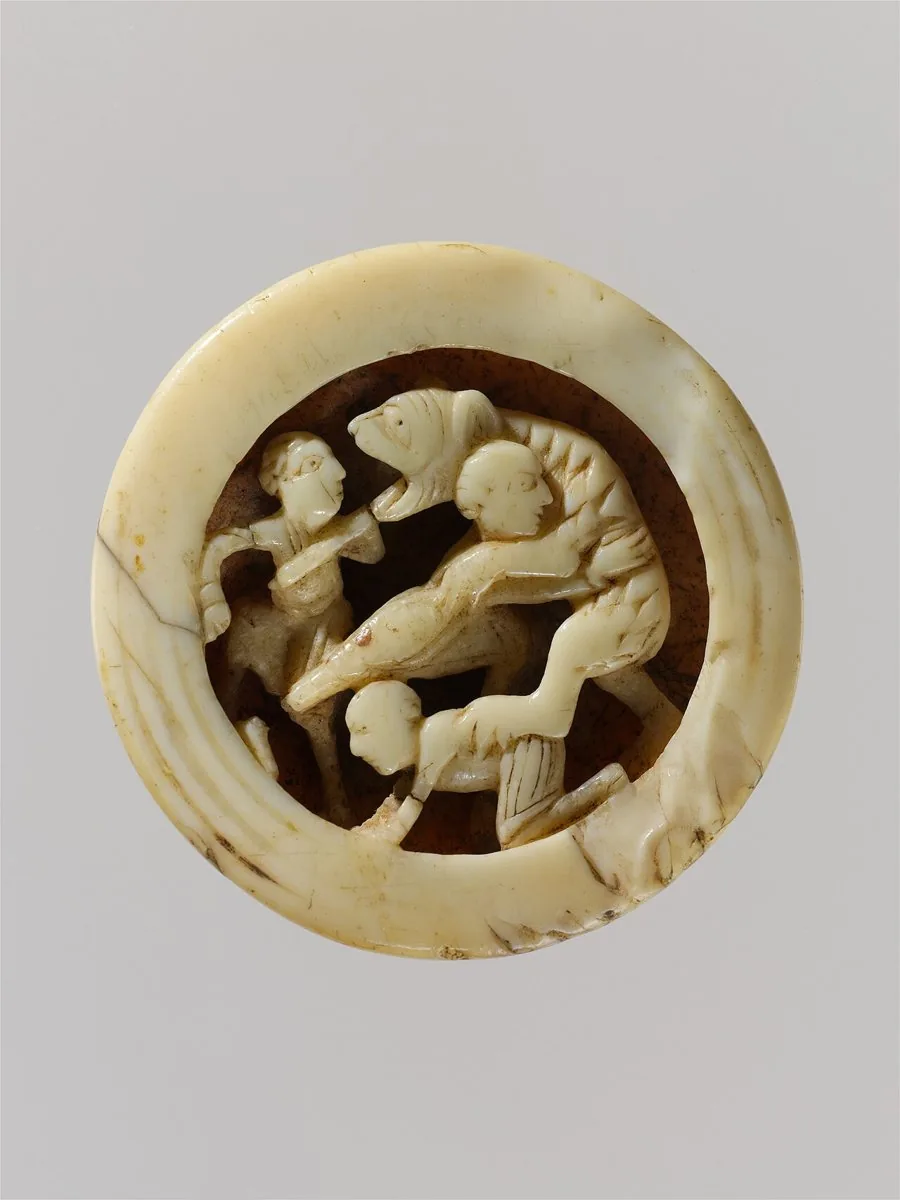
Virgil's Georgics Four gives another encounter with Proteus, this time involving Aristaeus and the loss of his bees. His mother Cyrene supplies the guidance, and the compelled god tells a story connected with Orpheus and Eurydice. Similar patterns of assistance, capture and transformation lead into different troubles and responsibilities. We should keep the questioner and consequences distinct instead of importing the beekeeper's entire story into Menelaus' return. The medieval game piece illustrated here depicts Menelaus and companions battling Proteus, offering a later material response to the struggle. Reading the texts beside it restores the larger sequence: receiving help, enduring changes, hearing difficult news and acting on what has finally been learned.