A Gift Becomes a Trap
After Hephaestus was abandoned by his mother Hera, he built a golden chair and gave it to her. Hera was firmly trapped when she sat on it. The other gods could not find a way to release her, and only the maker controlled the mechanism. The story unfolds in ancient images, travelogues, and later mythological documents. It transforms the hurt between parents and children into craftsmanship: beautiful gifts hide limitations, and even if the craftsman is not present, he can still change the relationship in Olympus with his work.
The golden chair made it impossible for Hera to stand up, and also made her temporarily experience the situation of being unable to move on her own. This mechanism reveals the usually underestimated ability of craftsmen: powerful gods can command others, but they cannot unlock the limitations of his creations with just commands. The returning procession thus carries the connotation of a triumph of craftsmanship and a renegotiation of relationships at the same time, with changes in power positions still visible beneath the laughter.
Why Dionysus Brings Him Back
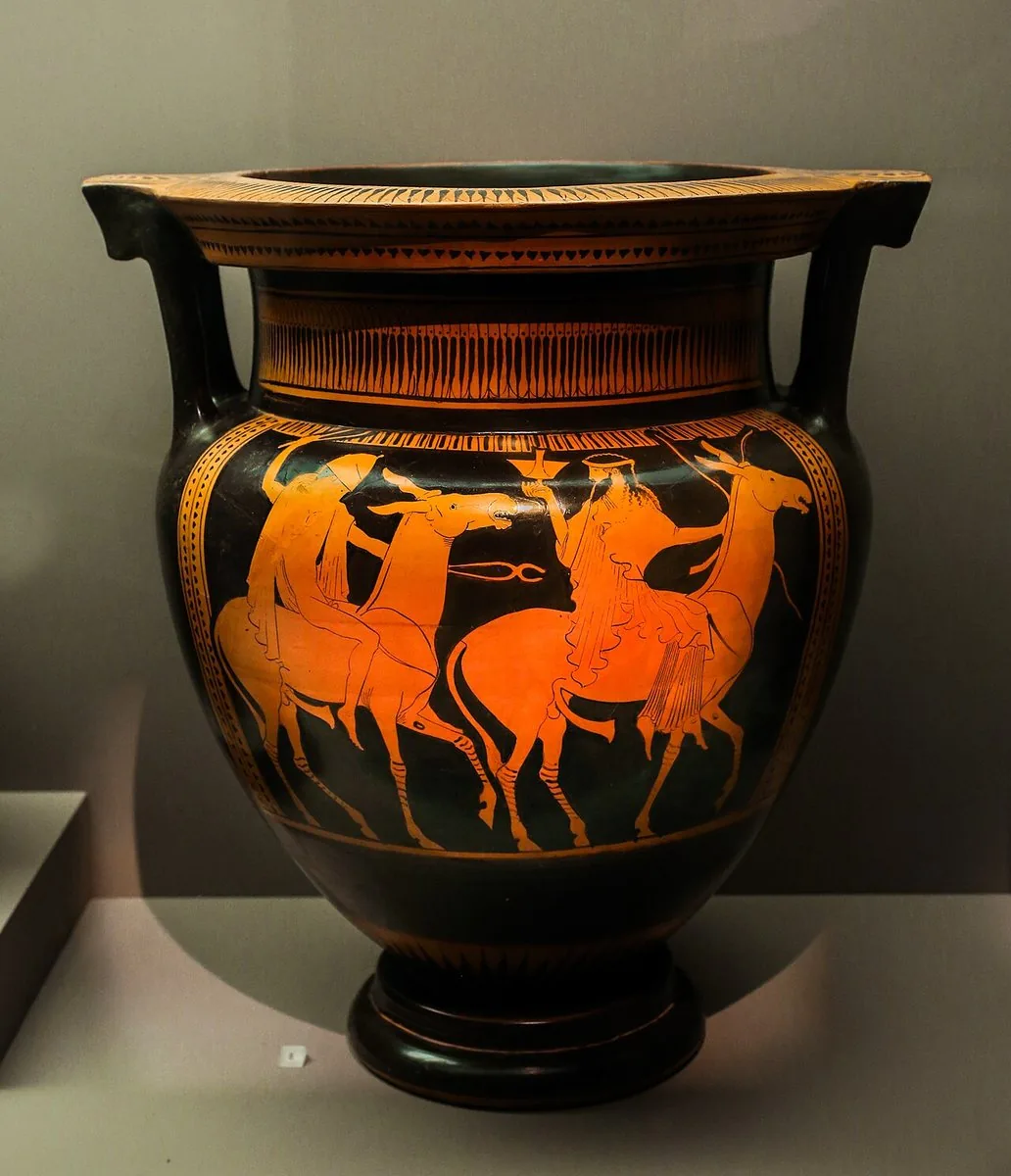
Pausanias explains the Golden Chair story when describing a painting in Athens and says that Hephaestus refused to go back. Dionysus gained his trust, let him drink wine, and took him back to the gods. Ancient vase paintings repeatedly show craftsmen riding mules, and Dionysus and his attendants traveling in procession, often accompanied by music, dance, and exaggerated movements. The return is painted not as a triumph over an enemy, but as a somewhat shaky procession in which wounded kinships are temporarily linked by another kind of interaction.
Laughter Does Not Erase the Hurt
The audience can sense the comedy in the gestures of the wine, the mules, and the fellow travelers, but the cause of the Golden Chair is still rejection and humiliation. The craftsman uses sophisticated technology to gain negotiating power, while Dionysus is good at breaking deadlocks. These two gods, each familiar with exclusion cooperate here. Other ancient works say that Hephaestus was thrown away by Zeus. Those are different scenes and cannot all be regarded as the same cause of the Golden Chair incident. The tradition here is drawn from the rejection of Hera, the golden chair, and the welcome of Dionysus; return implies restoration of contact and does not automatically mean that the original harm never occurred.