The survivor does not bear the cost alone
Euripides' Alcestis begins with an unequal exchange: Admetus may escape death if someone else dies instead. His wife accepts that place, then asks him to protect their children and never marry again. Treating her simply as the means of another person's rescue would miss her own arrangements for the future. She participates in the choice and also names what it takes away.
We can admire her courage without making sacrifice a debt that every wife owes. The play gives different characters a desire to remain alive and lets their demands collide. Admetus survives, but survival does not make the bargain fair. Asking who stays, who leaves, and who will care for the children restores bodies, time, and responsibility to an abstract ideal of devotion.
A guest is kept from the truth
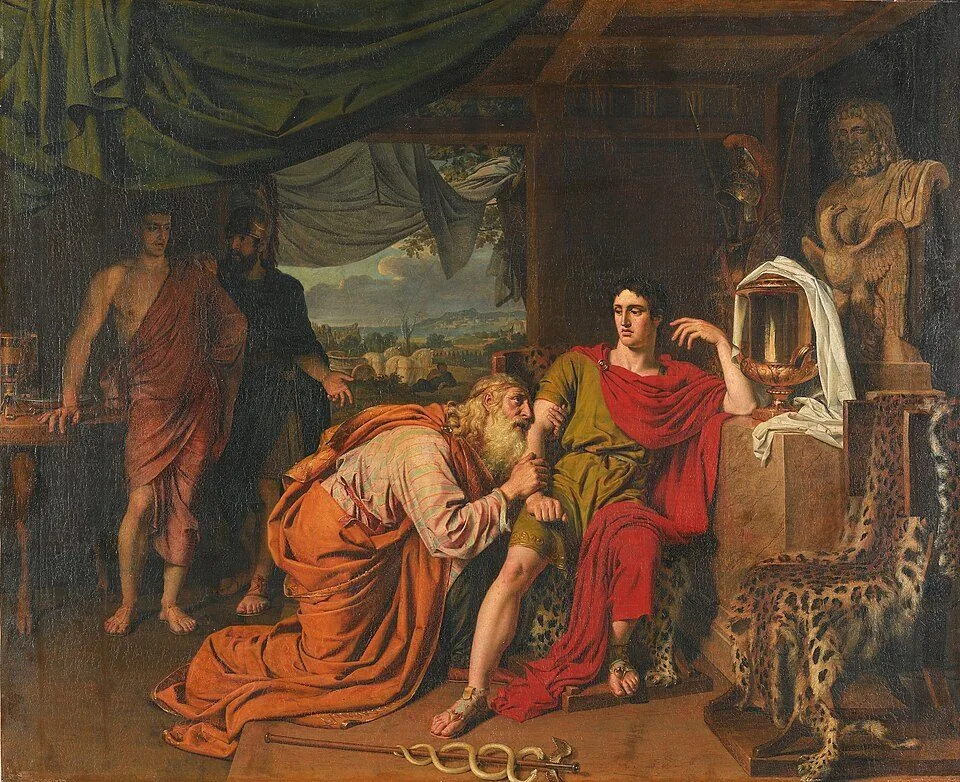
When Heracles arrives, Admetus avoids stating plainly that his wife has died. Ambiguous answers lead his friend to understand that the dead woman was an outsider sheltered in the house. The guest offers to stay elsewhere; Admetus insists on receiving him and orders the doors closed between the guest rooms and the mourners. This welcome depends on withholding an essential fact.
The host is not without feeling. He values their friendship and fears a reputation for rejecting visitors. Yet the closed door prevents two real needs from meeting: a guest wishes to show consideration, while mourners need to express grief. We can read that door as a small model of the drama. It preserves the appearance of welcome while leaving others inside to sustain it.
A servant's grief interrupts the feast
A servant must attend the drinking, singing Heracles instead of accompanying the mistress he loved to her burial. To him, the guest seems grossly insensitive. Heracles, imagining a more distant loss, even recommends enjoying life's brief pleasures. Only when the servant identifies the dead woman does the feast reveal its true distance from the funeral. Unequal knowledge changes what the same behavior means.
This conversation gives someone usually beside the hero an opportunity to explain events. The servant is more than a pair of hands bringing wine: he has his own relationship with the dead and has lost his place in mourning. Heracles' change therefore requires more than strength. He must hear a voice suppressed by the host's arrangements, and understand the house he has entered.
A return gift, and different traditions of return
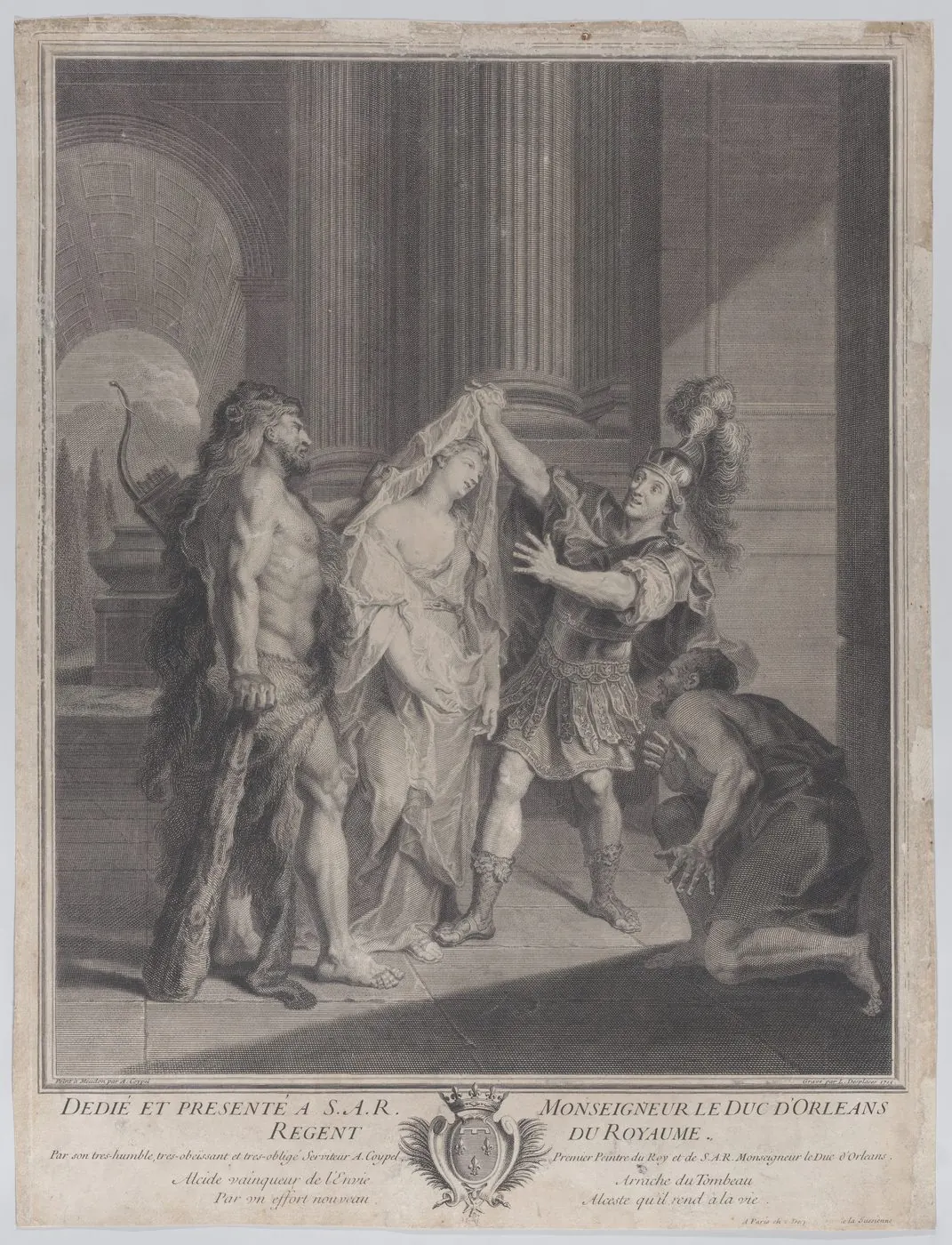
Learning the truth, Heracles resolves to repay his host. He later brings back an unidentified woman and insists that Admetus receive her himself. After recognizing his wife, the husband learns that the hero ambushed and overpowered Death at the tomb. His opponent here is the play's Death: an underworld setting does not automatically turn this into an invasion of Hades' palace.
The Library 1.9.15 preserves alternatives: Persephone sends Alcestis back, or Heracles fights Hades and restores her. A short mythographic account and an unfolding drama do not arrange an identical sequence. Reading them together need not supply the play with a grander underground expedition. Instead, it shows how returning a life can be narrated through permission, struggle, or a gift offered in gratitude.
The voice not immediately heard at reunion
Alcestis remains silent at the ending. Heracles explains that purification for the gods below must be completed and the third day arrive before she may speak to her husband. That supplies a dramatic reason, but does not tell her experience of death and return for her. The husband's joy fills the audible reunion; we should remember the woman who earlier spoke her wishes clearly.
We need neither invent resentment for her nor take the absence of speech as proof that every question is settled. An unexpected return offers hope while leaving questions about care, listening, and shared life. Looking back at the closed door, the future worth hoping for involves more than everyone occupying one house again. It also involves their finally being able to hear one another within it.