An altar carries the story beyond the birth
After Niobe’s catastrophe, Metamorphoses 6 turns to another story about Leto. A narrator says that, while fetching cattle for his father with a Lycian guide, he saw an ancient altar standing in a pool. The guide explained the rejection suffered there by the goddess. The narrator witnessed the place and altar, rather than the transformation itself. Leto has already borne Apollo and Artemis. Leaving Delos, she carries the twins through the country, pursued by Juno’s hostility. Heat and wandering exhaust her; nursing adds to her thirst. This is therefore a story after childbirth. The immediate question is how a mother can keep herself and her children alive, with water becoming an urgent need beside an apparently ordinary path.
A request for the water that sustains life
She sees clear water in a valley, where countrymen are gathering reeds, osiers, and marsh plants. When she bends to drink, they stop her. Instead of using divine force, she pleads that sunlight, air, and flowing water come from nature: water should not be the exclusive property of a few. She wants a drink rather than a bath. Her cracked lips can scarcely form words, and a mouthful would restore her like nectar. She asks them to pity her infants, who happen to extend their little arms. Argument, bodily weakness, and this coincidental gesture work together. The speech deserves attention as an appeal concerning shared resources, without being enlarged into proof that ancient societies universally practiced such access.
Refusal destroys what could have been shared
The countrymen continue threatening and insulting her. They then stir the pool with hands and feet, lifting slime from its bed into the clear water. Refusal becomes deliberate damage: they would rather make the water undrinkable than give a stranger a mouthful. The action makes the conflict painfully concrete. Water is already before them, requiring no expedition to retrieve it; human choice prevents it from answering an immediate need. Leto stops pleading. Anger overcomes thirst, and she raises her hands toward heaven, condemning them to live in that pool forever. Ovid supplies neither a negotiated settlement nor a final cup of water. Petition becomes curse through a sudden reversal of power, which cannot erase the humiliation that preceded it.
Changed bodies preserve the quarrel
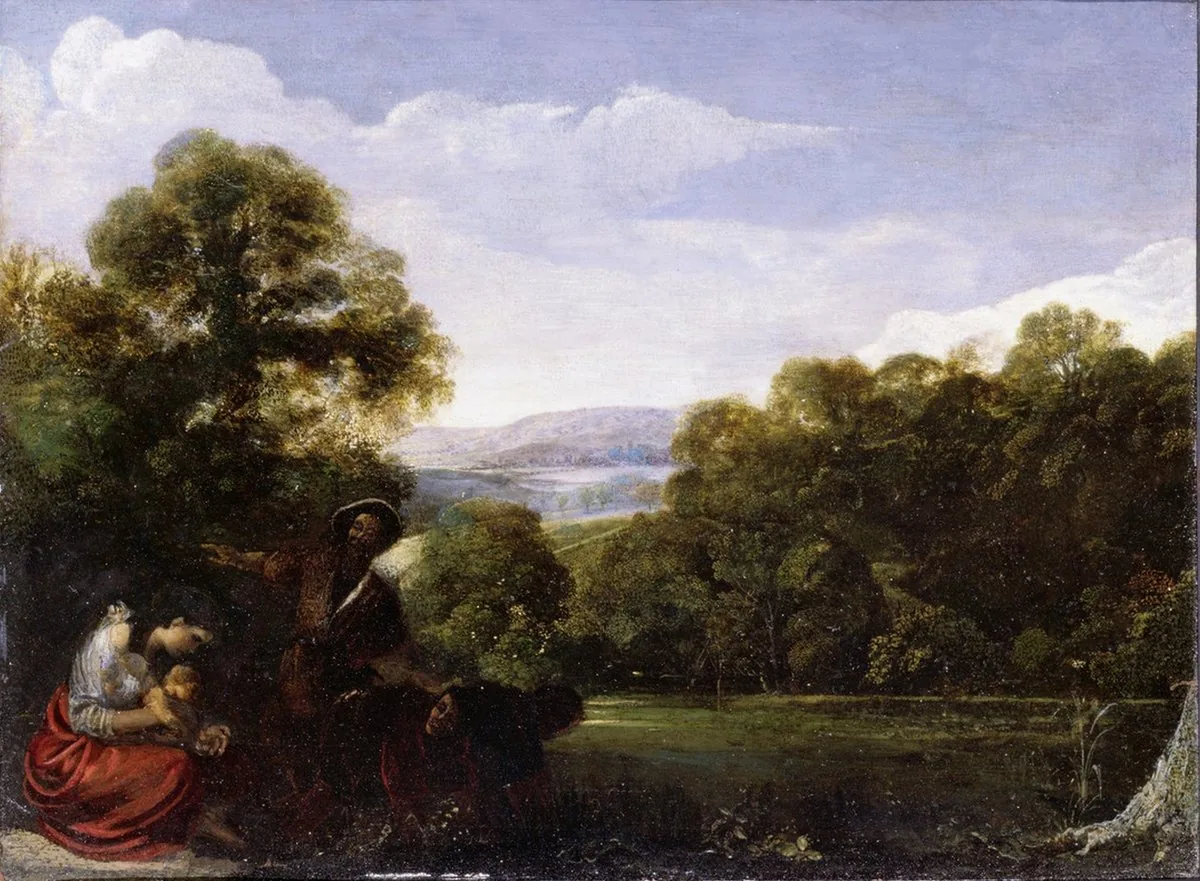
They dive, surface, leap, squat on the damp bank, and plunge again. Ovid follows widening mouths, swelling throats, shortened necks, green backs, and pale bellies. Their human appearance disappears, but their quarrel continues as harsh croaking; even underwater they cannot stop making noise. Refusing water does not send them into a desert. It binds them permanently to the water they withheld, a spatial reversal we can read in the passage. Wenceslaus Hollar’s 1649 etching after Adam Elsheimer likewise places a mother holding twins beside a pool, opposite figures disturbing its edge. This is a later artist’s composition, rather than a record of antiquity. The image holds the gesture of appeal while the poem follows sound through a changed body.
Another route begins with helpful wolves
Antoninus Liberalis preserves another route in tale 35. Leto first wants to wash her children at Melite, but herdsmen drive her away so their cattle can drink. Wolves wag their tails and guide her to the Xanthus, where she drinks, bathes the twins, and dedicates the river to Apollo. The text also connects Lycia’s name with the Greek word for wolves, a narrative explanation rather than a modern linguistic finding. Returning, she turns the herdsmen into frogs and drives them into the spring with a rough stone striking backs and shoulders. Cattle, wolves, river, and return belong to this account; Ovid emphasizes gathering plants, pleading, muddying, and an immediate curse. Keeping them separate preserves each author’s arrangement of help and punishment. Both leave a request that sustains life, and the water from which the people who refused it can never finally depart.