The god hidden in a swan
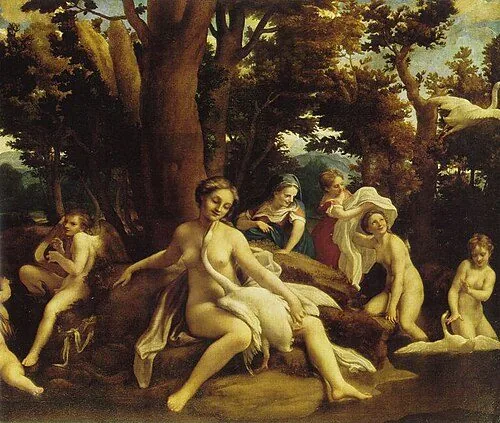
Leda is the wife of Tyndareus, and Zeus meets her in the form of a swan. This is the most familiar narrative skeleton. Transformation allows gods to approach mortals, but also prevents humans from understanding each other's true power based on appearance. Modern paintings often juxtapose white feathers with female bodies to highlight femininity and intimacy, but these visual choices cannot erase the asymmetry between gods and mortals. When introducing such themes, the tradition of the work and the situation of the characters should be explained at the same time, and the beauty of the picture should not be used as a substitute for understanding the plot.
Who is whose father?
The version compiled by Apollodorus distinguished the paternity of gods and mortals, linking Polydeuces and Helen to Zeus, and Castor and Clytemnestra to Tyndareus. Other authors say otherwise about the birth of the child and the relationship between the parents. The difference between one twin being immortal and the other mortal later enters into the story of sharing life and constellations. So one cannot just draw an unannotated family tree and claim that the same family relationships were practiced everywhere in ancient times.
The egg and the alternative tradition of Nemesis
Some traditions have Helen born from an egg, and some narratives say her biological mother was Nemesis, and Leda was just the one who received the egg and raised the child. This is not adding an insignificant detail to the same version, but changing the mother and the subject of the encounter. When introducing different statements at the same time, the substitution relationship should be clearly marked. Myth transmission retains similar animals, eggs, and children but reassigns the characters. This is where caution is needed when comparing materials.
Power in Tapestry and Painting
Book 6 of Ovid's Metamorphoses mentions the swan and Leda among the images woven by Arachne, placing it in the series of gods transforming to approach mortals. This literary context allows beautiful patterns to also become revelations of the conduct of divine power. Later, the painter used oil paint to reconstruct the meeting, which did not necessarily continue the same critical context. When looking at the accompanying illustrations, one can both appreciate the composition and identify who controls the identity, who knows the truth, and who has the ability to leave; these questions are closer to the complexity of the story than just looking for the white swan.