The white bull on the coast
Book 2 of Ovid's "Metamorphoses" writes that Zeus transformed into a beautiful and docile bull, mixed into the herd, and gradually approached Europa. The girl began to stroke it, decorate its horns, and finally sit on its back. Danger does not appear with a ferocious face, but instead adopts a soft and harmless image. Shapeshifting allows the god to hide his identity, and also causes mortals to misinterpret the contact; the act of intimacy does not mean that she already knows or agrees with what happens next.
Step into the sea
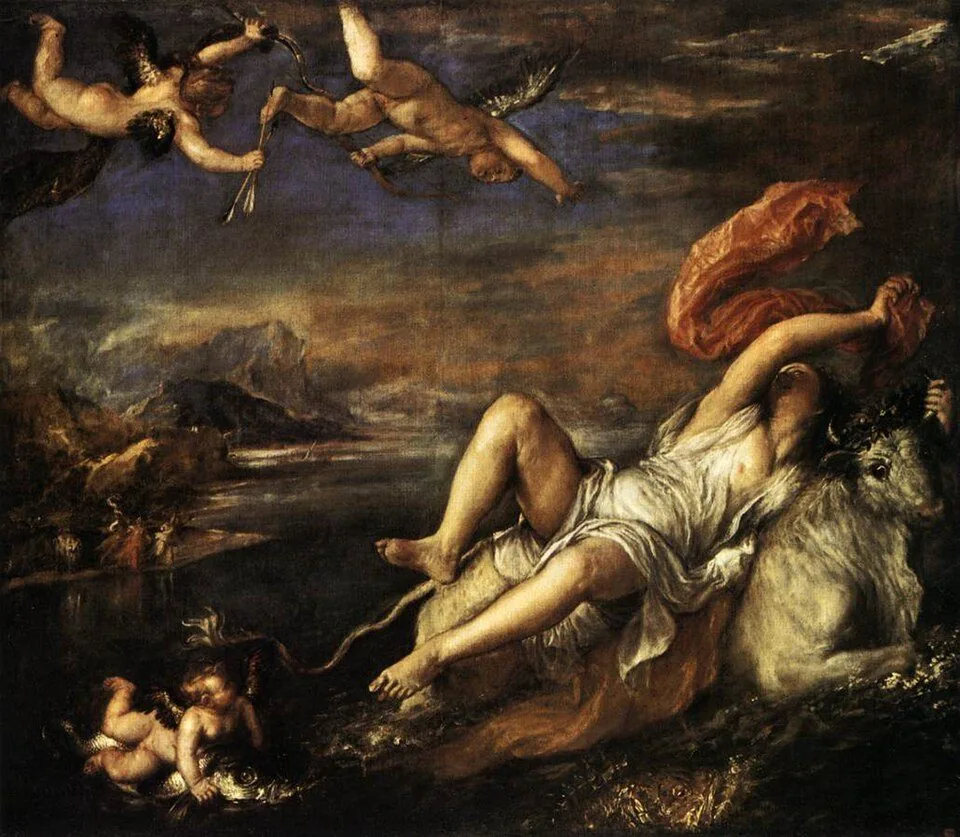
The white bull carried Europa away from the shore, swam out to the sea, and brought her to Crete. Friends on the coast gradually fade away, and the character's situation changes from a game from which she could return into a journey that is difficult to end by her own choice. Later titles sometimes use the words "abduction" or "kidnapping", and these words indicate the imbalance of power in the story. When introducing the painting, it is not appropriate to automatically turn the lithe bodies and gorgeous scenery in the painting into an equal love relationship, nor should you ignore how ancient authors used the bull's posture, waves and looking back to express the girl's fear.
Origins of the Cretan Royal Family
The mythology connects Europa with figures such as Minos, Rhadamanthes and Sarpedon, illustrating the bloodline of important royal families and gods. Different traditions differ in the details of subsequent marriages and family lines, and instructions should be based on specific texts. The name Europa is also connected to ancient explanations of the name Europe, but such mythical naming stories cannot directly prove the entire history of modern geographical names. Legends explain the world in a way that does not require the same evidence as the study of language and history.
Painting leaves something on the shore
Titian and other painters chose the moment when the white bull has entered the sea. The crowd on the shore is still far away, but Europa's body is carried forward by the waves and the movement of the bull. Modern scenes may include cupid, fish or different clothing, which is the artist's reconstruction of ancient themes. When looking at the accompanying image, you can pay attention to where the characters are looking back: this is not only a picture of the transformation of a god, but also a picture of leaving a familiar world. The distance between those taken away and those left behind constitutes a part of the story that cannot be eliminated with beauty.