Minos’ unfulfilled sacrifice
The Bibliotheca offers two accounts of the Cretan bull: one identifies it as the animal that carried Europa across the sea; another says Poseidon sent it from the sea after Minos promised a sacrifice. Admiring its beauty, Minos keeps it and sacrifices a different bull instead. The god makes it savage. These explanations of its identity stand side by side in the text and must not be silently joined into one account of its origin. The bull’s danger is tied to a king’s broken promise. Although the disaster appears to come from an animal, the narrative locates its cause in human choice and exchanges between mortals and gods.
Capture is not permanent confinement
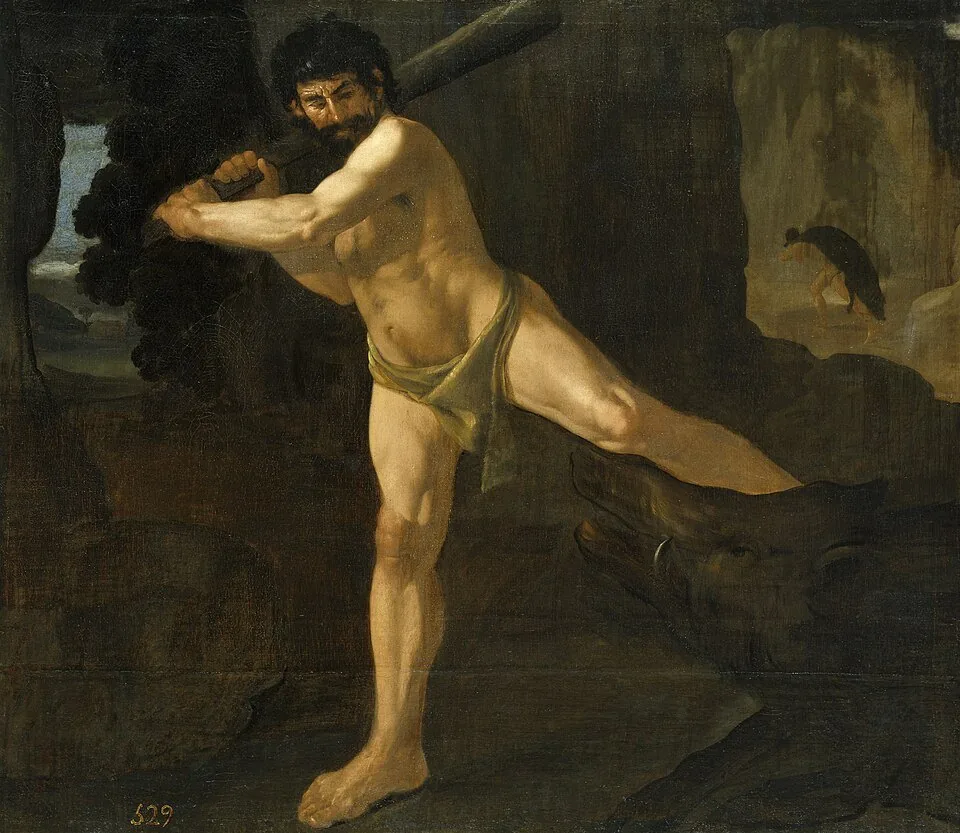
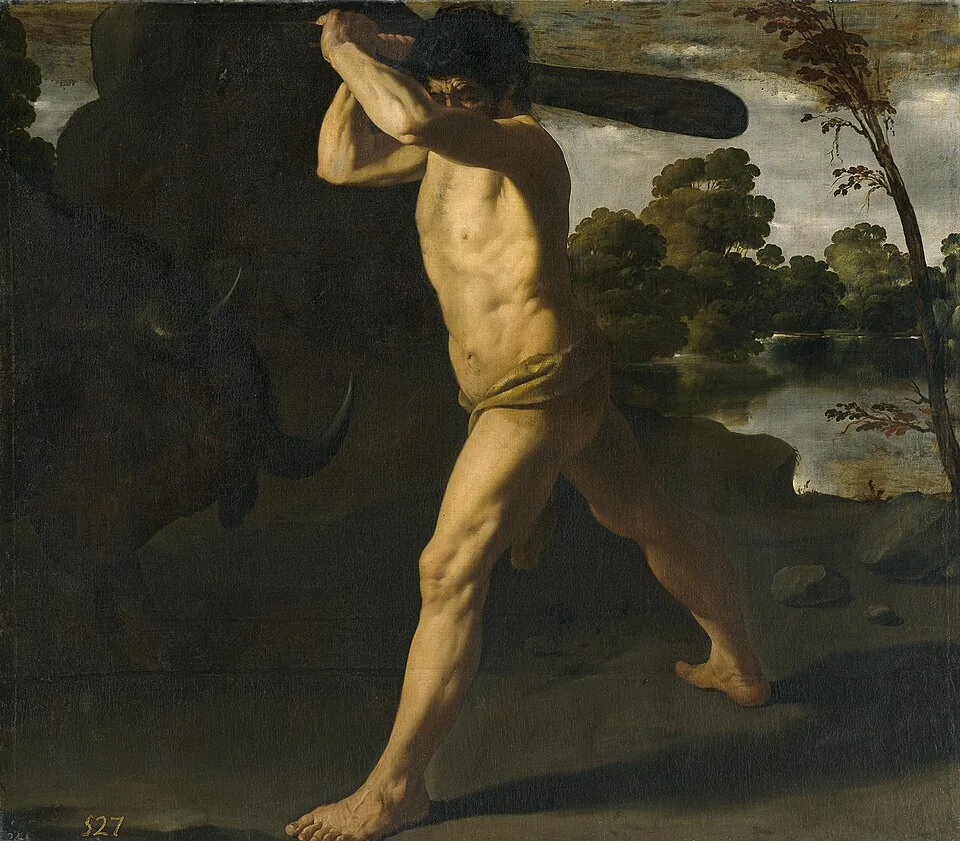
Heracles goes to Crete and asks Minos for help, but is told to subdue and capture the bull himself. He captures it, displays it to Eurystheus, and sets it free. Diodorus also includes this task in his journey, emphasizing an ability to confront dangers across the sea. Unlike the lion’s killing, the bull’s body must be brought back, and the presentation becomes a step in completing the task. The story does not then provide a safe enclosure: the animal remains able to move after the mission ends. Live capture must not be mistaken for permanent elimination of the danger throughout the world.
Another hero inherits the problem
The Bibliotheca has the bull pass through Sparta, Arcadia, and the Isthmus before reaching Marathon in Attica, where it continues harming the inhabitants. Theseus’ later capture of the Marathonian bull continues this labor, rather than forming an unrelated story with a similar name. Later images may show a hero gripping its horns, carrying it, or restraining it with a rope. Whether the setting is Crete must be judged from the work’s title and narrative context. This continuation reminds us that mythological beings can move beyond an individual hero’s closed list of adventures. Heracles completes the presentation required by the king, establishing the task’s completion, while others still face the bull’s consequences elsewhere. The story preserves both victory’s reach and its limits.