Cutting creates more threats
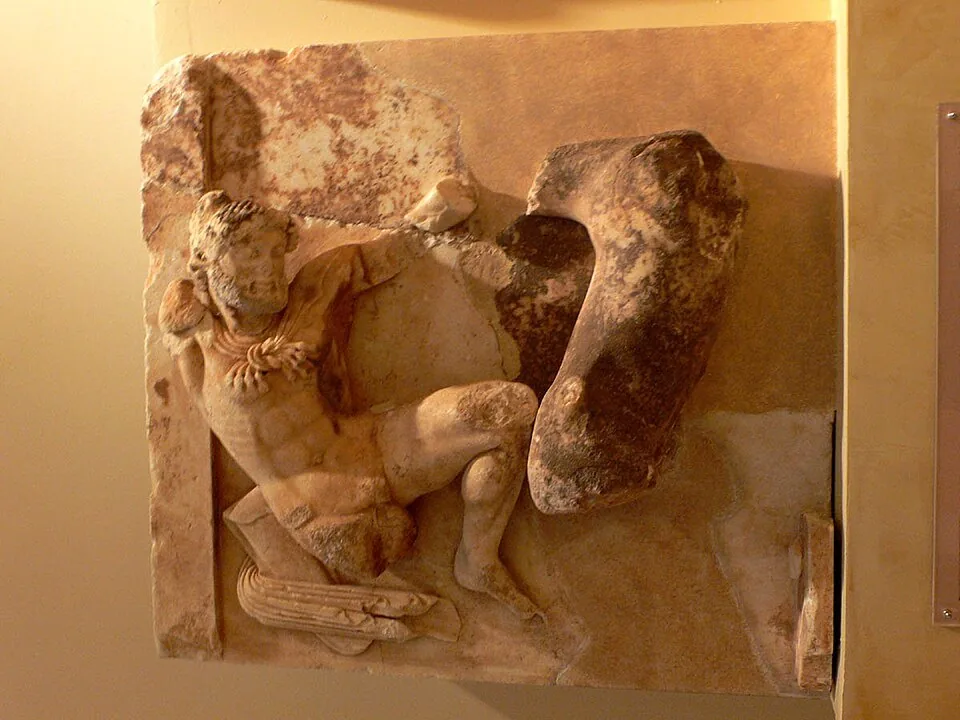
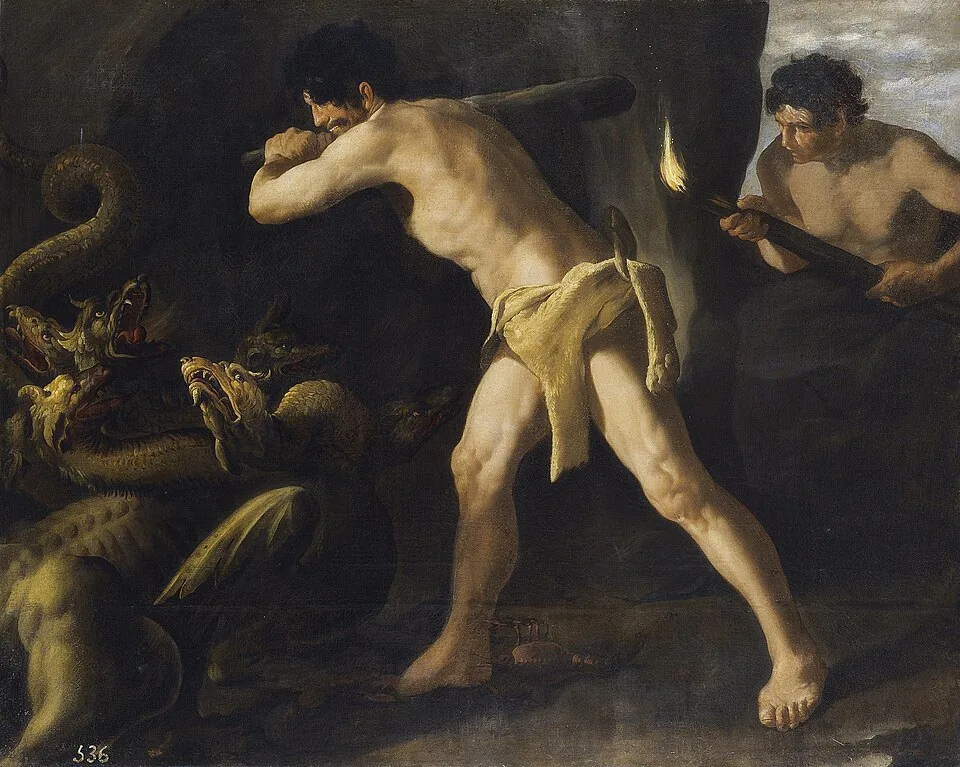
The Hydra inhabits the marshes around Lerna, harming livestock and nearby people. The Bibliotheca gives it nine heads, one immortal. The hero drives his chariot to its lair, drives it out with flaming arrows, and smashes its heads, only to discover that two grow for every one destroyed. Hera also sends a crab to bite his foot. These details make combat a matter of divided attention: attacks may multiply the threats unless their regrowth is addressed. The story requires a suitable method rather than harder repetition of the same action. Ancient images show different numbers of heads, so a particular depiction should not be condemned for departing from a supposedly unique standard form.
How two people complete the task
Iolaus provides crucial help: as Heracles cuts off each head, he burns the neck to prevent regrowth. Their division of labor changes the battle’s rhythm. The immortal head is buried beneath a heavy stone. Heracles then dips his arrows into the creature’s poisonous blood, gaining a weapon that can wound at a distance. Diodorus also emphasizes fire and cooperation, but the head counts and steps in different texts must not be silently merged. The trophies are not harmless keepsakes: the poisoned arrows enter later episodes, endangering enemies and potentially friends. A solution to one crisis leaves consequences that continue to spread.
Someone else retains the power to count
Because Heracles has Iolaus’ help, Eurystheus refuses to count the Hydra’s killing as a completed task. The Bibliotheca uses this refusal to explain why ten initially required labors ultimately become twelve. Cooperation enables success, yet the system uses it to deny that success. Proving that the monster is dead cannot resolve the dispute. The labors are thus more than an uninterrupted record of battles: whoever makes the rules and judges results also determines the journey’s length. When looking at images of the Hydra, notice whether they leave room for Iolaus. If only hero and monster remain, cooperation, the use of fire, and the irony of the labor’s rejection can easily disappear behind the spectacle.