An old account on a new battlefield
In Book 21 of the Iliad, the gods have begun fighting when Poseidon reminds Apollo of a year far in the past. They had left the house of Zeus to work for Laomedon, king of Troy, with wages agreed for the end of their service. Poseidon recalls building the broad, strong wall around the city, while Apollo tended cattle in the valleys of Mount Ida. That division matters: in this Homeric passage, the two gods are not both carrying stones. A new war outside Troy suddenly opens a view into the making of its defenses. The structure that now protects the inhabitants also preserves, for one of its makers, the memory of an account that was never settled.
When completed work is answered with threats
When the year ended, Laomedon withheld the promised payment. He threatened to bind the workers, sell them on a distant island, and cut off their ears. Poseidon remembers that he and Apollo left in anger. The disturbing thing is not simply the loss of a possession: the king who accepted their work proposed turning the people who fulfilled the agreement into bodies for sale. The city could use its wall, while those who provided the labor received no recognition. We can consider rule, exchange, and trust through this scene, without treating it as a complete archive of ancient labor arrangements. It remains a recollection spoken by Poseidon during an argument, shaped by his anger and by the demand he is making now.
Shared memory does not require a shared response
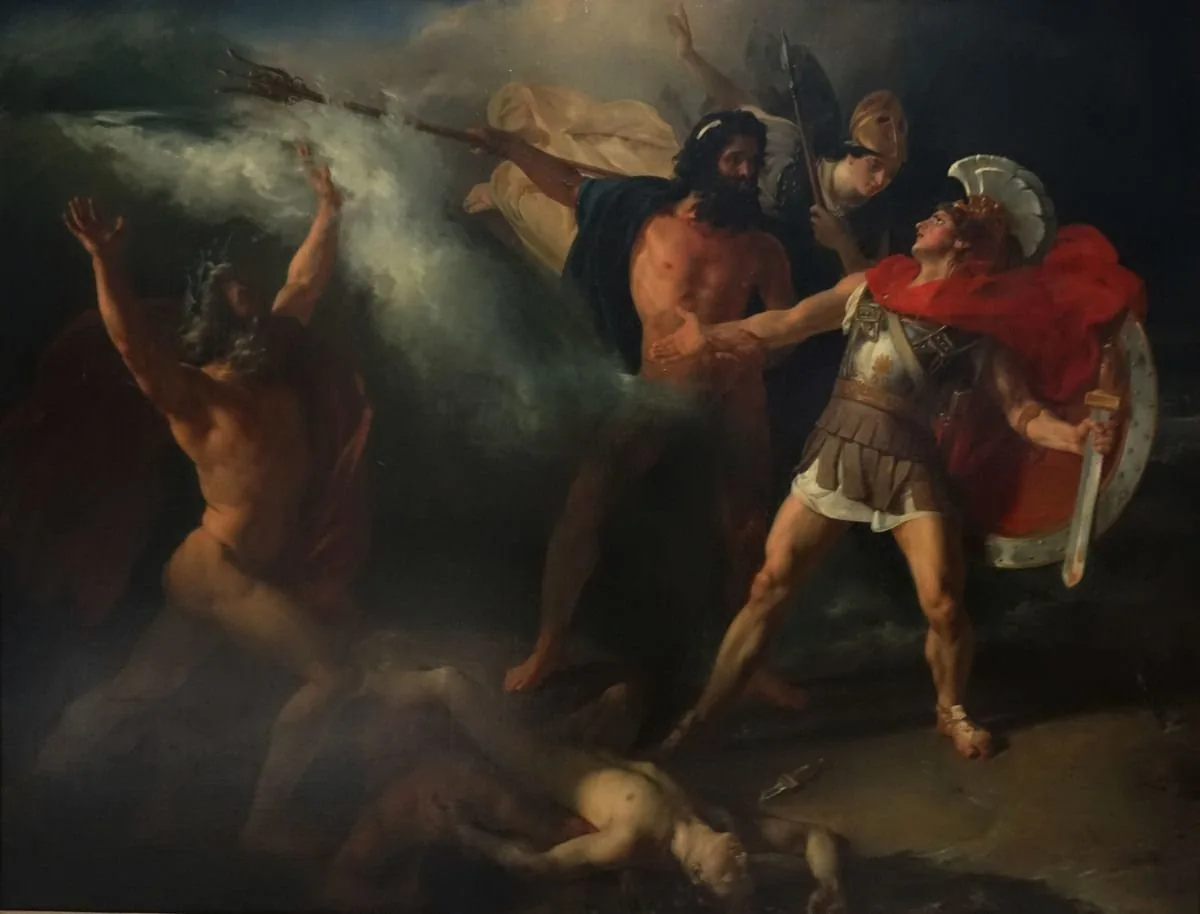
The sea god asks why Apollo still helps the Trojans after such treatment, instead of joining in the destruction of them and their families. Apollo does not claim that the debt has been paid. He refuses to fight his father’s brother over mortals whose lives are brief as leaves, and steps away. Later, he enters Ilium because he fears the Greeks might take the city before its appointed time. These actions place a distance between past injury and present choice. Having suffered together does not bind the gods to one response forever; the people living inside the walls are more than extensions of an earlier king’s promise. We can understand Poseidon’s anger while still asking what it means to spread punishment across a whole community.
Another account brings both gods to the wall
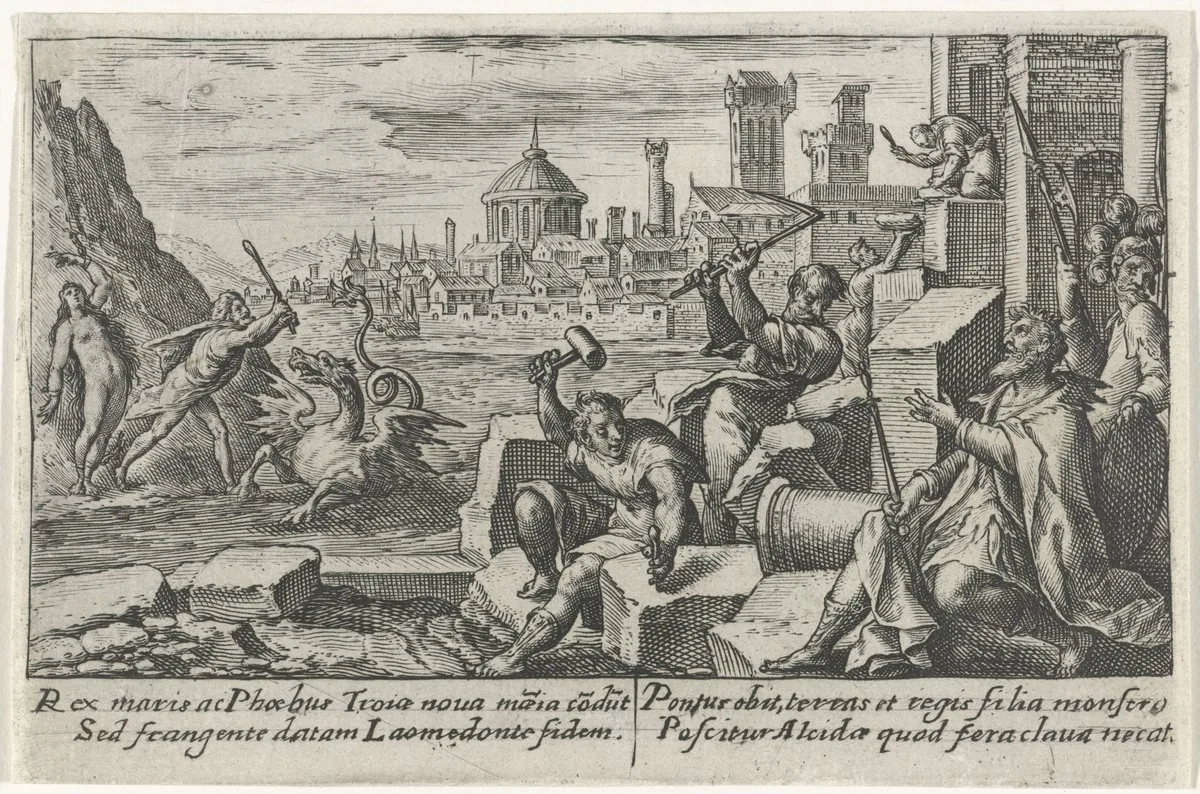
The Library attributed to Apollodorus, at 2.5.9, offers another arrangement. Apollo and Poseidon take human form and accept wages to fortify Pergamum, intending to test Laomedon’s arrogance; here both are builders. After he refuses payment, Apollo sends a plague and Poseidon a sea monster that carries off people from the plain. An oracle requires the king’s daughter Hesione to be offered to the creature, and she is fastened to seaside rocks. This sequence should not be inserted into Homer’s division of work to manufacture a single account. It makes the transfer of danger especially clear: the father promises the reward, but his daughter bears the consequences at the shore, along with townspeople who never took part in the bargain.
A second promise offers no lasting safety
Heracles agrees to rescue Hesione in exchange for Laomedon’s horses. He kills the monster, but the king again refuses the reward. At 2.6.4, the Library later brings the hero back with a fleet: Troy is captured, and Laomedon and most of his sons are killed. Hesione is assigned to Telamon as a prize, then uses her veil to ransom her brother Podarces; the compiler connects his later name, Priam, with that purchase. This is not the wooden horse and the fall of Troy in Achilles’ generation. Nor is it an ending that compensates every injured person. Looking back at the wall, the question becomes more than whether its stones were strong. A ruler keeps the results of other people’s work while repeatedly discarding his promises, until even those inside the building cannot find security there.