A refuge that depends on the host’s loyalty
Euripides begins Hecuba with the ghost of Polydorus, identifying himself as the son of Priam and Hecuba. Before Troy fell, Priam entrusted the young boy to his Thracian friend Polymestor and sent gold to support the children who might survive the war. The child was removed because he was too young to fight. While Troy remained powerful, his refuge held; after its destruction, his host killed him for the treasure and cast him into the sea. The audience knows this before Hecuba discovers the body. What she still imagines as protection has already become abandonment. Gold meant to sustain a surviving household has supplied the reason for murdering its guest, who now lacks even a grave.
Water for one child brings news of another
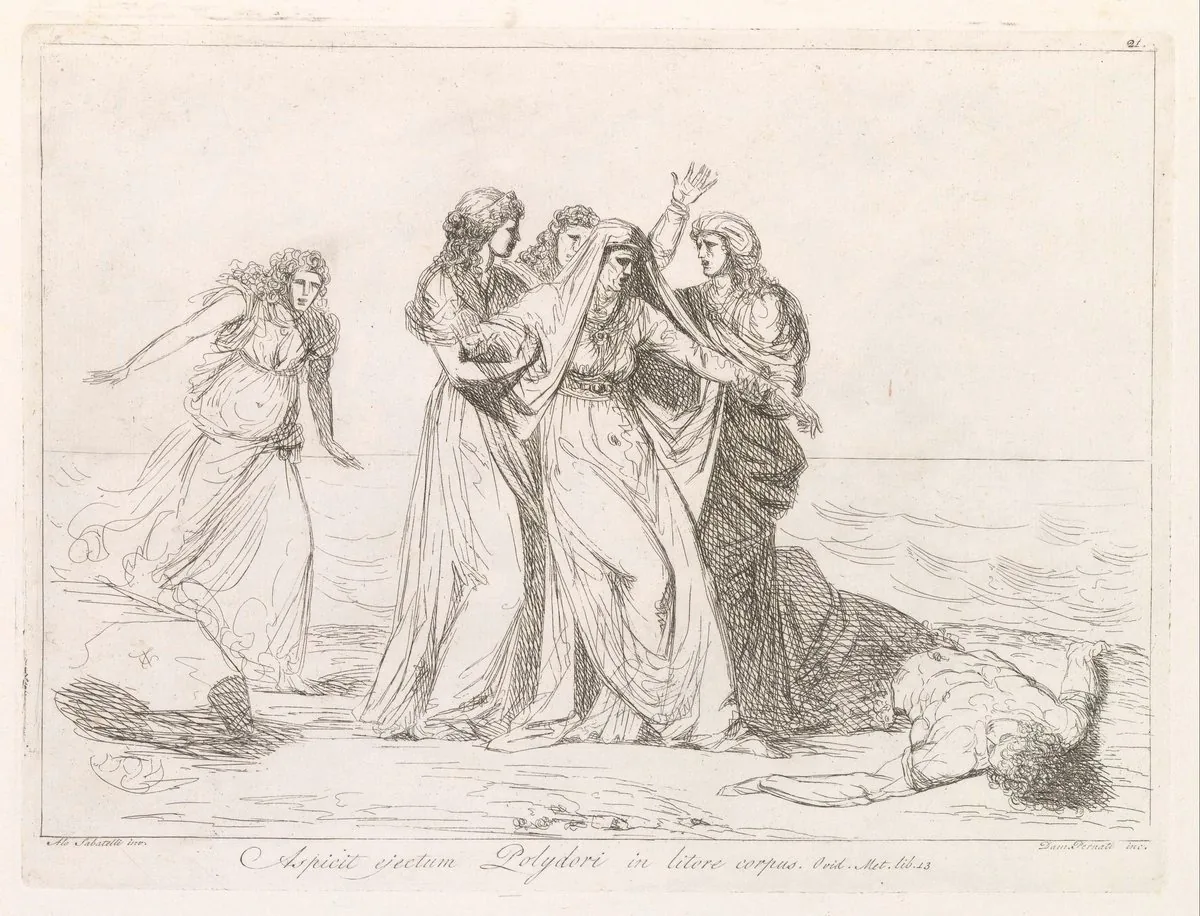
Hecuba has already lost Polyxena, sacrificed at the tomb of Achilles after his ghost demanded her. These are two distinct deaths: the daughter is killed by the Greek army’s decision, the son by the host entrusted with his safety. A servant sent for seawater to wash Polyxena finds Polydorus on the shore and brings his covered body back. Hecuba initially thinks she is seeing her daughter’s corpse; uncovering it destroys a different hope. Recognition changes the meaning of the neighboring coast, where her son was supposed to be living. This should not be merged with Homer’s Polydorus killed by Achilles in battle: Iliad 21 gives Laothoe as that son’s mother, rather than importing Hecuba’s motherhood from the tragedy. Covering and uncovering are small stage actions with large consequences: a familiar face turns an unspecified bundle into evidence of the most intimate kind.
Asking a victor to protect a broken obligation
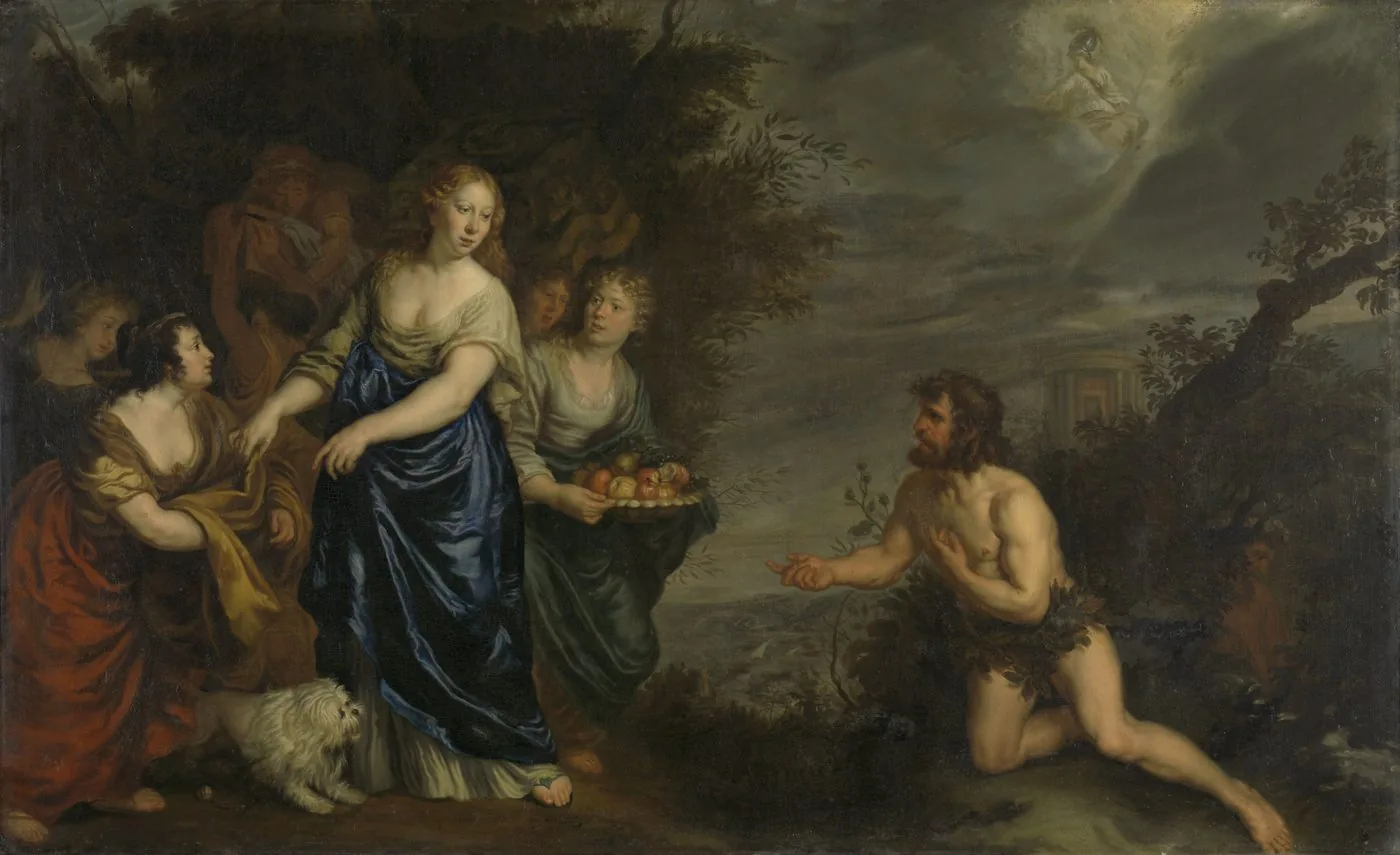
When Agamemnon arrives, Hecuba hesitates before approaching his knees. Her position as an enslaved enemy makes even being heard uncertain. She asks him to punish a guest-friend who accepted her family’s hospitality and then murdered the child placed under his roof. The appeal reaches beyond personal affection to the shared rules that make trust possible. Agamemnon expresses sympathy but fears his army’s reaction: the Thracian is counted a friend, the dead Trojan an enemy. He also worries about appearing to act for Cassandra, Hecuba’s daughter and his captive companion. Hecuba therefore proposes a limited role. She will arrange the action with the Trojan women; he should prevent interference. Consent comes through military calculations, not an unrestricted promise of justice.
The lure repeats the language of the lost treasure
Hecuba summons Polymestor with his two sons, speaking of hidden gold and pretending that Polydorus can still benefit. His continuing claims that the child is alive expose the betrayal to listeners who know the truth. Inside the women’s tent, the captives kill his sons and blind him. The violence reaches the audience first through cries from within, followed by the wounded father and the children’s bodies. Agamemnon later rejects Polymestor’s claim that he killed the Trojan boy to protect Greek interests, judging greed the motive. Yet the revenge has also killed children who did not commit their father’s crime. Reading the scene does not require calling that loss a happy restoration. A violated household has produced another household’s bereavement, and no child has returned.
Ovid changes who sees, and what the voice becomes
Metamorphoses 13 brings Hecuba herself to the water to wash Polyxena’s wounds. There she sees Polydorus; the poem concentrates her silence, gaze, and rage around the discovered body. She again uses promised gold to lure the murderer, and captive women help her blind him. When Thracians attack her, her attempted speech becomes barking and her body a dog’s. In Euripides, that transformation remains a future announced by Polymestor, rather than an event performed during this discovery. Keeping the tellings apart preserves their different attention: a mother negotiating with a commander, or a human voice changing under grief and violence. Neither makes the recovered corpse a recovered life.