A father outside the palace
In Book 24 of the Odyssey, Odysseus leaves the scene of his victory over the suitors and goes to his father's country property. Laertes is working among the plants, poorly dressed and marked by grief. The contrast is striking: the land shows careful attention, while its cultivator neglects his own comfort. This is not the first news of his condition. In Book 11, Anticlea has already described the father's withdrawal from town, rough sleeping arrangements, and sorrow at his son's absence. The orchard meeting gives a body and a place to suffering that Odysseus previously learned about through another person's report.
The choice to keep a disguise
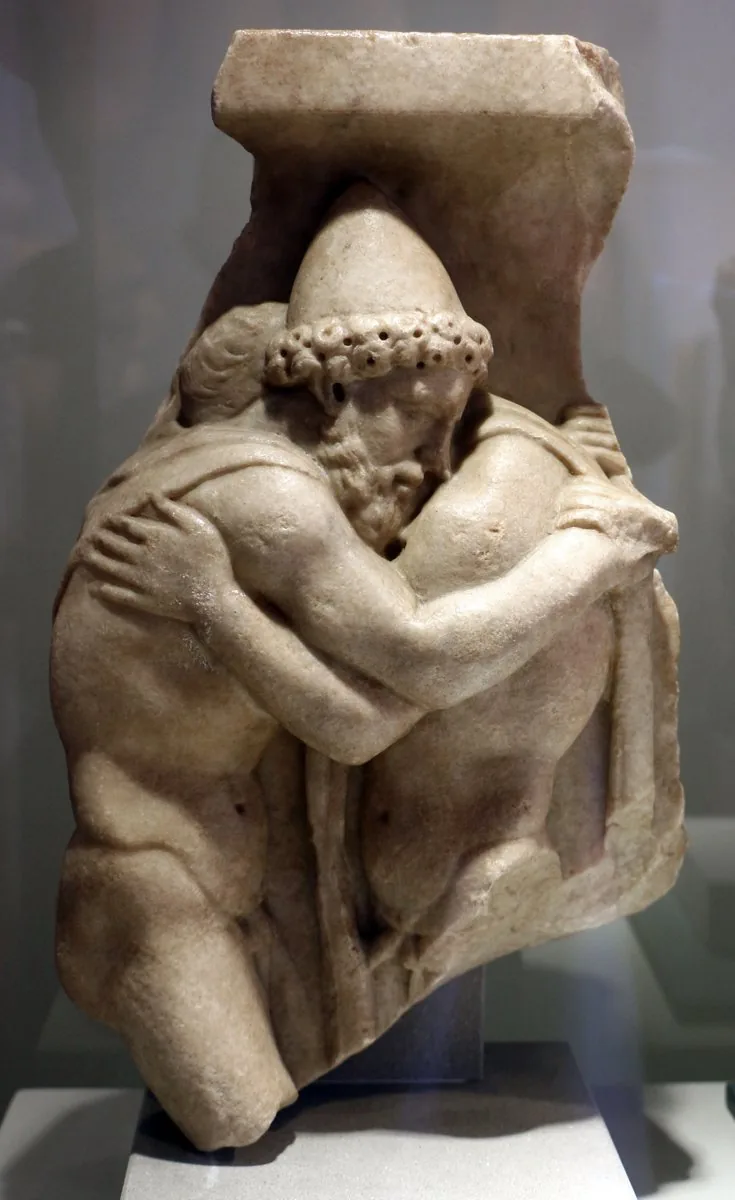
Seeing his father, Odysseus first weeps apart and considers whether to reveal himself immediately or question him. He chooses a fabricated story, presenting himself as someone who once entertained Laertes' missing son. The exchange prolongs the father's uncertainty. When Laertes pours dust over his head in grief, Odysseus can no longer maintain the performance and embraces him. This is a difficult recognition scene, not simply an exhibition of cleverness. The poem records the son's hesitation and the father's pain, allowing readers to ask what the habit of testing others costs when the person tested is already vulnerable.
Evidence beyond a declaration
Laertes does not accept identity on the strength of the announcement alone. He asks for a convincing sign. Odysseus first points to his hunting scar and then recalls the trees his father gave him as a child. They had walked through the orchard together, with the father naming and explaining the plants while the boy asked questions. The remembered numbers are concrete: thirteen pear trees, ten apple trees, forty fig trees, and a promise of fifty rows of vines. These are not details that establish kingship before a public assembly. They belong to a particular relationship, learned through shared time in a particular place.
Inheritance as an experience
The trees make inheritance more than a possession listed in a claim. They recall a child following an adult, learning names, and imagining a future share in the cultivated land. This interpretation does not require every tree to have remained untouched during the years of absence. The force of the sign lies in the remembered gift and conversation. Unlike a password chosen for security, the knowledge grew out of ordinary family life. Laertes' recognition therefore joins personal history to the landscape. The orchard is not merely a convenient background for an embrace; its contents help make that embrace possible.
A reunion before peace
Laertes' strength fails when the evidence convinces him, and his son supports him. Joy returns, but danger has not ended. The father immediately worries that the killing of the suitors will bring retaliation from the community. Book 24 still has conflict to resolve before Athena establishes peace. Keeping that sequence matters: the orchard does not magically erase the political consequences of events in the palace. It restores a relationship within a world still unsettled. The scene's tenderness comes from its precise scale, where the man who survived distant wonders can finally be known through the trees he once asked his father to name.