After the labors, a visitor is killed
Diodorus places this episode after Heracles’ labors in Library of History 4.31. Rejected as a suitor for Iole, the hero drives away the mares of her father Eurytus. When Eurytus’ son Iphitus comes searching, Heracles takes him up a high tower, then throws him down, claiming that the visitor has falsely accused him of theft. The dead man is neither a monster nor an obstacle to erase from an adventure list. Illness follows the killing. Heracles seeks purification, but remains unwell after receiving the rite and consults Apollo. A powerful body cannot make an injury already inflicted become something that never happened.
Selling a body is not a holiday freely chosen
The oracle requires that he be sold into slavery and that his price be paid to Iphitus’ sons as compensation. In Diodorus’ account he travels to Asia with friends, and one of them sells him to Omphale, queen of Lydia. This author describes her here as unmarried. Heracles cooperates with the sale under the constraints of illness and a divine command, not as a tourist freely choosing a palace holiday. The money’s destination matters: the narrative connects lost freedom with compensation for the victim’s family. That arrangement neither restores the dead man nor obliges readers to approve the ownership of human beings.
Strength still harms during service
Diodorus does not make service end the hero’s capacity for action. He punishes the Cercopes, delivers captives to Omphale, and kills Syleus, who forces travelers to dig his vineyards. He also sacks a city used by raiders against the queen’s land, enslaving its inhabitants and destroying it. Stopping one form of forced labor has not prevented him from producing another enslavement. The contradiction belongs in our reading. Diodorus then says Omphale learns his identity and parentage, admires his courage, frees him, and marries him, bearing Lamus. This ending belongs to that account; subsequent marriage cannot retrospectively make the earlier slave relationship an equal romance.
A year, revenge, and a herald’s explanation
In Sophocles’ Women of Trachis, however, the herald Lichas reports a full year of service to Omphale, imposed by Zeus for killing Iphitus treacherously. Lichas uses that humiliation to explain Heracles’ later attack on Eurytus’ city. Another messenger promptly exposes what he has concealed: the hero wanted Iole. A character’s stated motive must therefore be distinguished from the motives gradually revealed to the audience. One herald’s defense is not automatically the playwright’s final verdict. Captive women from the conquered city stand onstage too, bringing the hero’s recovered freedom and other people’s lost freedom into the same scene.
Which ancient poem exchanges the clothes?
The exchanged clothing is not wholly a modern painter’s invention. Ovid’s Fasti 2.303–358 already places the pair on a journey in Lydia: Omphale dresses Hercules in her clothes and takes his club, lion skin, and weapons. Preparing for a festival of Bacchus, they sleep separately. Faunus enters at night intending to assault Omphale, but the clothes and his sense of touch misdirect him towards Hercules, who throws him down. The Roman poet uses costume for nocturnal misrecognition and an explanation of ritual. This is not Diodorus’ account of why the service began, and cannot prove that the queen dressed the hero this way every day.
Look at the art, remember the unfree
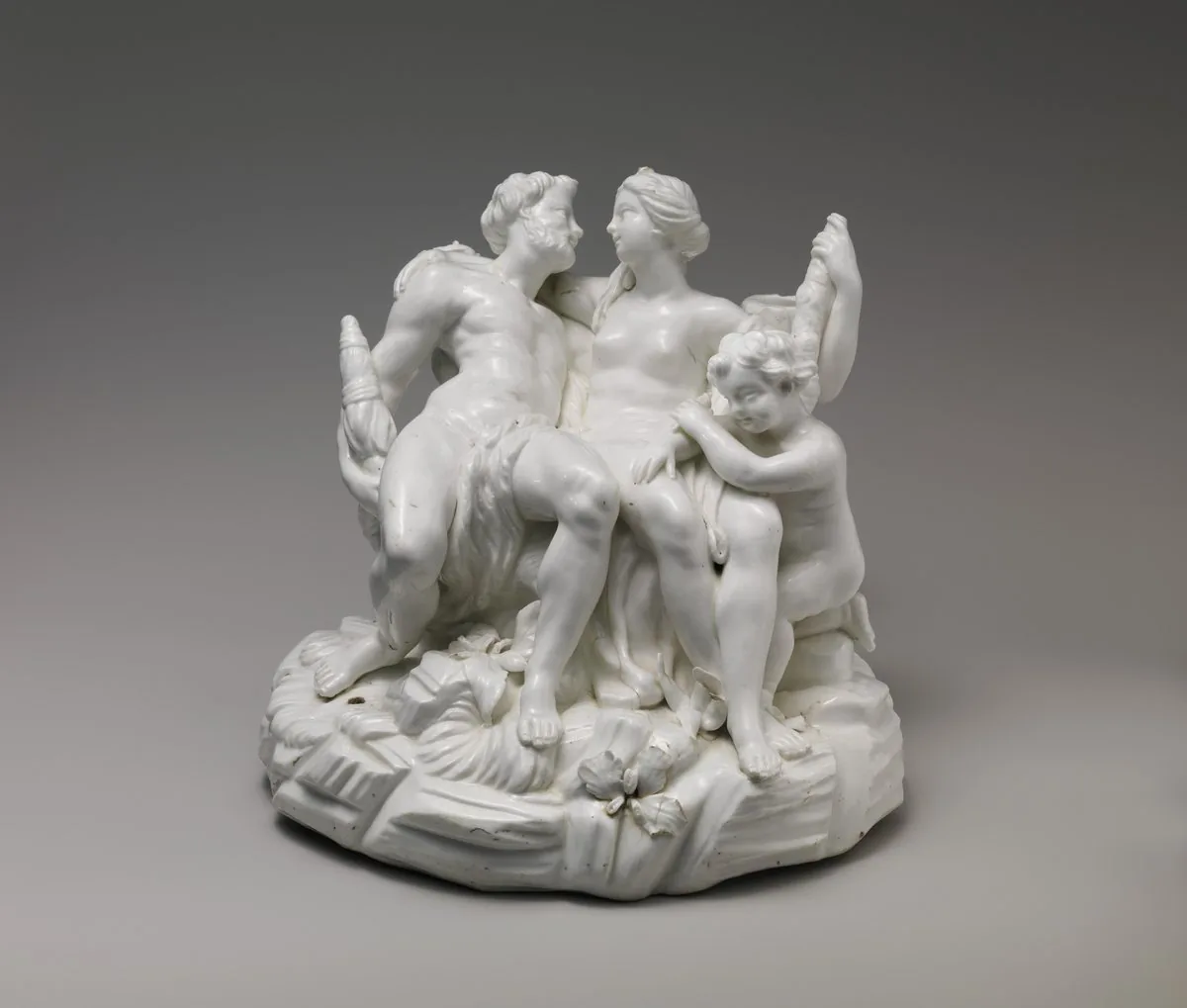
A Vincennes porcelain group dated about 1749–50 in the Metropolitan Museum seats the pair on the lion skin, while a little love god holds the spindle. Later artists made transferred weapons, skin, and spinning equipment a way of identifying power, choosing intimacy to organize the scene. Their choices are not eyewitness records of the earliest Greek story. We need not inherit the prejudice that spinning degrades a man to understand what the attributes communicate. More useful questions concern who commands another person’s labor and body, who can end service, and who suffers enslavement outside the picture. Remembering those people keeps the hero’s imposing body from hiding the concrete conditions of freedom.