A discussion about how to live
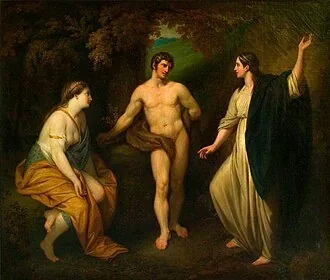
In Book II of Xenophon’s Memorabilia, Socrates discusses self-control, training, and the work of rulers, and recounts Prodicus’ fable about Heracles. As the young hero reflects alone on his future, two women approach. One is dignified and restrained; the other attracts him through adornment, sensual appeal, and easy pleasures. There are no monsters, royal commands, or divine weapons here. The conflict lies between two ways of arranging a life. Heracles’ famous strength remains important, but is still an ability awaiting use. The fable asks how daily habits will direct it.
The promises of Happiness and Virtue
The first woman promises pleasure without effort and calls herself Happiness, while saying her enemies call her Vice. Virtue does not conceal the cost: anyone who wants fruitful land, a strong body, friends’ trust, or a city’s respect must actually work, train, and help others. Rather than rejecting happiness, she connects it with relationships earned through effort. Their debate is therefore not a simple slogan that all enjoyment is bad and all suffering good; it distinguishes unsupported demands from actions that can sustain a life. Xenophon’s persuasive examples of land, herds, and friends are much more concrete than later abstract labels.
How painters turn arguments into roads
Later paintings often place figures to left and right, use gestures pointing in different directions, and show roads leading near and far, making the choice visible at a glance. The ancient text, however, is chiefly a dialogue. Mountaintops, palaces, and forked paths often result from artists giving the arguments spatial form. Nor should this subject be inserted into the order of the twelve labors in the Bibliotheca: it comes from a tradition of philosophical exhortation and puts the hero to a different use. Readers today can consider its question about time: does immediate ease postpone necessary work, and can sustained effort create a life one is willing to undertake? Such reflections are questions readers draw from the fable, rather than modern aphorisms spoken by Heracles himself.