An opponent arrows cannot pierce
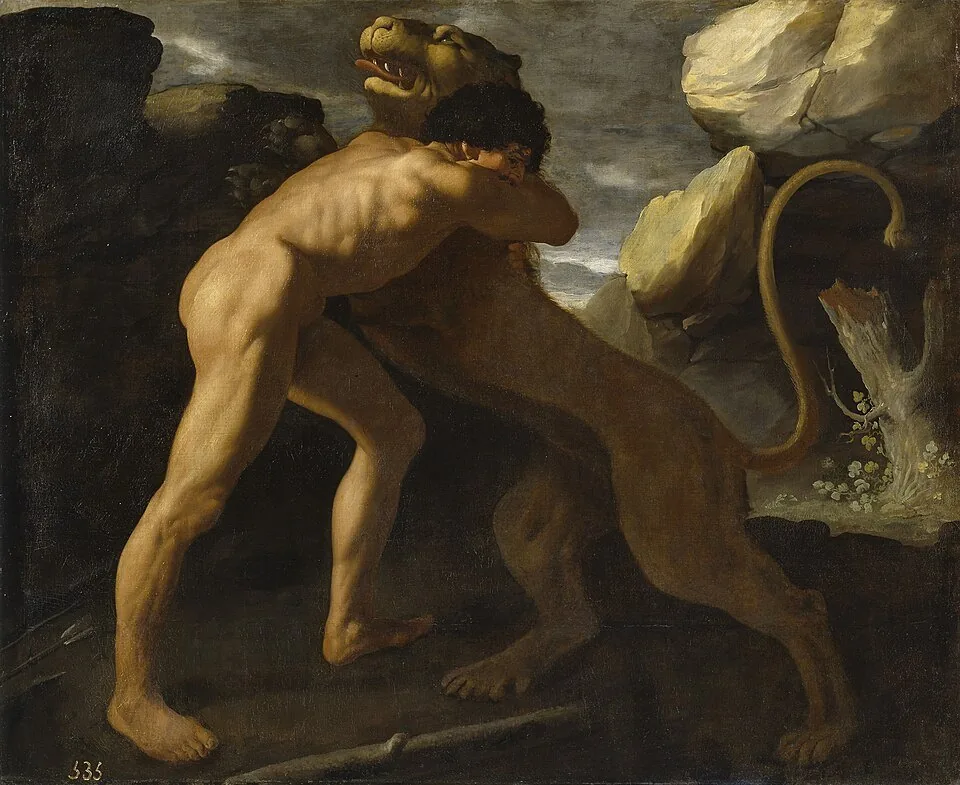
The Bibliotheca makes the Nemean lion the first task Heracles completes for Eurystheus. He first tries arrows and discovers that the lion’s body is unharmed. He then drives it back with his club and pursues it into a cave with two entrances. Blocking one opening, he enters through the other and strangles the lion by gripping its neck. The arrangement of the entrances matters: it reduces pursuit across open country to a space from which escape is difficult, forcing the hero to face danger at close range. Strength is essential, but observing why a weapon fails and changing his method are also conditions of success.
Protection from the monster’s body
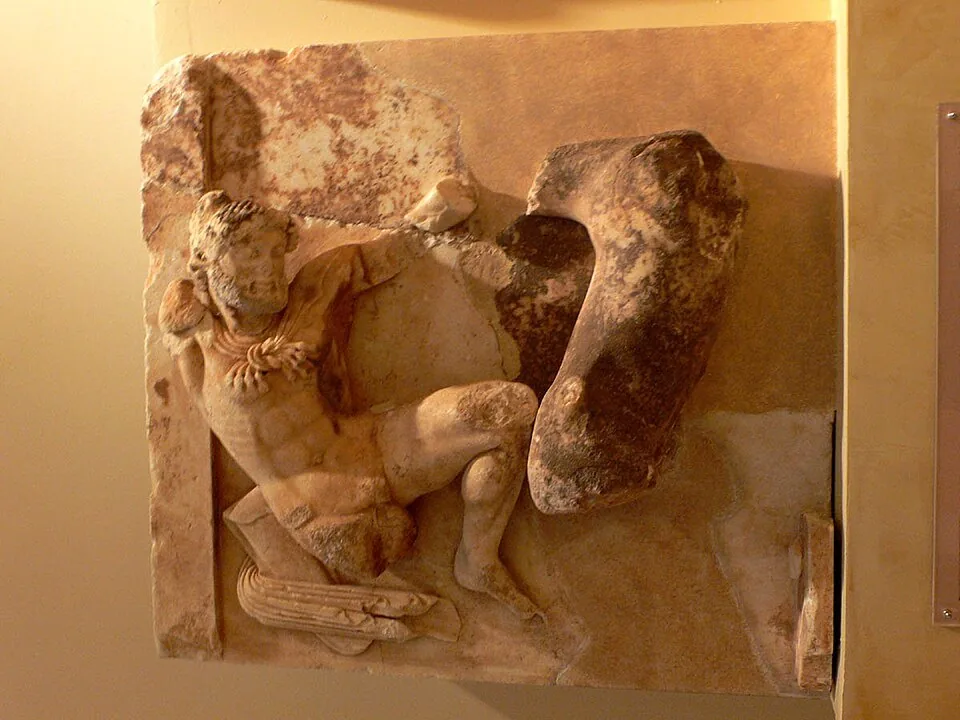
Theocritus’ Idyll 25 presents the battle through the hero’s own account and explains the difficulty of skinning the lion. Ordinary blades cannot cut its hide, so he uses the lion’s own claws. The skin becomes protection across his shoulders, and the head serves as a hood. This transformation is specific: the monster’s invulnerability retains its value after death and accompanies the hero on later journeys. In images, the lion skin and club are often more reliable identifiers of Heracles than his face. Yet a statue displaying the skin establishes his identity, and does not automatically depict the battle with the Nemean lion.
Why victory makes the king retreat
The Bibliotheca says that Eurystheus is frightened by the hero’s strength and orders him henceforth to display his accomplishments outside the city, receiving tasks through a herald. The first victory changes the distance between them: the person issuing commands retains institutional authority but refuses to face their executor. This tension recurs through the twelve labors. As the hero grows more dangerous, the king has greater reason to keep his body at a distance. Read alongside the idyll, this passage reveals both the cave fight’s actions and the political reaction when its results reach the royal court. The lion skin is more than decoration: it records a transformation of material into protection and the hero’s inescapable position within a system of commands.