Preparing before the descent
The Bibliotheca places the retrieval of Cerberus at the end of the twelve labors. Heracles first participates in the Eleusinian mysteries and undergoes purification, then enters the underworld through Taenarum. Most shades flee at the sight of him, but a Gorgon’s image makes him draw his sword. Hermes reminds him that it is merely a bodiless phantom. These preparations and mistakes show that the underworld is not another place for ordinary hunting: actions must be judged anew according to the world one has entered. Rituals have their own significance in ancient religion. A myth reveals the conditions under which the hero gains entry, but cannot establish that we know every actual detail of the mysteries.
A struggle with the underworld ruler’s consent
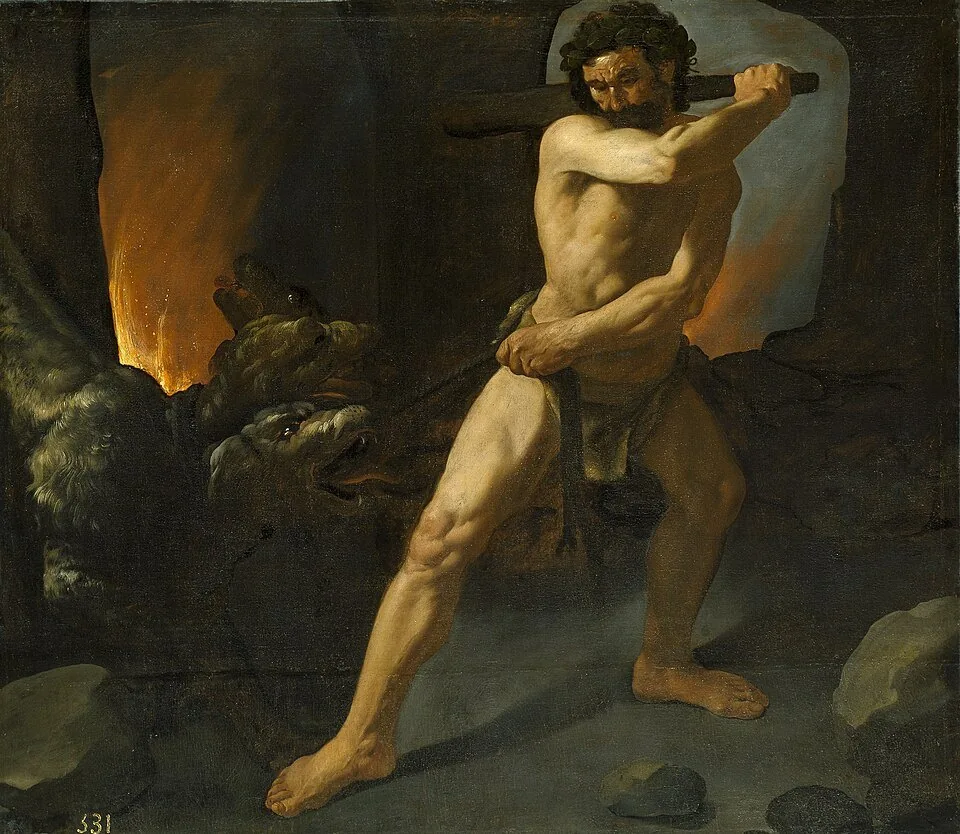
Heracles meets Hades, also called Plouton, and receives permission to take the guardian dog, provided he subdues it without his existing weapons. Protected by the lion skin, he grips its neck and persists despite the serpent tail’s attacks until it yields. In this version Cerberus has three canine heads, a serpent’s tail, and snake heads along its back. Other ancient writers describe different head counts, so visual differences should not all be treated as artists’ mistakes. Permission changes the struggle’s nature: Heracles neither kills the underworld’s ruler nor overthrows its order, but temporarily controls its guardian within prescribed limits. Diodorus also treats this as an exceptionally difficult task, without needing to reproduce the Bibliotheca’s steps line by line.
The guardian must finally return
After bringing Cerberus to Eurystheus for display, Heracles returns it to the underworld. The task ends with a round trip, rather than granting the dead freedom to escape. During his descent he also attempts to help the imprisoned Theseus and Pirithous, with different results for each. Even great strength cannot undo every divine punishment. Later paintings often make leading the dog out of a cavern victory’s climax, leaving the ruler’s conditions and the return outside the frame. Restoring these steps gives the final labor a clear scope: Heracles proves that he can enter alive and return, but gains no sovereignty over the dead. Fear is temporarily subdued and the boundary remains, distinguishing this guardian from the Nemean lion that must be destroyed.