First find the unknown garden
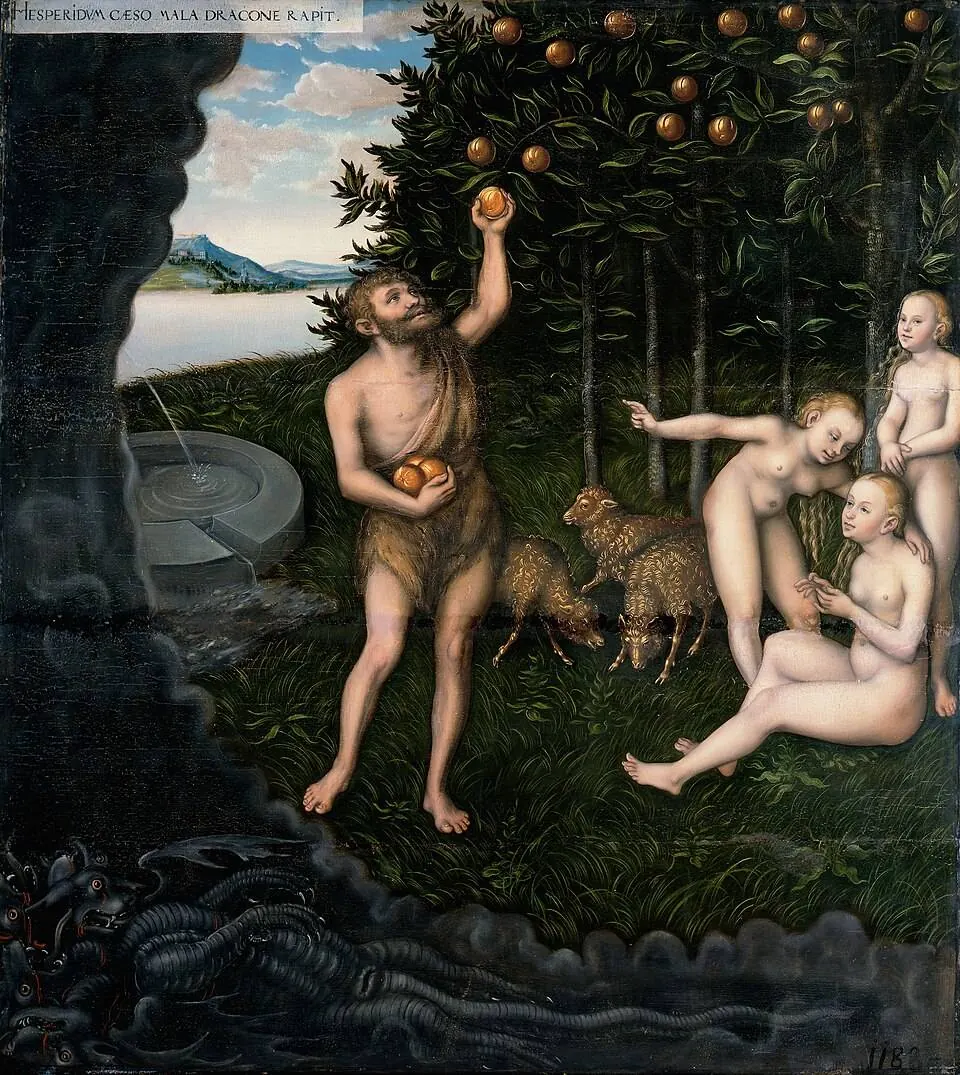
In the Bibliotheca, the Hydra and stable-cleaning labors are rejected, so Eurystheus requires Heracles to fetch the golden apples as an additional task. They belong to Hera and are guarded by the Hesperides and a dragon. Initially he does not know the garden’s location. Along the way he contends with Nereus to learn the route and encounters obstacles such as Antaeus. This uncertainty is part of the task rather than a blank on a map: the destination belongs to the gods’ world and cannot be supplied directly by ordinary knowledge of roads. Short versions often retain the apple tree while omitting the time spent finding information, making the hero appear to know every answer from the start.
Atlas undertakes the retrieval
After rescuing Prometheus, Heracles receives advice to let Atlas fetch the apples while he temporarily supports the sky. On returning, Atlas offers to deliver the fruit to Eurystheus and is unwilling to resume his burden. Heracles asks him to take it back briefly so that he can put padding on his shoulders, then leaves with the apples. The Bibliotheca also records another account in which the hero obtains them himself and kills the guardian dragon. These actions should be narrated separately, rather than having him kill the dragon alone while still requiring Atlas to fetch the same fruit. Diodorus offers a further explanation connecting golden apples with flocks of sheep, another ancient attempt to make a wonder more intelligible.
Obtaining something does not mean owning it
Eurystheus eventually gives the apples back to Heracles, and Athena returns them to their original place because such sacred fruit must not remain elsewhere. The task is complete, yet the apples do not become possessions he can enjoy permanently. The sky’s weight also separates ability from responsibility: temporarily bearing it does not mean wishing to take it on forever. Images of holding the sky and carrying fruit can correspond to different stages of the exchange; depicting everyone together compresses time artistically. Readers can also notice how promises and words resolve this impasse, unlike the close combat of the lion fight. The journey’s appeal lies in fruit passing through many hands before returning to its original sacred boundary.