A question about a missing horn at dinner
Book 9 of Ovid’s Metamorphoses begins with Theseus asking his host, the river god Achelous, why he sighs and how his horn was broken. The answer is not a victory speech delivered by Heracles. It belongs to the injured opponent. Achelous first calls it painful to tell his disgrace, then finds consolation in the greatness of the man who defeated him: confronting such a hero can itself offer honor. This opening gives the account a particular angle. We hear an admission of defeat and an effort to preserve dignity together. The missing horn is not an event entirely left behind. It remains part of the body entertaining guests, a place other people notice and continue asking about.
Marriage becomes an argument about origins
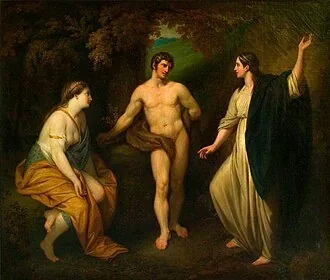
Achelous remembers that he and Heracles both sought the hand of Oeneus’ daughter Deianira, while the other suitors withdrew. The hero praises his descent from Jupiter and his achievements. The river argues that he belongs locally, flowing through the king’s territory, and should not yield to a foreign man. He also attacks his rival’s mother’s reputation, intensifying the exchange. These are claims made by a hostile character, not evidence that the narrator endorses the insults. Heracles declares himself better with his hands than with words and attacks. Marriage becomes a competition between qualifications: ancestry and labors against local belonging and divine status. Deianira’s own response does not enter this negotiation. The approaching result cannot supply a voice the scene has not allowed her.
Another shape does not provide a way out
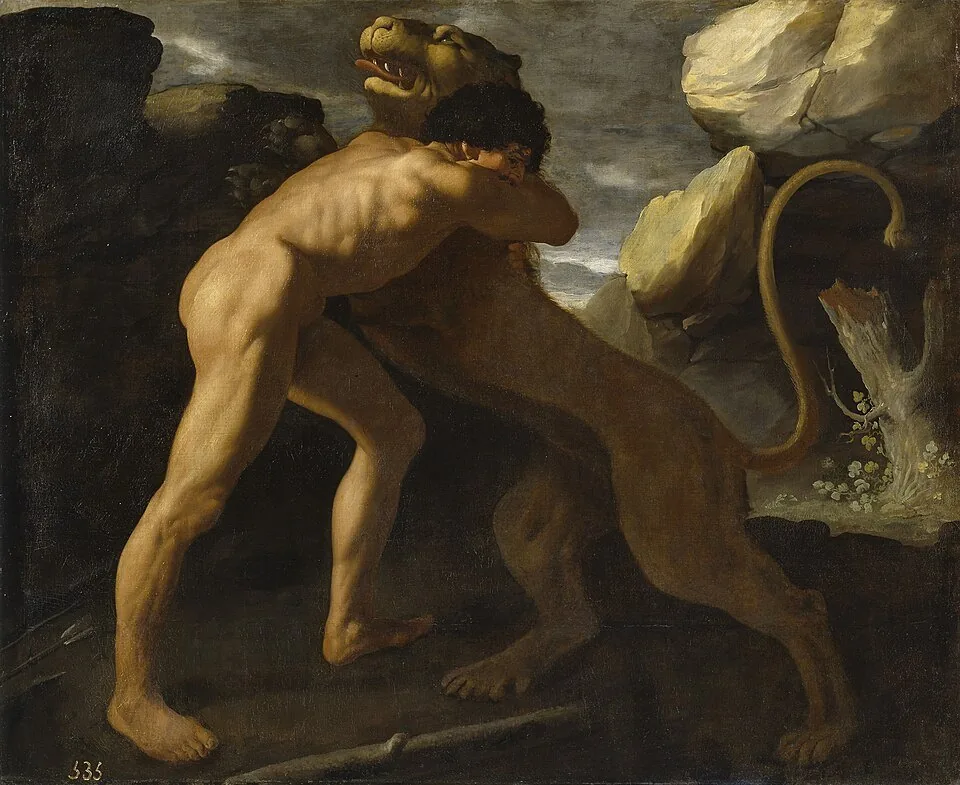
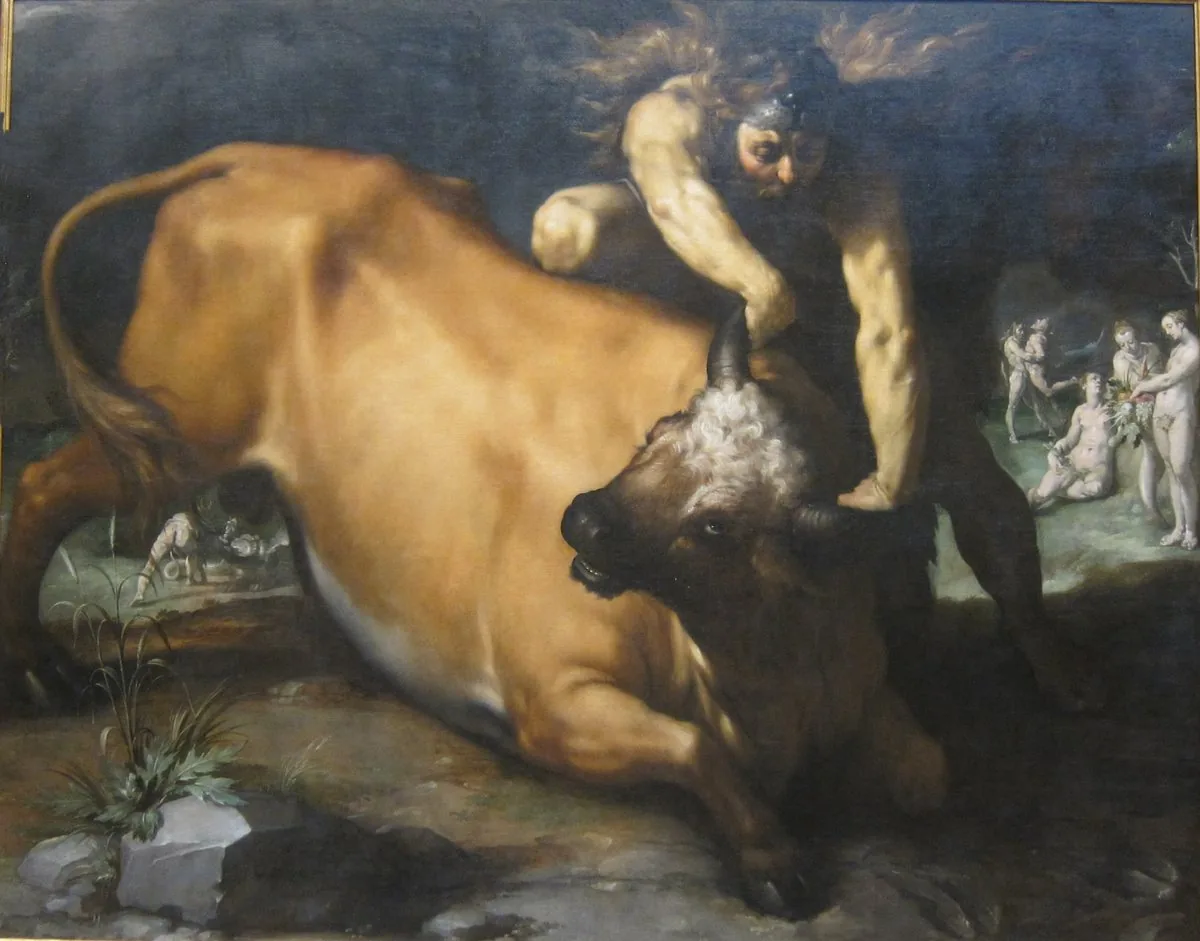
Ovid gives the wrestling weight and texture: yellow dust, interlocked fingers, a body pressing onto a back, and a knee finally driven to the ground. Achelous first fights in human form. Unable to escape, he becomes a snake; Heracles mocks him by recalling the snakes of his cradle and the Lernaean Hydra, then grips his throat again. The river becomes a bull, gaining another powerful body, but his opponent seizes the horns and forces him into the sand. One horn is torn away. Changing shape does not provide unlimited escape. Instead, it makes the bodily part that can be grasped and lost more visible. The Bibliotheca attributed to Apollodorus briefly records only the bull-shaped struggle and broken horn; Ovid’s detailed actions should not be treated as a scene both books describe.
Which horn becomes the source of plenty?
In Ovid, Naiads fill the river’s broken horn with fruit and flowers, dedicating it to Plenty. Bibliotheca 2.7.5 instead says Achelous recovers his own horn by exchanging Amalthea’s horn. Citing Pherecydes, it calls Amalthea a daughter of Haemonius who possessed a bull’s horn supplying abundant food or drink according to desire. These are not consecutive stages in which the same horn is both permanently lost and already recovered. They give the gift different origins: an object left by an injury, or an exchange made to regain part of a body. Nor should familiarity with Amalthea’s name silently turn this woman into the goat who nourished Zeus. Identifying the relationships each work actually provides lets the horn’s meaning emerge without constructing a composite genealogy.
Food reaches the table; the wound remains
After the river’s account, a nymph brings the abundance of autumn to the table in a horn, offering apples as another course. Achelous later conceals his wounded head within his flowing water. Plenty can serve the visitors, but Ovid has not thereby removed the injury. Later art redirects attention again. The Kemper Art Museum’s discussion of Goltzius’ Great Hercules, made in 1589, identifies a huge hero holding the broken horn in the foreground, with wrestling and fruit-bearing nymphs behind him. The image emphasizes the victor’s body; the poem’s dinner restores the defeated host’s opportunity to speak. Deianira’s later poisoned garment belongs to another article here. For now, we can remain beside the table, attending to a wounded host who still welcomes others and finishes a story he would rather not remember.