An oath before the landing
When Odysseus hears cattle on the island, he remembers the warnings of Tiresias and Circe. He wants to pass the pasture of Helios, but his companions are exhausted and have just lost six men to Scylla. In Odyssey 12, Eurylochus complains that their leader seems to have an iron body, refusing to let them land for food and rest. Most approve of stopping. Odysseus therefore requires each man to swear that he will harm no cattle or sheep and will eat only the provisions Circe supplied. They agree. After supper they remember the dead companions, weep and fall asleep. The oath belongs to tired bodies and recent grief: the crew has not arrived with an immediate plan to kill the animals or simply discarded every warning on reaching shore.
A month of wind places hunger against a promise
South and east winds keep the ship there for a whole month. Grain and wine run out, leaving the sailors catching whatever birds and fish they can. The chance to sail does not arrive, while hunger grows. Odysseus goes inland alone, washes his hands and prays for the gods to show a way home; they then send him deep sleep. In his absence Eurylochus proposes selecting the finest cattle for sacrifice to the immortals. If they reach Ithaca, they will build Helios a splendid temple. He acknowledges that the god might sink the ship in anger, but considers a single death by drowning more bearable than slowly starving. We can recognize how desperation narrows his view while remembering that the men are revising a commitment they have already made.
Leaves and water around a forbidden sacrifice
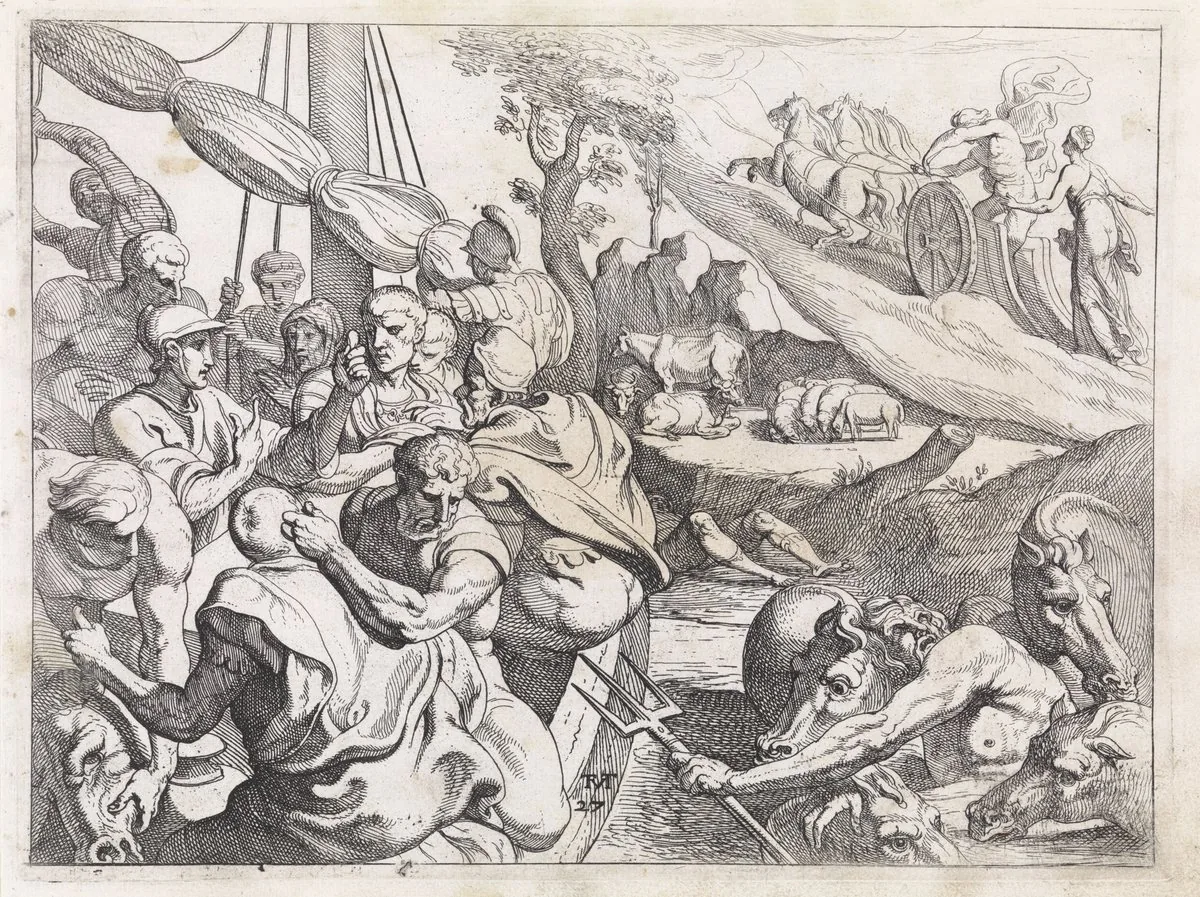
The crew gathers around the chosen animals, prays, kills them and prepares the meat. Without barley they use fresh oak leaves; without wine they pour water. Familiar sacrificial gestures remain, yet the offering comes from a herd explicitly forbidden to them. A solemn form cannot supply its owner’s permission. The temple promised after homecoming is a future undertaking, not proof that this taking has been accepted now. Helios is the Sun whose cattle these are; replacing him with Apollo would confuse this episode with another cattle story. Dickinson College’s commentary draws attention to the substituted leaves and water. Small actions around the meal make the crossing of the prohibition visible, even as the participants seek to give their actions a recognizable sacred shape.
After the meat begins to low
Odysseus wakes and smells roasting meat. He reproaches the gods who put him to sleep, but the dead cattle cannot be returned to the pasture. Lampetia reports the killing to her father Helios. The Sun demands punishment and threatens to shine among the dead; Zeus promises to break the vessel with lightning once it reaches open water. Odysseus explains how he knows this divine conversation: Calypso told him later, having heard it from Hermes. He does not claim to have stood in that assembly himself. Hides then move, and meat on the spits makes the sounds of cattle. These terrible signs do not immediately end the eating. The companions continue feasting for six days before the seventh brings weather in which they can sail.
The opening judgement and the later details
Offshore, dark cloud, wind and lightning destroy the ship. All the companions fall into the sea and lose their chance of homecoming. Odysseus lashes mast and keel together and drifts alone. The opening of Book 1 already identifies eating the Sun’s cattle as a decisive act of the companions’ own folly; Book 12 slowly supplies exhaustion, waiting, hunger, persuasion and ritual. Reading both speeds of narration keeps responsibility and hardship together. The warning was given and the oath broken, yet the poem still lets us hear what those deciding were afraid of. At sea the company cannot begin again by offering one compensating meal. The return has become one person’s survival, leaving us to consider how the group lost its shared future.