Bread and wine interrupt the crowd's pleasure
In Odyssey Eighteen, after the disguised Odysseus defeats Irus, the suitors enjoy the spectacle. Amphinomus brings bread and offers wine to the apparent beggar, wishing that his fortunes will improve. The gesture gives one man a distinct position within the gathering without making him an outsider to it. He is still one of the suitors consuming the absent king's household resources. The poem permits us to notice a considerate act alongside that participation. Such attention is more useful than immediately sorting every person into an entirely good or entirely bad category. A shared table can contain different conduct without ceasing to be a shared arrangement.
The stranger answers with a life story
Odysseus responds by praising Amphinomus' apparent understanding and recalling the good reputation of his father Nisus. He then describes the insecurity of human fortune through the voice of his disguise, presenting himself as someone once prosperous and reckless. We should not treat every autobiographical detail of that speech as a direct confession by the king of Ithaca. The invented position makes a warning possible between people who seem to stand at different levels of power. A guest who appears to possess little offers knowledge about the instability of possession itself. His words ask the listener to look beyond the confidence that a well-supplied room currently encourages.
An invitation to leave meets a fixed narrative future
The warning becomes specific: Odysseus will return soon, and the suitors' meeting with him will be violent. The speaker hopes Amphinomus can reach home beforehand. After returning the cup, Amphinomus walks away troubled and lowers his head, then sits down again. The narrator adds that Athena has bound him to death at Telemachus' hands. This combination places a recognizably serious response beside a future the poem has already assigned. We need not erase either element to make the scene easier. He hears something that matters; the story nevertheless withholds the uncomplicated escape that a modern account of good advice might lead us to expect.
The later scene gives the warning a bodily end
Book Twenty-Two returns Amphinomus to view when the fighting begins in the hall. He attacks Odysseus with a sword, attempting to force him away from the doorway, and Telemachus kills him from behind with a spear. The earlier courtesy has not become a guarantee of safety or a refusal to join the final violence. Reading the books together preserves both his distinctive gesture and his later action. It also keeps the warning from becoming an empty decorative omen. The person who received the cup's message has remained inside the group whose future the stranger described, and the narrative follows that involvement into its fatal conclusion.
Care and participation remain different questions
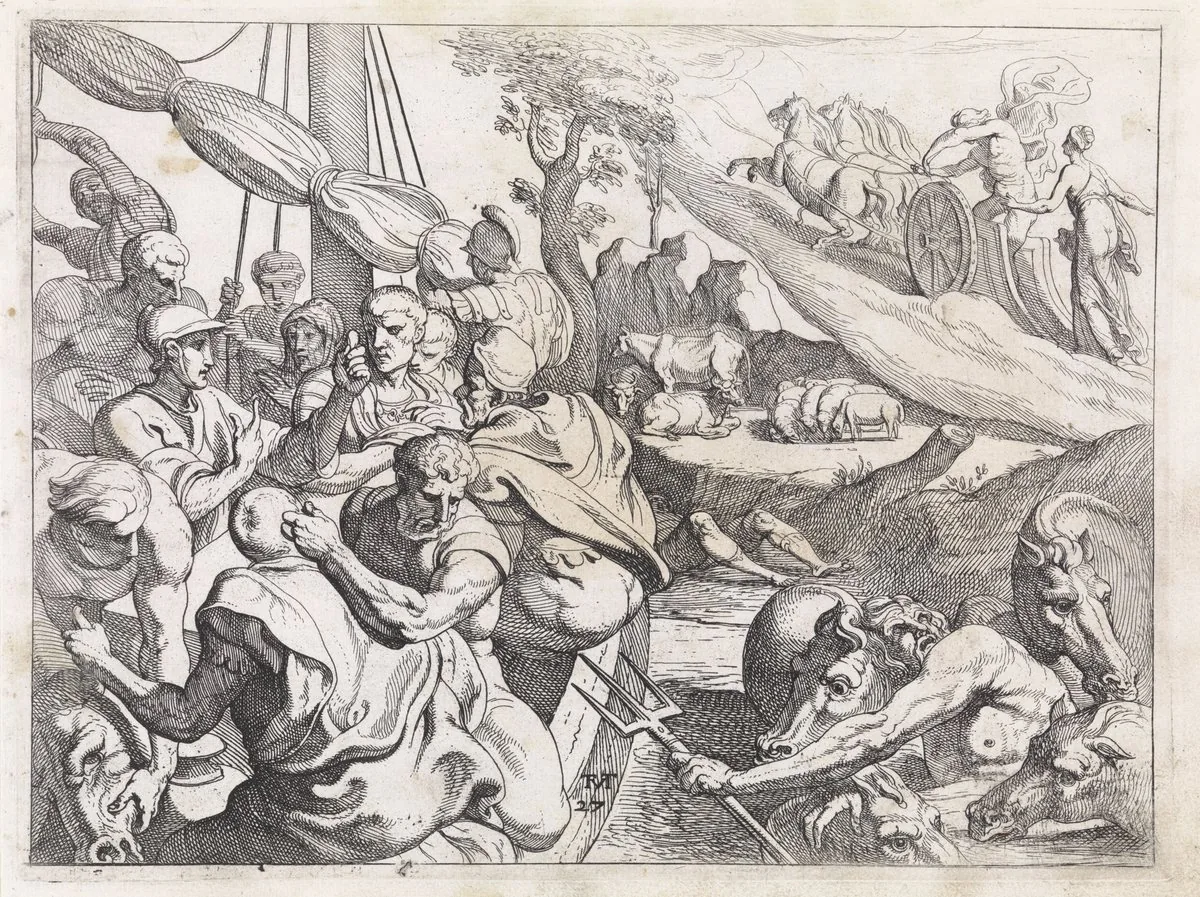
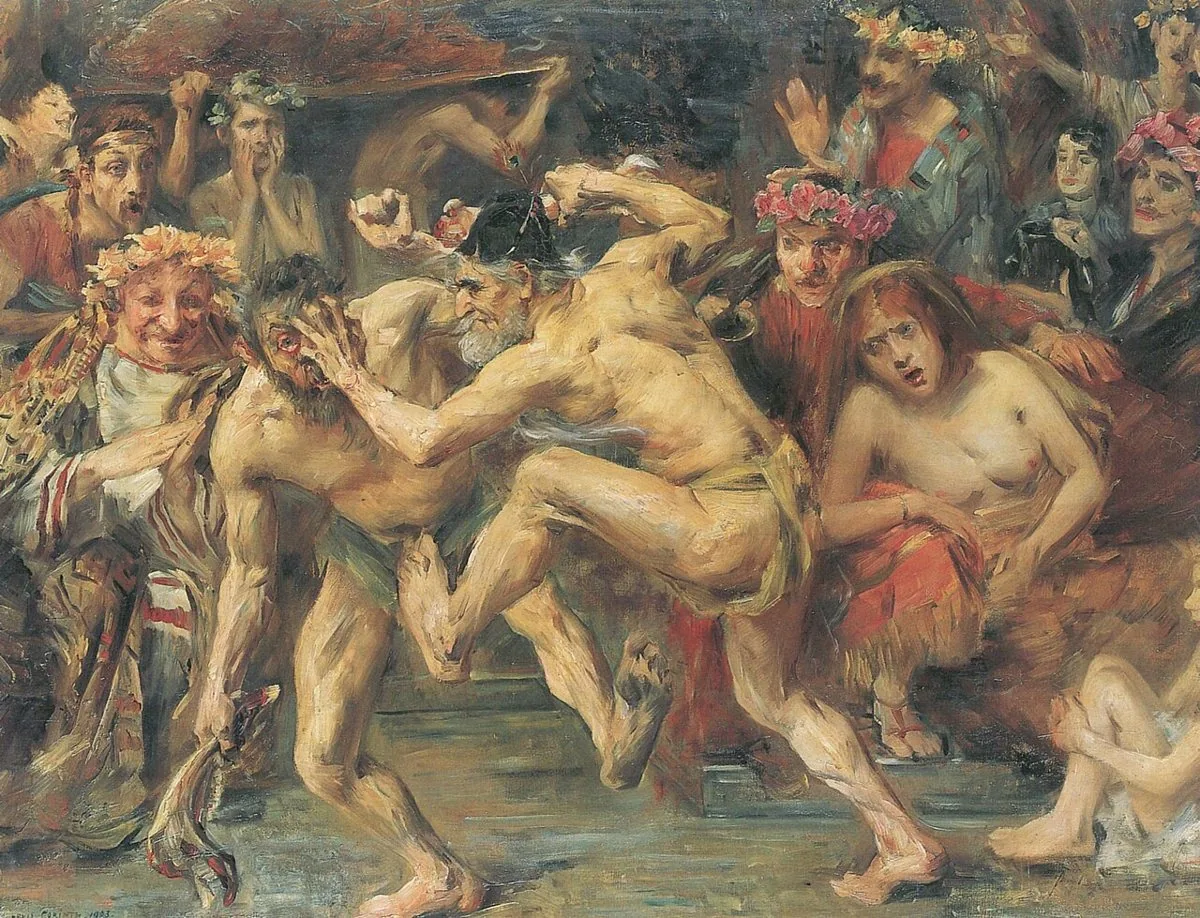
Amphinomus later urges restraint during another disturbance in Book Eighteen, again showing that the suitors do not all speak identically. These differences should sharpen attention rather than dissolve the household's larger conflict. A thoughtful gesture can matter to the person receiving it without cancelling the arrangement in which its giver continues to participate. The illustration presents the earlier confrontation with Irus, the setting from which the exchange grows, rather than claiming to show the cup itself. Following the bread, the speech and the return to the seat lets us read courtesy, fear, divine determination and responsibility together, without pretending that one of them supplies a complete explanation for all the others.