The first song already comes with force
Odyssey One introduces Phemius singing for the suitors, and the narrator says they compel him. Penelope later asks him to change a song about the Greeks' troubled returns because it intensifies her grief. Telemachus defends the singer but also sends his mother back to her domestic work. The scene contains several unequal claims over the same performance. A musician's presence at a feast does not by itself tell us whether he approves of the people enjoying it. Beginning here matters when we reach the later violence: the poem has already supplied information about constraint before the singer needs to use that fact to defend his life.
A lyre is set down before the plea
In Book Twenty-Two, Phemius considers seeking the altar or approaching Odysseus directly. He lays his instrument down and chooses supplication. His appeal describes his art and insists that the suitors forced him to perform. The lyre's placement gives a small physical transition to the move from entertaining a room to asking its armed master for mercy. Skill alone does not establish safety. Phemius also needs the circumstances of his work to be heard. He names Telemachus as someone who can confirm them, seeking more than the protection of a beautiful voice or the hope that the killer will value future songs.
A witness changes what can happen next
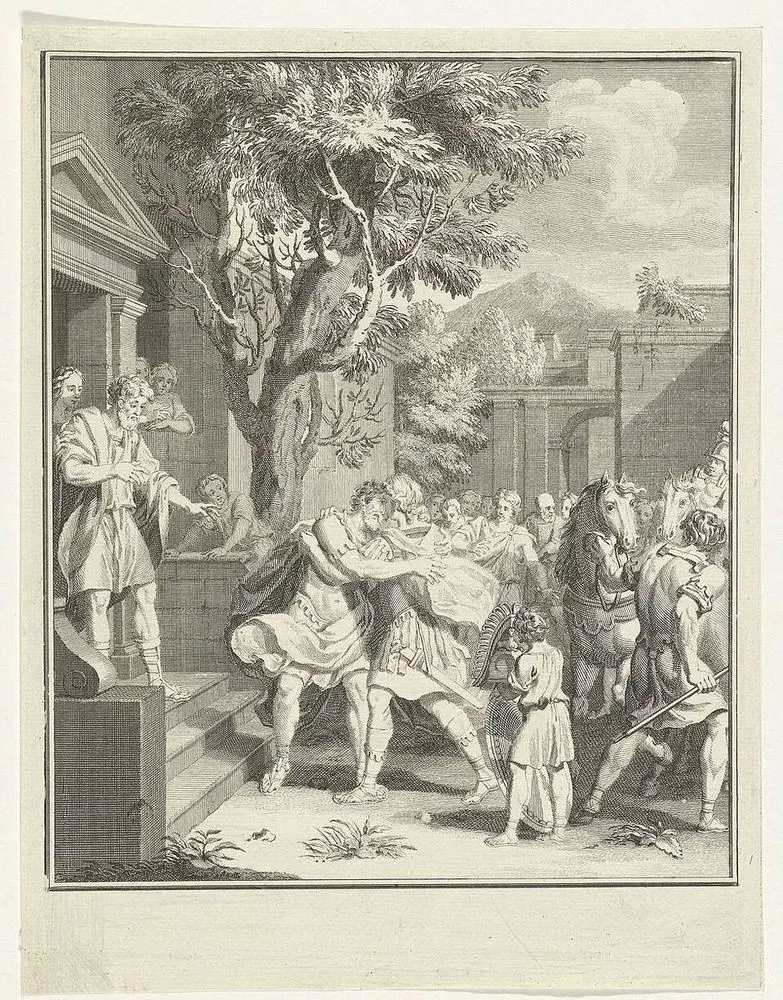
Telemachus intervenes immediately and tells his father not to harm the singer. He also asks that Medon be spared, recalling the herald's kindness to him when he was young. Medon has hidden beneath a seat under an animal skin; hearing the appeal, he emerges and asks for protection himself. Two different histories now matter inside the same violent room: compelled performance and remembered care. Telemachus' ability to speak to his father gives those histories practical force. The episode is not a general tribunal in which every person's experience receives equal examination. It shows a particular intervention stopping particular deaths, within a scene whose power remains drastically uneven.
Leaving the danger does not erase fear
Odysseus allows both men to go into the outer court, away from the continuing slaughter. They sit near Zeus' altar and remain frightened. The text does not require them to celebrate the restoration of order as soon as permission to live has been spoken. Their bodies still occupy the aftermath of an immediate threat, and survival needs distance from the weapons. Remembering this movement keeps mercy from becoming only a flattering quality assigned to the victor. It is also something the spared must be allowed to act upon: standing, moving out and waiting in a place that may offer protection while violence continues nearby.
Listen to the conditions around a voice
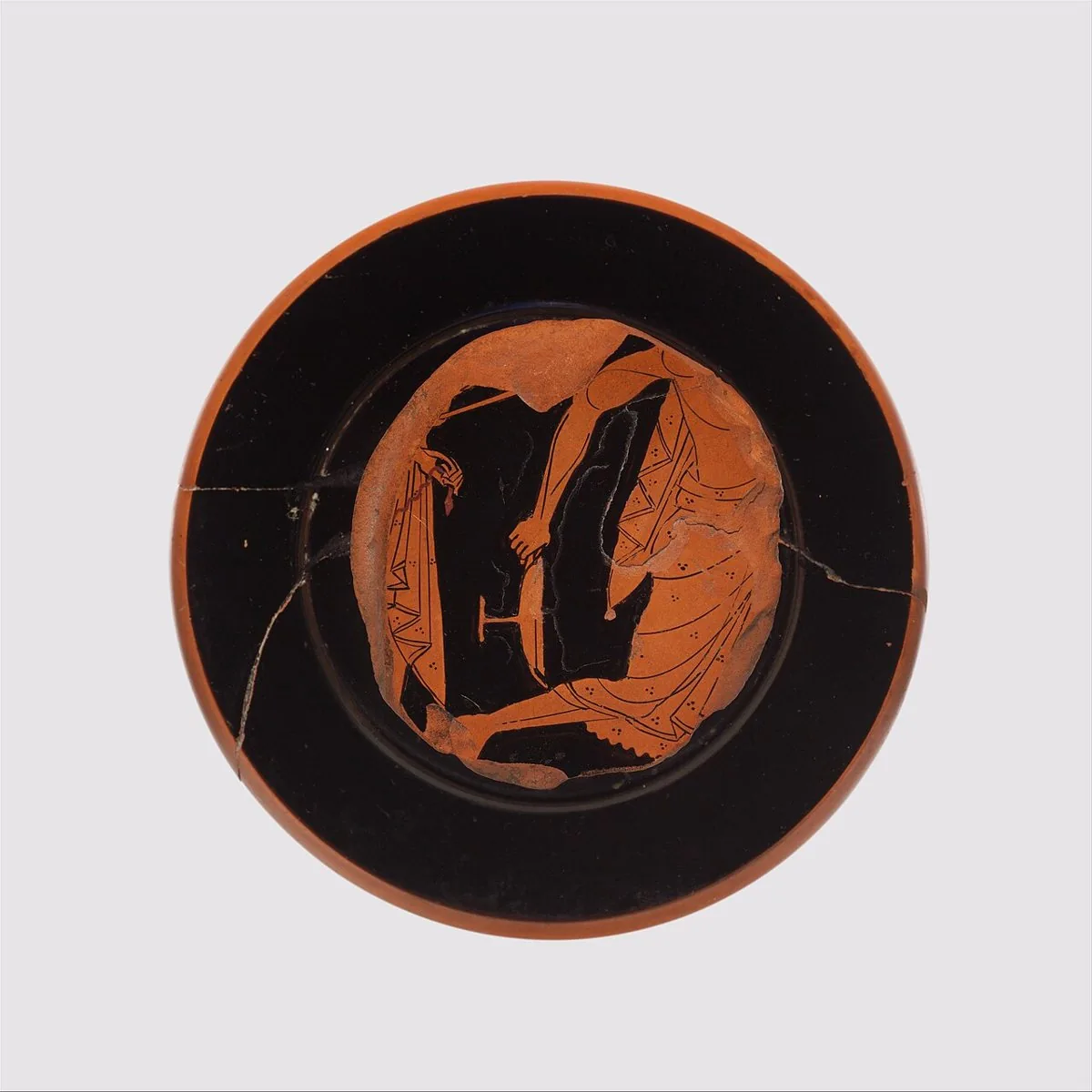
Read with the first book, the rescue makes it possible to distinguish performing for a group from freely belonging to it. It also shows how a witness and an old relationship can change the fate of people who hold no comparable weapons. The ancient lyre-player illustrated here offers a visual comparison, rather than a labelled portrait of Phemius. What the poem adds is a sequence of constrained song, a laid-down lyre, spoken confirmation and a fearful departure. Following those actions invites attention to the conditions under which a voice is heard, and to the people who can make room for its account before judgement becomes irreversible.