The Extensive Power of the Early Goddess
Hesiod's "Theogony" gives Hecate a high status, writing that she can help people in the fields of meetings, wars, athletics, animal husbandry and navigation, and retain her share of heaven, earth and sea. This image is broader than the common modern label of the goddess of witchcraft. She is usually associated with the lineage of Perses and Asteria, and cannot be casually said to be the daughter of Zeus. When reading early poetry, you must first recognize the scope of authority given by the work, and only then can you see clearly what was added to the later image.
The torch lights the search for a daughter
In the Homeric Hymn to Demeter, Hecate hears Persephone's voice when she was kidnapped, joins the mother's search with a torch, and becomes Persephone's companion after the daughter's return. The fire here is associated with disappearances, night walks, and aid, and one cannot conclude from the torch alone that she only represents evil magic. She is located at the boundary between what people can see and what they cannot see, helping the message to pass between the two worlds, and also giving people who have lost direction the opportunity to continue asking.
Forks in the road and triple images
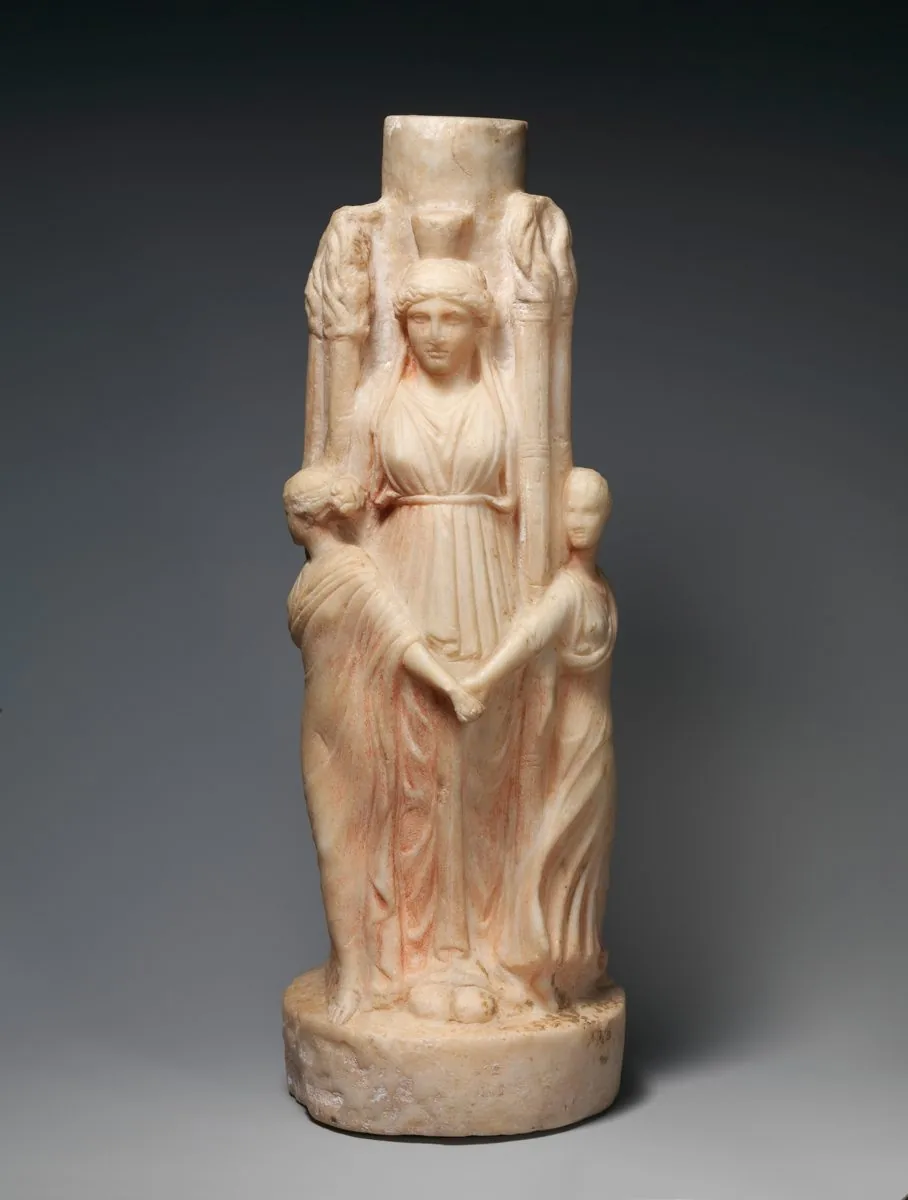
Ancient cults associated Hecate with doorways, intersections of roads, and protection, so the triple image was suitable for facing in different directions. Such body organization is related to specific spaces and should not be automatically interpreted into the modern system of maiden, mother, and crone. Later literature reinforced her association with nocturnal rituals, the dead, and magical potions. Different levels of material influenced each other without at the same time forming a completely unified doctrine; indicating age and context helps avoid projecting modern interpretations onto all ancient works.
Borders can be both dangerous and protective
The goddess standing on the threshold or at the fork in the road reminds people that there is uncertainty in entering and exiting and choosing the path. Guarding the border doesn't mean she creates every danger, just as being associated with the dead doesn't mean she's just the villain of a horror story. When looking at the ancient statue of the triple-bodied Hecate, you can observe the orientation of the figure, the torch and its position, and understand how the image fits into the space. Her multi-faceted nature is more suitable to be entered separately from the early praises, the story of the search for Persephone and local sacrifices, and then compared with the later imagination about magic.