Flower picking interrupted
The Homeric Hymn to Demeter begins with Persephone picking flowers in a meadow. The earth opens, and Hades carries her away. The poem says Zeus has agreed, while Demeter has no part in the decision. Persephone’s cries for her mother make separation and unwillingness the first realities of this divine marriage.
A mother’s anger changes the earth
Searching for her daughter, Demeter comes to Eleusis and withdraws from the gods. She prevents the earth from bearing crops. The crisis reaches beyond a family’s grief: humans face starvation, and the gods will lose sacrifices. The gods must take her demand seriously. The earth’s fertility becomes the means by which she insists on her daughter’s return.
One pomegranate, different arrangements
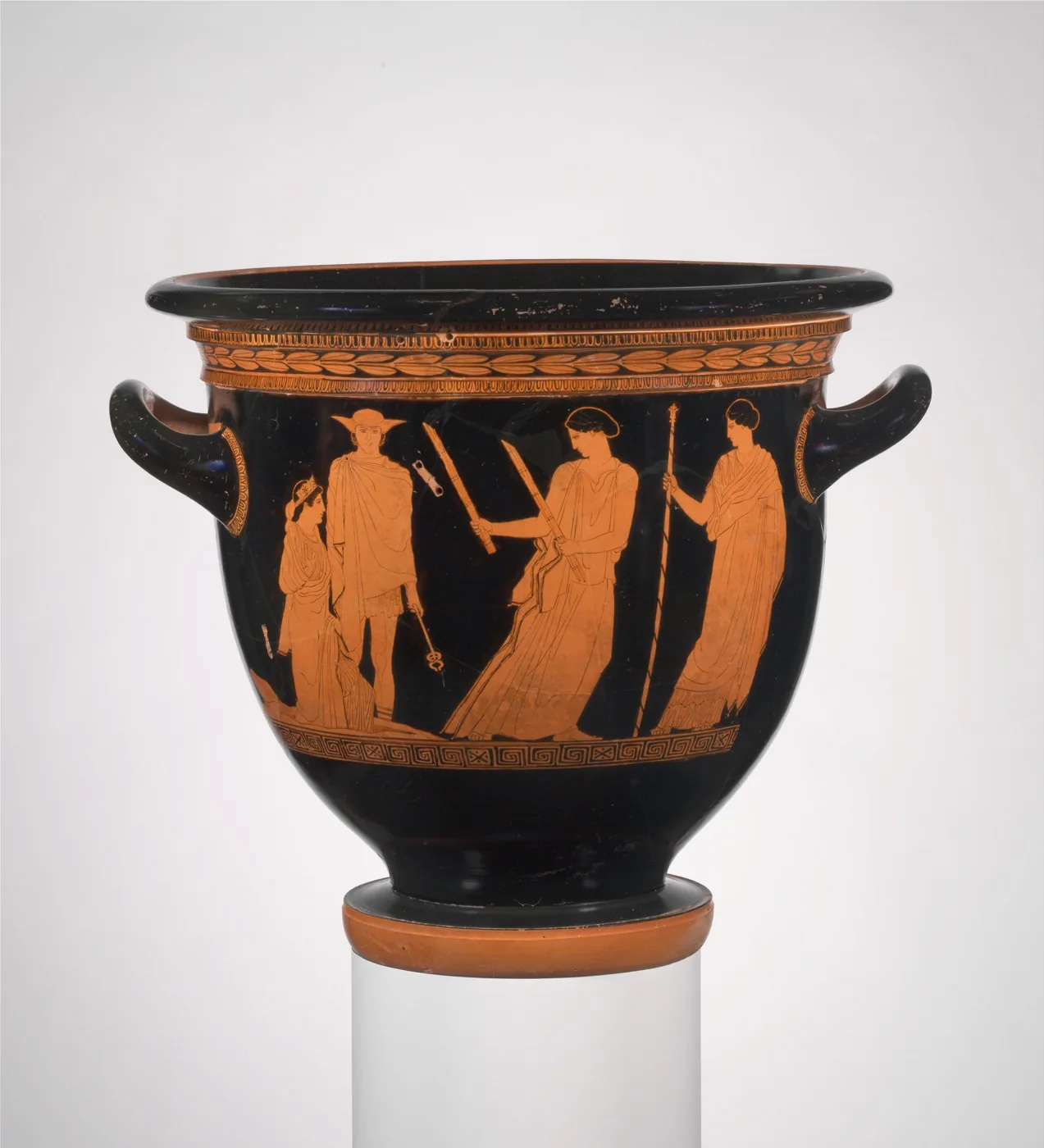
Hermes is sent to bring Persephone back, but eating the underworld’s pomegranate complicates a complete return. In this hymn’s arrangement, she spends one-third of the year below ground and the rest with her mother and the gods. An exact half-year division therefore does not belong to every ancient account.
Book Five of Ovid’s Metamorphoses uses Roman divine names, tells of the pomegranate seeds and divides the year into two equal parts. These narratives can be compared, but should not be silently joined together. Their different proportions of time, speeches and emphases reveal a myth retold across many centuries.
Let each version retain its voice
The story often explains the earth’s abundance and decline, and also connects Eleusinian rituals with experiences of life and death. Reducing it to a seasonal allegory leaves out the negotiations between mother, daughter and gods. Romanticizing it obscures the coercion in the ancient text. Keeping these tensions visible helps explain why reunion is hard won.