Dogs before questions
Book 14 of the Odyssey brings the returning Odysseus into the countryside before his own hall. Disguised as a poor old man, he nearly suffers an attack by his own dogs. Eumaeus drops his leatherwork, drives them away, and leads the visitor inside. Brushwood and the goatskin on which the herdsman sleeps become a seat. Shelter begins before a dependable account of the stranger’s identity. Homecoming briefly loses the appearance of royal triumph: safety at the gate depends on someone who is himself enslaved. Readers know the hidden master; Eumaeus sees a vulnerable body. That difference makes ordinary movements matter. He does not first recognize the king and then decide that this particular visitor deserves protection.
Who raises the animals, who eats
Two young pigs provide the first meal; the best animals keep going to the suitors occupying the royal household. At evening, after the other herdsmen return, Eumaeus prepares a five-year-old boar. Seven portions include one for Hermes and the nymphs, with a choice serving honoring the stranger. Behind this meal lie breeding, firewood, cooking, and division. Eumaeus complains that others enjoy the proceeds of their work. His voice takes us beyond a fable about a generous poor host. Distant feasting consumes labor performed here. The disguised property owner hears how someone responsible for its daily care understands that loss. The food has a history of work before it becomes a welcome.
Doubting news without withdrawing food
Odysseus invents a life story and insists that the missing master will return. Eumaeus refuses that comfort: an earlier traveler disappointed him with similar news. Sympathy for suffering can coexist with doubt about a particular report. The visitor even proposes a wager: if his prediction fails, they should throw him off a cliff. Eumaeus rejects the arrangement. Welcoming a man and then killing him cannot belong to the same responsible conduct. He explains that reverence for Zeus and pity sustain his care, rather than a purchase of hopeful information. Assistance need not certify every statement as true. Caution need not cancel supper. The poem allows the swineherd to retain judgment instead of proving loyalty through easy belief.
A story that asks for a cloak
On the cold, rainy night, Odysseus tells another story, about an ambush at Troy. Its speaker forgot a cloak; the Odysseus within the tale arranged for another soldier to leave his behind while carrying a message. The present telling tests whether Eumaeus will understand a need for covering. He praises the tale, prepares bedding near the fire, and supplies a heavy cloak kept for severe weather. Yet he says the visitor must wear his old clothes again tomorrow: the herdsmen have few spares. Telemachus may later provide clothing. Tonight’s covering is therefore a loan, not an already completed gift of a new outfit. Understanding the request differs from accepting every narrative detail. Eumaeus answers the cold that is real before him.
The guest sleeps; the herdsman goes out
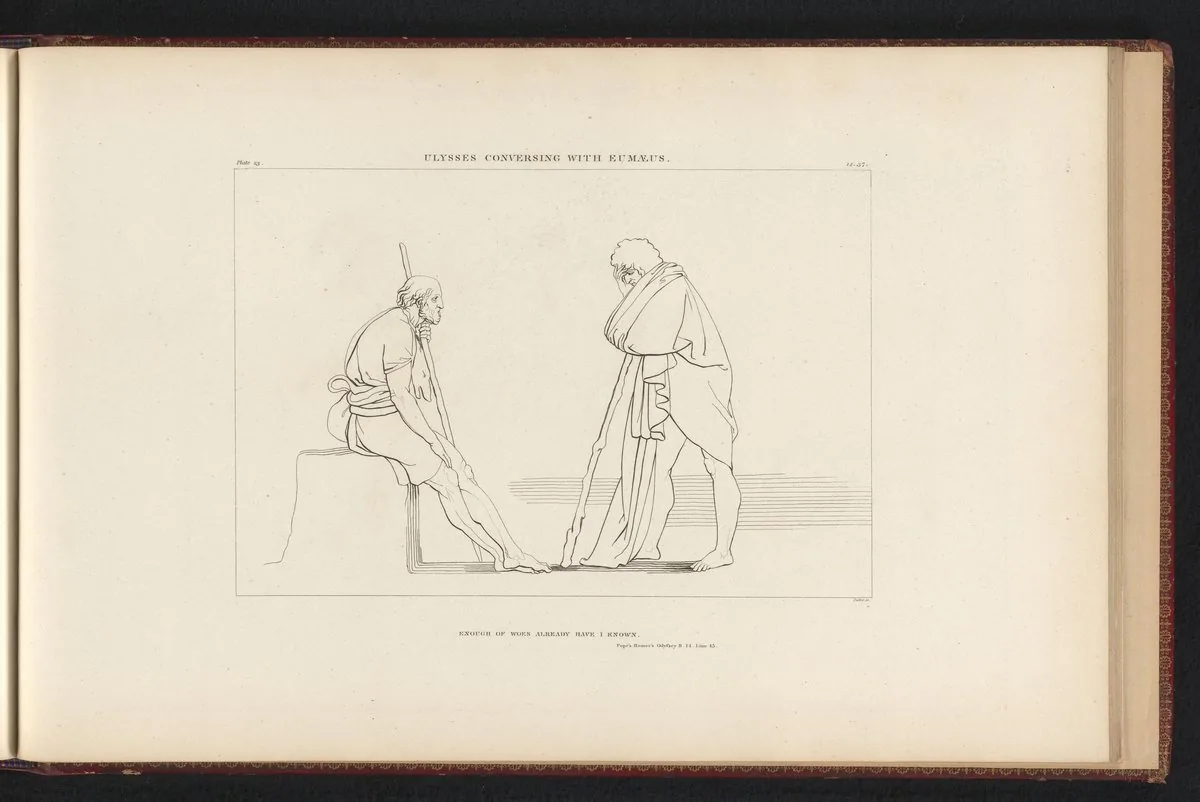
While the guest sleeps, Eumaeus dresses, takes weapons and a goatskin, and goes outside to guard the pigs. Rest indoors depends on continuing work outdoors. Thomas Van Nortwick’s Dickinson commentary considers how anonymity opens a relationship outside heroic rank; we should also notice what remains unchanged. Eumaeus was purchased for service, while Mesaulius, who brings the bread, was bought by Eumaeus himself. Capacity for care and participation in enslavement coexist. The hut is not an equal society, and this night does not free its host. Before recognition or reward, however, a person under constraint already distinguishes rumor from evidence, distributes food, and decides how to meet another person’s immediate need. Reading his decisions keeps him visible beyond his usefulness to the returning hero. A Rijksmuseum print by James Parker after John Flaxman, dated 1805, keeps the two conversing men together. The museum identifies Book 14, rather than the later father-and-son recognition in Book 16.