The promise that sends him out
In Book 10 of the Iliad, the camps face an anxious night. Hector asks for someone to discover whether the Achaeans still guard their ships or intend to flee. Dolon volunteers, asking for Achilles' horses and chariot as his reward. Hector swears to grant them, though the narrator already marks the promise as futile. Dolon is not an anonymous shape in the darkness: the poem identifies his father Eumedes, his wealth, his running ability, and his place among five sisters. These details give a household to the man who is about to leave it, while the promised horses attach his hope to someone else's famous possessions.
The pursuer becomes the pursued
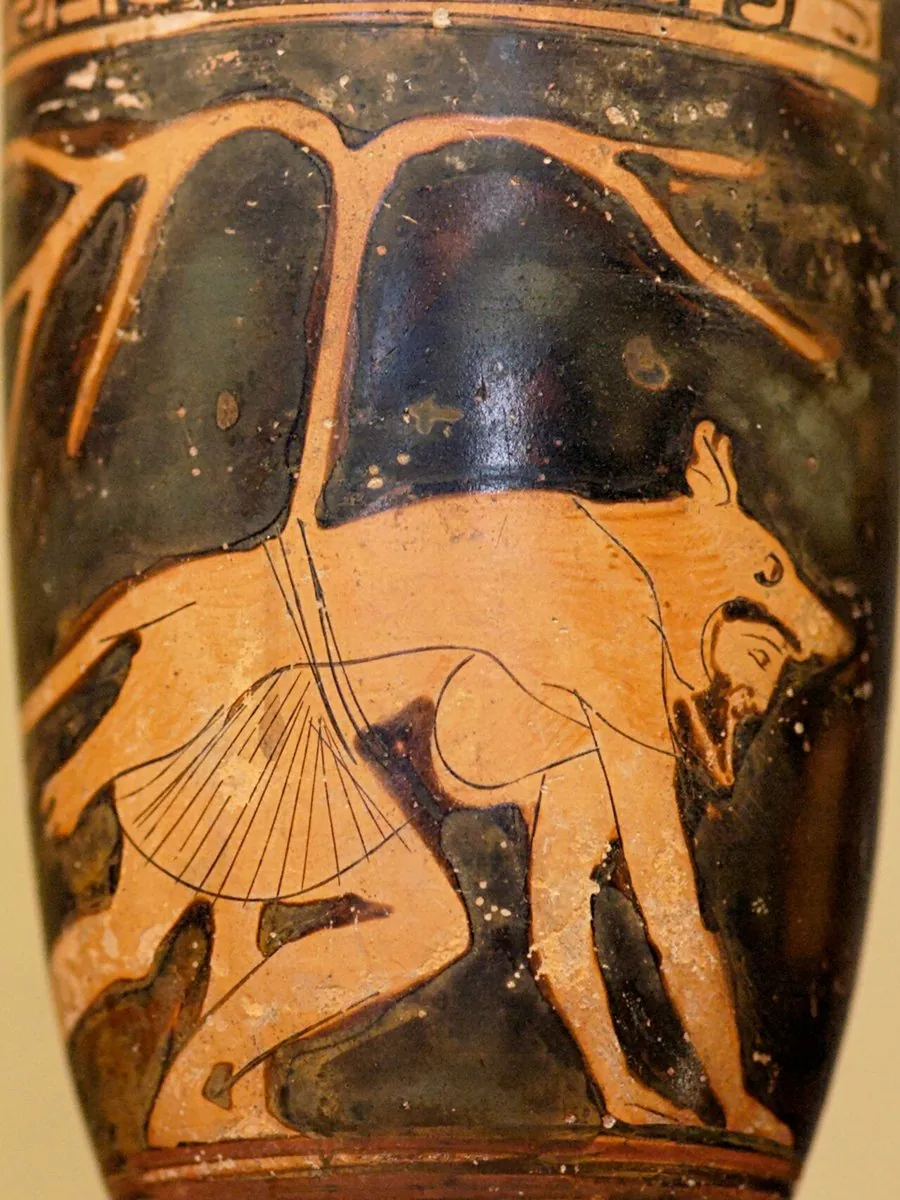
Dolon wears a wolf skin and carries weapons as he moves toward the ships. Odysseus and Diomedes are themselves outside the camp on a night mission. They notice him, let him pass, and cut off his retreat. At first he mistakes the following footsteps for friends from his own side. The moment of recognition reverses his situation: the scout who hoped to observe unseen becomes the person observed and captured. The encounter depends on distance, mistaken expectation, and the ability to block a route. It is not a formal challenge between fighters announcing themselves before assembled armies.
A conversation under unequal control
Dolon asks to be taken alive and offers ransom. Odysseus tells him not to fear death, then questions him about his purpose and the Trojan camp. Dolon gives information about arrangements and the recently arrived Thracians under Rhesus, whose horses attract particular attention. He even proposes being bound while the answers are checked. The text lets his hope of survival remain audible through these offers. Yet useful information does not give him control over what follows. Reassuring words and the captive's interpretation of them cannot by themselves establish a secure agreement between people who possess such unequal power.
The answer does not buy a return
Diomedes decides that releasing Dolon would allow him to threaten the Achaeans again and kills him despite the information provided. The two then act on the intelligence, attacking the sleeping Thracians and taking the horses. A retelling can keep this violence clear without reproducing the passage's bodily detail. The mission succeeds from the raiders' perspective, while the person whose answers made it possible does not return to his family. Both results belong to the episode. Calling it only a triumph of clever scouting would remove the human cost that the poem has already made specific through Dolon's fear, speech, and household.
Another crossing of darkness
Book 24 offers a different night passage: Priam enters the enemy's world to recover Hector's body, with Hermes as his guide. That journey leads to an encounter in which a plea is eventually heard. Priam is not a captured scout, and the circumstances should not be treated as identical. Reading the scenes beside each other nevertheless shows how darkness can hold very different relations of trust. One traveller gives knowledge without receiving safety; another receives guidance toward a dangerous conversation. The contrast keeps the night from becoming merely a backdrop for heroic adventure. Who can speak, who can promise, and who can return remain decisive questions.