Separation divides the traditions
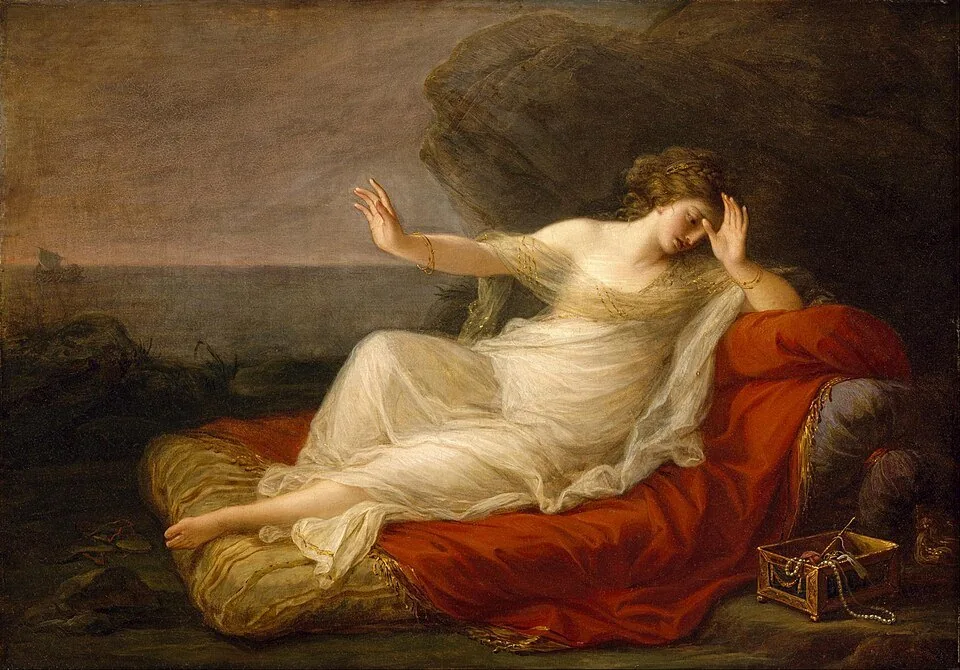
Ariadne helps Theseus escape the labyrinth and then sails away with him, but they part on an island. Ancient texts explain this separation differently. Book VIII of Ovid’s Metamorphoses says that Theseus leaves her there and that she laments her abandonment. Homer’s Odyssey mentions another ending connected with Artemis and Dionysus. This article follows Ovid’s path toward Dionysus, without placing the version in which Ariadne dies before the version in which she marries him.
The departing ship makes Ariadne confront the time of being left behind: for those sailing away, the story keeps moving, while change temporarily stops for the person on the island. Dionysus’ arrival opens another thread without needing to prove that her earlier help for Theseus was a mistake. She can be read as someone who experiences contribution, loss, and renewed relationships, rather than having her whole life defined solely by the identity of her eventual husband.
Dionysus changes what comes next
In the Metamorphoses, Bacchus approaches Ariadne with love and embraces, offering an alternative to the isolation that follows the loss of her lover. Hesiod’s Theogony also names her as Dionysus’ wife and says that Zeus made her immortal and free from old age, but does not describe the island encounter in detail. These texts can be read side by side. The shorter account in the Theogony should not be treated as a novel already containing every detail of the separation.
A crown finds a lasting place
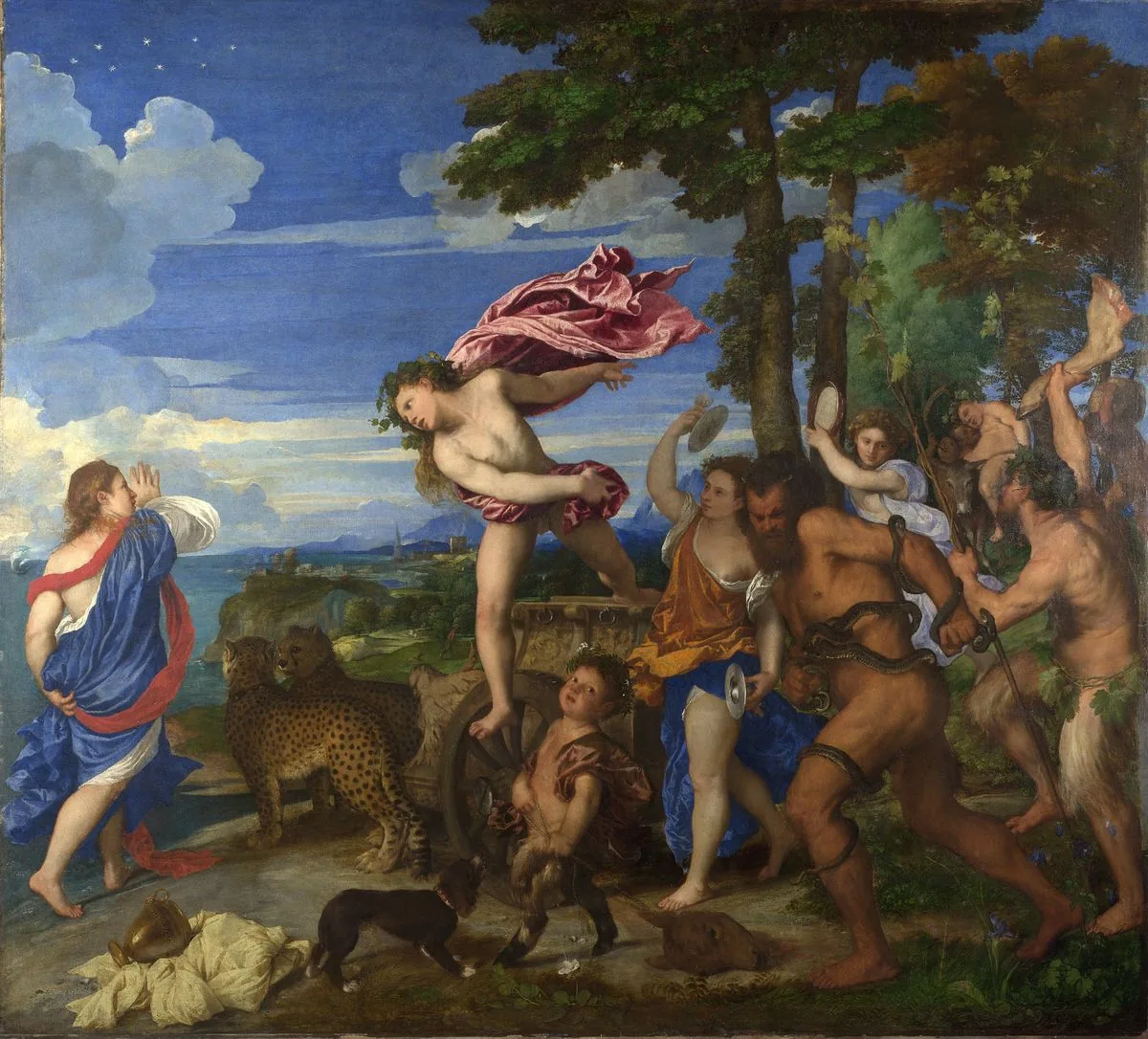
Ovid has Bacchus cast her crown into the sky, where its jewels become stars while preserving the crown’s shape. This ending turns a removable ornament into a continually visible memorial and creates a new spatial relationship with her island gaze toward the receding ship. Titian’s painting brings the turning woman, Dionysus leaping from his chariot, and the crown of stars into one scene, compressing the encounter and its conclusion. Viewers can recognize these different moments without treating every action as a realistic record of the same second.