The goddess sits beside the well
In the Homeric Hymn to Demeter, after losing Persephone the goddess takes the form of an old woman and comes to Eleusis. The daughters of the local king Celeus meet her at a well and bring her to their mother Metaneira. Demeter refuses the high seat and wine and remains silent. The servant Iambe’s behavior makes her laugh, and she accepts a drink of barley, water, and mint. These small gestures bring a stranger out of the isolation of grief and into a temporary connection with a family.
The goddess does not immediately reveal herself to the unfamiliar household, whose members treat her as an ordinary caregiver. This concealment makes protection and danger difficult to distinguish. The relatives’ cries are not merely interference: they also come from an ordinary sense of responsibility. By placing the misunderstanding between gods and mortals within a family, the poem shows the distance between their conditions of life more effectively than a simple account of a great miracle.
The secret of the infant and the hearth
The goddess cares for the infant Demophon, anoints him with divine ointment, breathes softly upon him, and places him in the fire at night, preparing to free him from old age and death. His mother discovers him among the flames and interrupts the secret work with a terrified cry. Demeter reveals her divinity and reproaches mortals for failing to recognize what is happening, thereby preventing the completion of his transformation into immortality. The mother’s response cannot simply be called foolish: for a mortal, fire first signifies danger, and she does not know the caregiver’s identity or purpose.
The gift moves from body to ritual
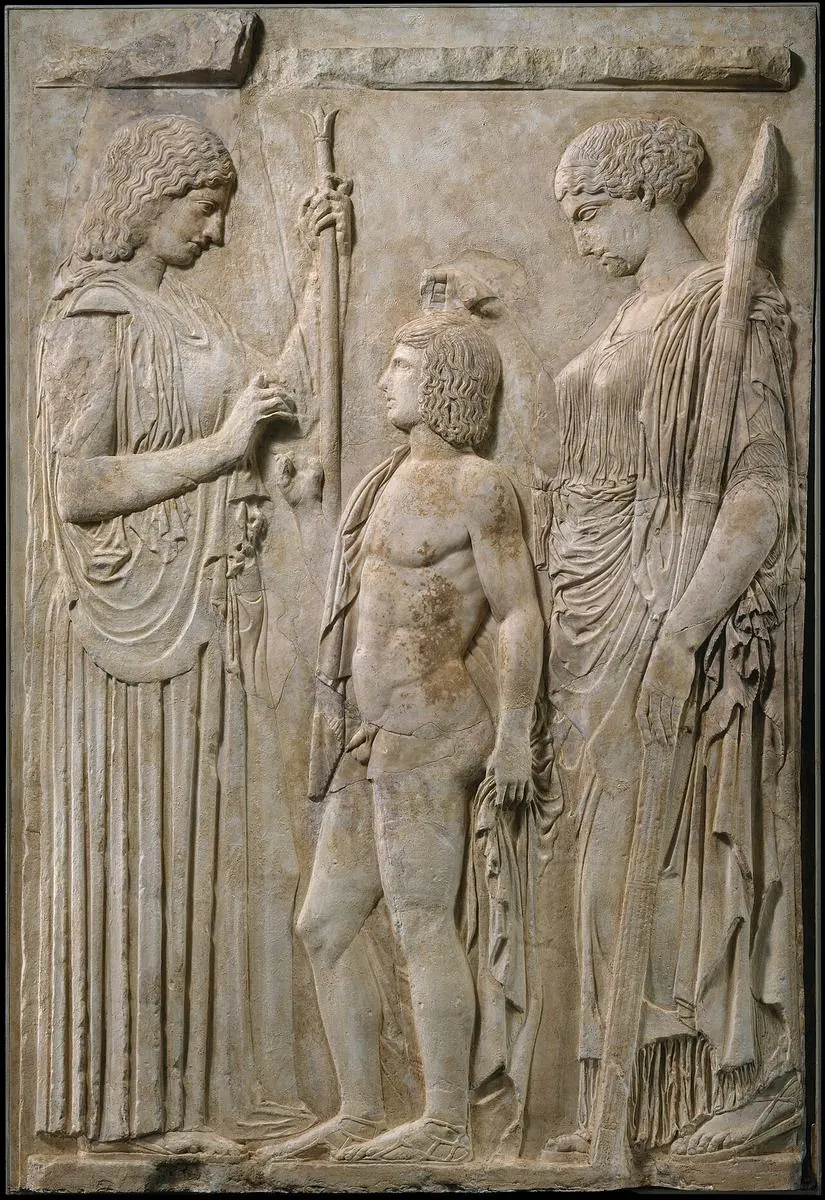
The goddess asks the local people to build her a temple. There she continues to withhold the growth of crops until the arrangements for her daughter’s return are settled. Finally she reveals sacred rites to local figures, and the poem stresses that these matters must not be disclosed casually. Demophon does not become physically immortal, but mortals’ relationship with the goddess continues through sanctuaries and rituals. Triptolemus in the accompanying image is a familiar figure of agriculture and Eleusis, rather than Demophon in the fire. Distinguishing their names prevents different gifts and narrative scenes from being collapsed into one.