News of return brings another woman
Sophocles places the waiting Deianeira outside her home in Women of Trachis. Heracles has not appeared, but messengers bring news of victory and women taken from a conquered city. Seeing one young captive’s sorrow, Deianeira first asks her name and wishes to spare her further distress. Only when Lichas’s concealment is exposed does she learn that this is Iole, daughter of Eurytus, whom her husband desired and fought to possess. Homecoming now has another side: the hero will return, but the household has already changed. Deianeira fears that her youth is fading and only the name of wife will remain hers. This anxiety exists alongside her pity for the captive, giving her more than a single jealous motive.
Why something from the river becomes a gift
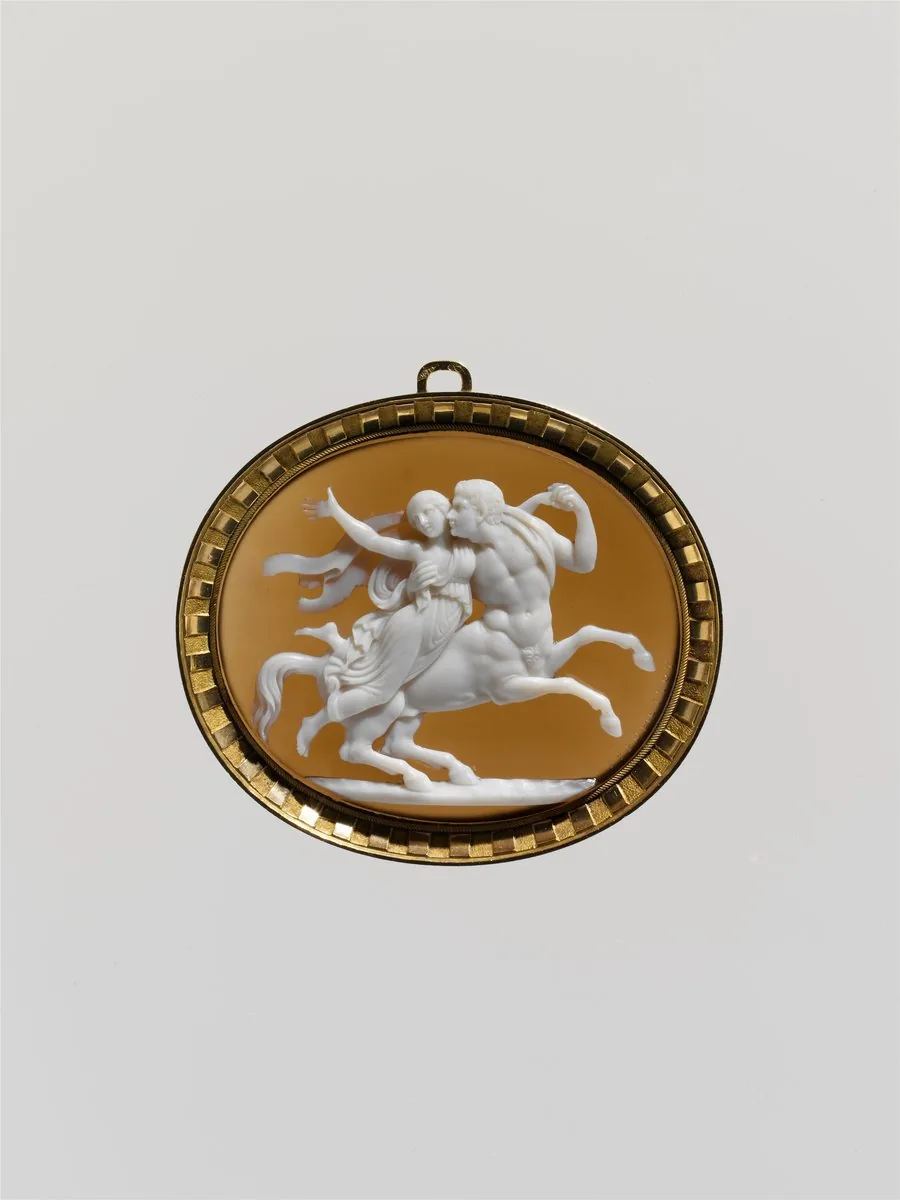
She remembers crossing the river Evenus soon after her marriage. Nessus the centaur carried her through the water but attempted to assault her; she cried out, and Heracles shot him. In her account within the play, the dying Nessus told her to preserve blood clotted around his wound, promising that it would keep her husband from loving another woman more. The arrow carried the poison of the Lernaean Hydra, so an enemy’s blood retained the danger of the hero’s own weapon. Library 2.7.6 also tells of the crossing and deception, but adds another ingredient and places the shot differently. Following the tragedy, what matters is her decision to store her attacker’s final promise as future assistance. Death has not ended his ability to retaliate.
A little wool in the sunlight
Following the old instructions, Deianeira treats a robe she has woven herself, packs it in a chest, and sends it with Lichas. She directs that it remain away from sunlight and fire until the sacrifice. After his departure, she notices that the wool used to apply the substance has fallen into sunshine. It shrivels and crumbles, leaving foam on the ground. This small object reveals danger more clearly than the attractive promise did. Now she asks why Nessus would help those responsible for his death and recalls the power of the poisoned arrow. Sophocles places understanding after the gift has already left. She can finally connect river, venom, and visible change, but her new knowledge cannot overtake the messenger.
The son reports suffering before understanding intention
Hyllus returns to say that his father put on the robe beside the altar. When the sacrificial fire blazed, the fabric gripped his body and terrible pain began. Heracles angrily killed the bearer Lichas and was carried back to Trachis. The son accuses his mother as though she deliberately planned the attack; she goes silently indoors. Household servants finally help Hyllus understand the centaur’s deception and his mother’s ignorance of its effects, but when he returns to her side, he finds her dead. His understanding has come too late. He subsequently tells his father that she hoped to restore affection with a supposed love charm. This explanation cannot undo the injury, but it changes the distribution of responsibility. Deception, fear, hurried judgment, and the hero’s own violence all belong to the household’s catastrophe.
Seeing the river while remembering the robe
The Met’s cameo Nessus Abducting Dejanira, made by Giuseppe Girometti around 1815–25, compresses resistance in the river and the shot from the bank into a small image. It shows the earlier crisis; knowledge of the robe lets a viewer follow that arrow toward the distant household. In the play Heracles finally understands that the dead being foretold as his destroyer is Nessus. The promised end of his labours likewise means something other than the peaceful remaining life he expected. He demands transport to Mount Oeta, but the stage does not show the ascent to heaven and immortal marriage later narrated in the Library. Staying with the tragedy leaves an uneasy question: when was danger already present, and when did people finally understand it?