A chamber built against a prophecy
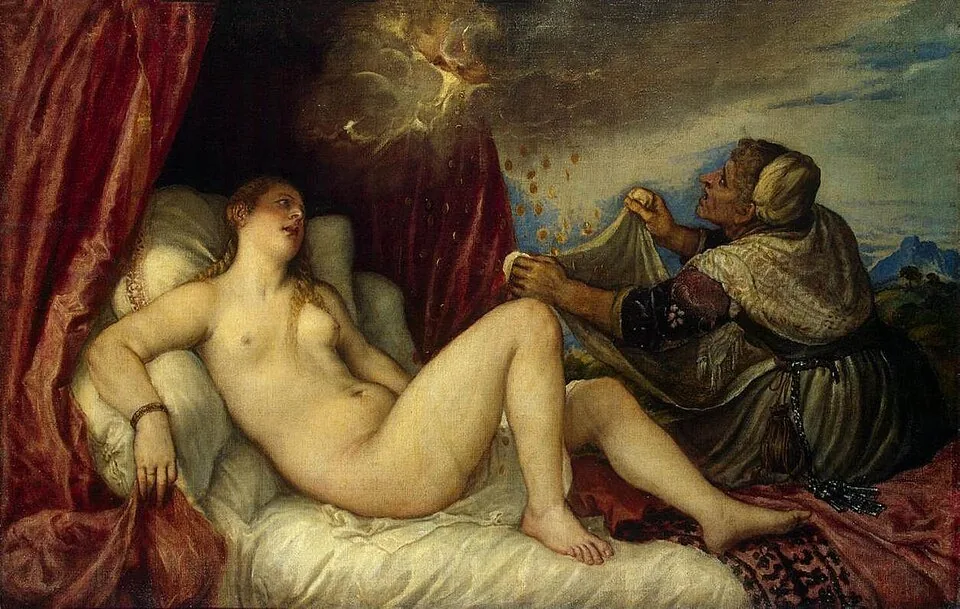
Acrisius, king of Argos, asks an oracle whether he will have a male heir. The answer is that his daughter will bear a son who will kill him. The Bibliotheca says that he then confines Danae in an underground bronze chamber. Her imprisonment punishes no fault of her own; it is her father’s attempt to control descendants not yet born. Beds, curtains, and luxurious interiors familiar from paintings are often settings devised by later artists. The ancient chamber is more closely connected with strict precautions against succession and death. Its defensive purpose should be distinguished from a painting’s seductive decorative effects.
The god enters; mother and child are expelled
In the familiar version, Zeus becomes a shower of gold and passes through the roof to Danae, who gives birth to Perseus. The Bibliotheca also preserves an alternative account linking the child to the king’s brother Proetus, rather than endorsing only one explanation. Acrisius refuses to believe that Zeus is the father, places his daughter and the infant in a chest, and casts them into the sea. They drift to Seriphos, where Dictys rescues them. The golden rain and wooden chest embody opposite movements: a god penetrates an enclosed space, while a mortal casts his relatives into an uncontrollable sea. Mother and child survive through others’ help, rather than simply through the destiny of a hero supposedly bound to succeed.
An oracle fulfilled unexpectedly
After growing up and rescuing Andromeda, Perseus prepares to return to Argos, but his frightened grandfather has left. During athletic games, a discus thrown by Perseus accidentally strikes Acrisius, fulfilling the oracle. The story does not devise a deliberate act of revenge against a parent; instead, the most strenuous precautions eventually encounter chance. Ovid also invokes the birth through golden rain as proof of Perseus’ divine descent, but this brief poetic reference differs from the family history emphasized in the Bibliotheca. Looking at Titian’s Danae and other paintings, viewers can notice how golden rain becomes a symbol of coins, light, and desire. This is the image’s own interpretive layer; confinement, expulsion, and rescue must still remain in the story.