A royal dispute before a wedding night
Bibliotheca 2.1.4–5 begins with two brothers. Aegyptus has fifty sons, Danaus fifty daughters, born to different mothers. After a quarrel over the kingdom, Danaus takes his daughters away by ship and eventually reaches Argos. His nephews later arrive seeking reconciliation and marriage to their cousins. He distrusts their assurances but agrees, distributing the brides among them. As the eldest daughter, Hypermnestra is assigned to Lynceus. Remembering this background prevents the wedding from becoming merely a decorative setting for forty-nine murders. Migration, authority, and distrust precede the couples’ meeting. The compiler describes a father allocating marriages; that does not mean we have heard every daughter freely accepting the arrangement. The family’s political problem has entered the rooms where the marriages are supposed to begin.
A father supplies daggers; a daughter refuses
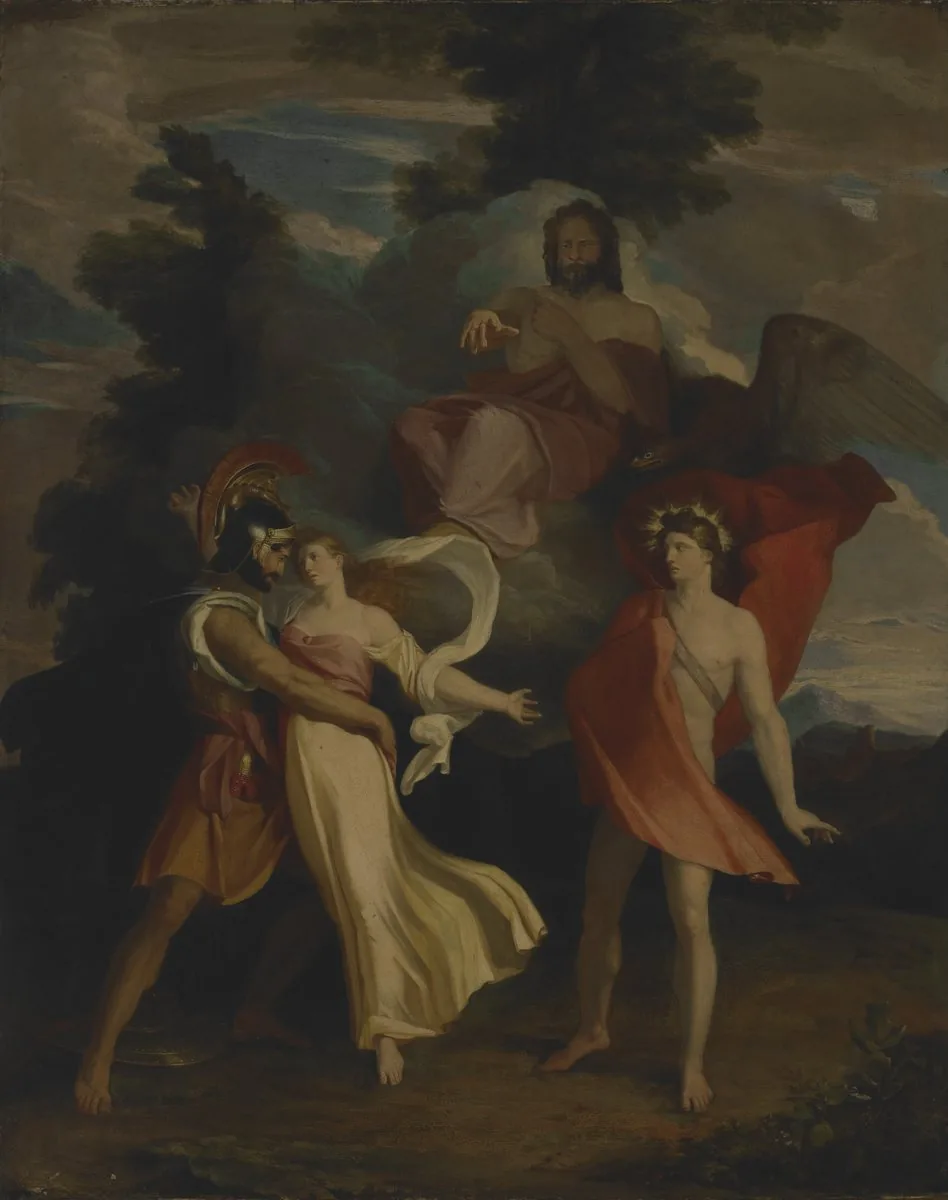
Danaus holds a feast and gives his daughters daggers. They kill their husbands as the men sleep, except for Hypermnestra, who spares Lynceus. The Library offers a specific reason: he has respected her virginity. We can understand this as his not forcing the sexual consummation of their marriage, without inventing an extended agreement absent from the account. Her father responds to her disobedience by imprisoning her under guard. Her exception therefore brings confinement before any family approval. On the same night, a father makes killing a daughter’s duty, and she is punished for not killing. Obedience and refraining from harm come into conflict. She also stops being an interchangeable unit within the convenient number fifty: the narrative must now explain what she did differently.
Another poem lets her urge an escape
Horace’s Odes 3.11 opens by invoking Mercury and the powers of a musical instrument. Its speaker wants Lyde to listen to the story of Danaus’ daughters. An unnamed bride is then praised for refusing her father’s command; the plot identifies her as Hypermnestra. The poem gives her a voice urging her young husband to rise. Danger comes from an unsuspected direction, she warns, and she will neither strike him nor keep him shut inside. She is prepared for her father’s chains or banishment, yet tells him to leave while night and Venus favor flight. This is a voice arranged by a Roman poet, rather than a verified transcript to insert before the Library’s imprisonment. Beyond leaving a dagger unused, she actively helps someone find a way out.
A leaking vessel is not every author’s ending
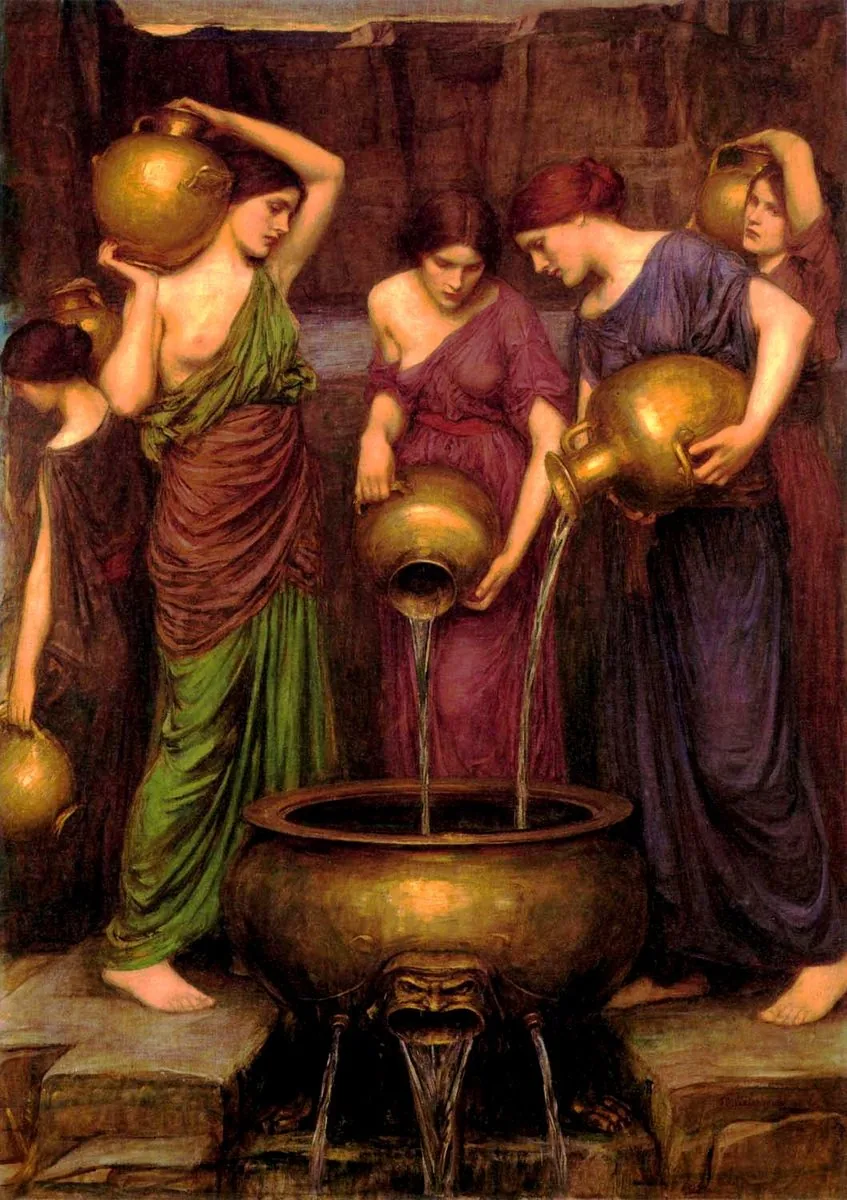
Horace’s poem also describes punishment below the earth: water escapes through a vessel’s bottom, frustrating the daughters’ labor. Bibliotheca 2.1.5 supplies a different continuation. The sisters who killed their husbands bury the men’s heads, perform funeral honors for their bodies, and are purified by Athena and Hermes at Zeus’ command. Danaus subsequently unites Hypermnestra with Lynceus and gives his other daughters to victors in an athletic contest. This passage does not place them beside a leaking container in Hades. A memorable water-carrying image should not fill every ancient text’s silence. Comparison asks what futures different authors give these women. It does not turn punishments, purification, and weddings into consecutive chapters of one complete biography that none of the sources actually tells.
The woman who did not kill watches from a window
A plate made in 1537 by Francesco Xanto Avelli, now in the Walters Art Museum, shows Lynceus taking Danaus’ crown while Hypermnestra looks down from a window. The museum explains its continuation through reunion and changed kingship; Cupid holds a plaque anticipating love’s victory. This later scene does not establish that Bibliotheca 2.1.5 also described Lynceus killing his father-in-law, or replace the still-anxious bride heard in Horace. It makes different positions visible: a sword-bearing man occupies the center of action, while the woman who withheld her dagger remains above. Returning to the wedding night, we need not hurry to give her a further magnificent reward. Her action is already precise: ordered to end another life, she leaves that person able to depart.