The god who sees everything fixes his gaze on one person
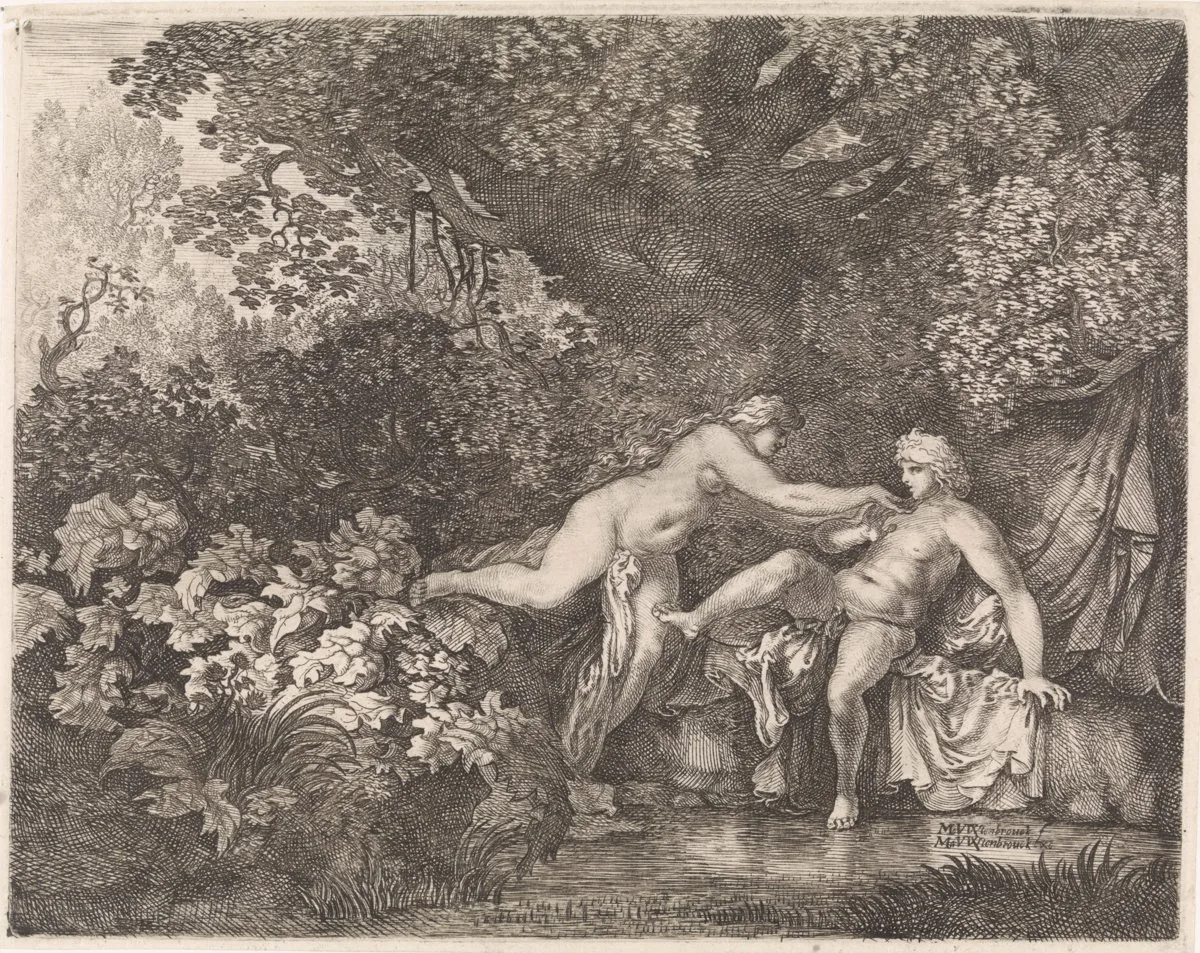
In Book 4 of the Metamorphoses, Leuconoe tells the Sun’s love story while weaving with her sisters. The Sun first discovers the secret of Venus and Mars and tells her husband. Venus retaliates against the watcher through desire, making him love Leucothoe. Ovid’s Latin calls this god Sol, a son of Hyperion associated with the Greek Helios. Clytie, who desired his intimacy, is now among those neglected. The opening already arranges a reversal: the god whose sight exposed another relationship becomes absorbed in watching one woman. Desire disturbs even his work of lighting the whole world. Looking is a power in the story, but its possessor does not remain outside the consequences of what he sees.
News reaches a father, and danger falls on his daughter
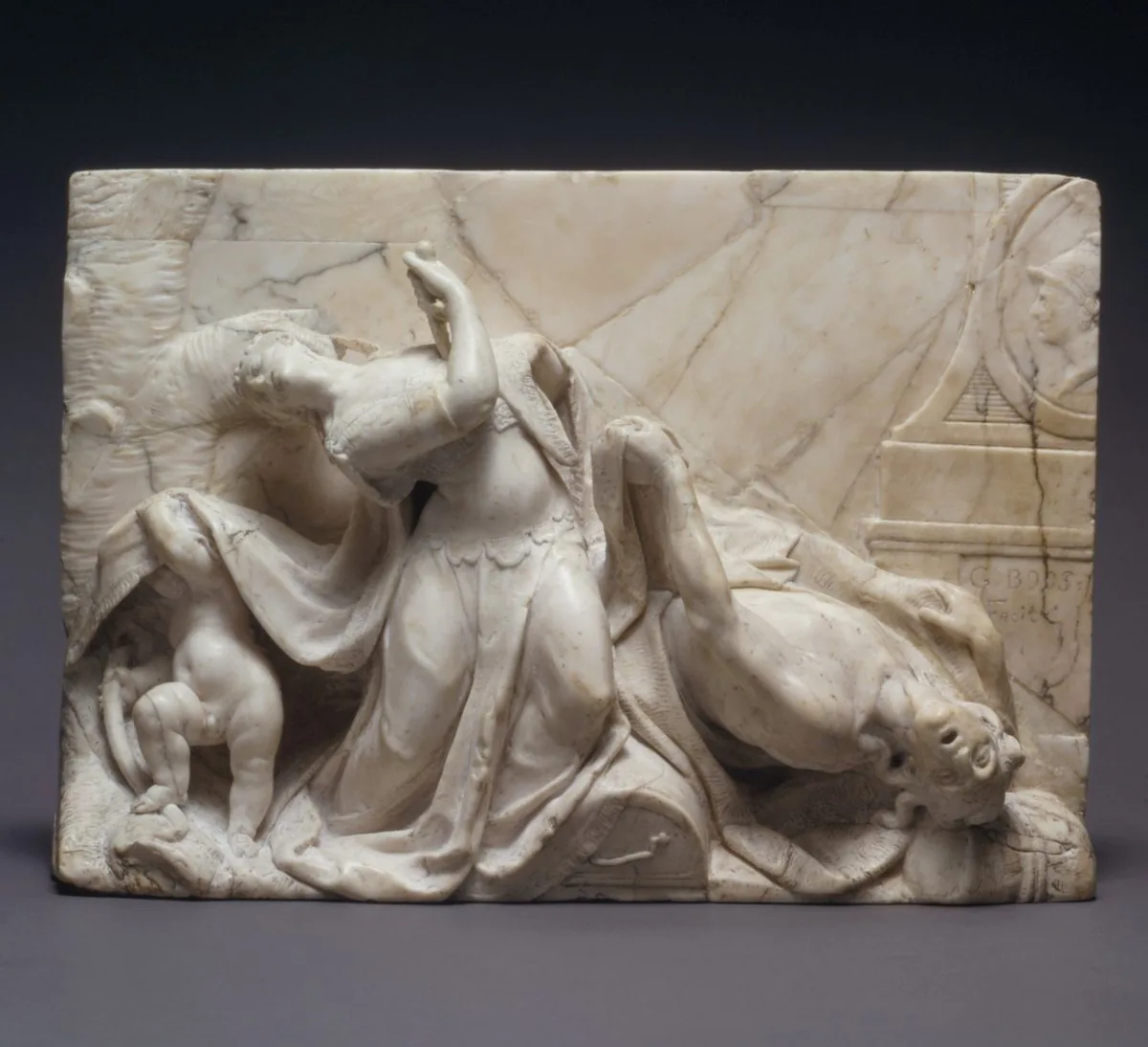
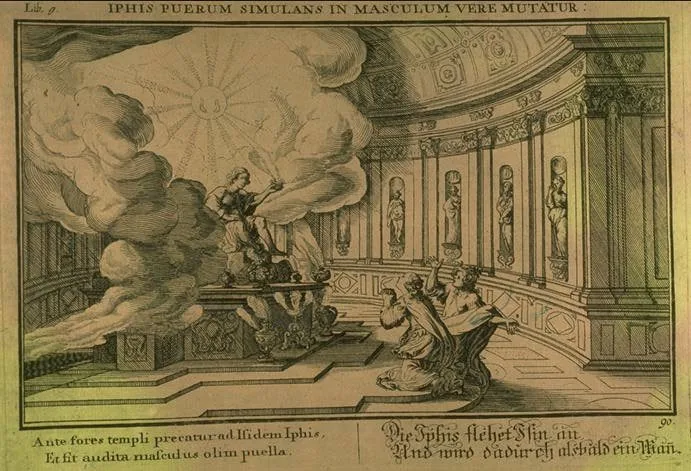
Sol enters Leucothoe’s weaving room disguised as her mother, dismisses the servants, and then reveals his divine identity. Jealous Clytie publicizes the relationship and tells the girl’s father, Orchamus. He buries his daughter alive; the Latin poem preserves her statement that she was forced. That voice deserves to remain audible beside any beautiful picture of romance. Clytie’s disclosure contributes to the harm, while the father’s violence and the god’s initial disguise each retain their own responsibility. When a woman harms another through jealousy, reducing every consequence to rivalry for affection makes the person buried underground lose her speaking place again. The sequence asks us to keep several actions in view rather than let the most memorable flower cover them.
Frankincense grows before Clytie’s flower
The Sun parts the sand with his rays and tries to restore Leucothoe, but he arrives too late. He sprinkles nectar on her body and the ground; a fragrant shoot then rises through the burial mound, becoming frankincense. Only afterward does the poem return to Clytie: Sol no longer approaches her, and disclosure has not restored the love she wanted. These neighboring transformations must remain distinct. A dead young woman becomes an aromatic plant; a nymph still watching will become a flower that follows the Sun. Divine power changes the shape of what remains, without undoing what happened. Fragrance and color preserve memory, neither exchanging the women’s endings nor returning either of them to her earlier life.
Roots hold the body while the gaze keeps moving
Clytie withdraws from the nymphs and sits outdoors, her hair loose, through days and nights. For nine days she takes no ordinary food or drink; the poet imagines dew and tears sustaining her. She watches the passing god and turns her face toward him. Her limbs gradually fasten to the soil, pale parts become vegetation, and a flower resembling a violet covers her face. Even held by roots, she turns toward the Sun. Movement and immobility occupy the same image: her object continues across the sky, while the life left below can only turn. Love survives the change, but its survival looks lonely. We can feel sorrow for her and still remember the harm Leucothoe has already suffered.
Later sunflowers bring interpretation into the artwork
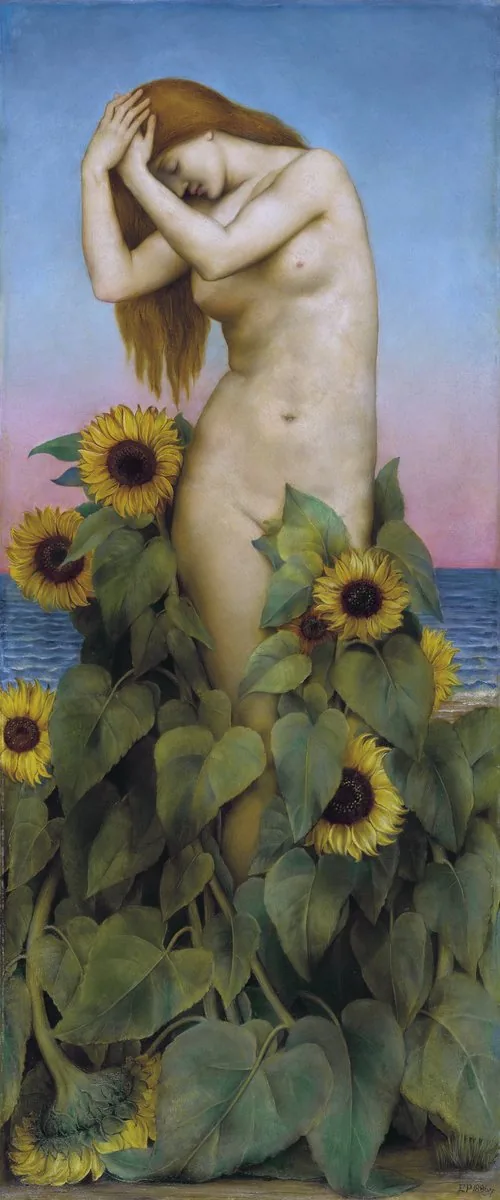
Later art often gives Clytie a sunflower. The Smithsonian holds Hiram Powers’ sculpture modeled around 1867, with a flower in her hair marking her fate. Ovid describes something violet-like, commonly called a heliotrope, without identifying a modern garden variety. Kew records the common sunflower as North American and brought to Europe in the sixteenth century. A visible distance therefore separates later floral imagery from the ancient poem. Looking at sculpture, we can consider both how a beautiful figure is made and which part of a story an artist preserves. A flower readily keeps Clytie’s gaze before us. The fuller narrative also invites us to remember the other person whom that gaze can leave in its shadow.