The voyage pauses over a name
In Book 14 of Ovid's Metamorphoses, Aeneas' voyage passes a series of shores and islands. Near the Italian coast, the narrator notices Pithecusae and explains its unusual inhabitants. For a moment, the Trojan hero's larger journey stops being the only story that matters. A place along the route receives its own account of change. This kind of pause is part of the poem's construction, not a geographical mistake to remove. The traveller passes onward, while the narrator allows an island name to open a small narrative that does not require Aeneas himself to cause or witness the original event.
A judgement against deceptive speech
Jupiter is said to have detested the frauds and false oaths of the Cercopes. Ovid gives a collective explanation rather than a detailed trial of two individually named defendants. The transformation takes away their human shape and their command of language. It is therefore important not to invent the exact promise, victim, or bargain behind the punishment. The passage supplies a moral judgement, but leaves many particulars unstated. A careful retelling can explain what the narrator condemns without manufacturing a complete case file. The god's decisive action is much more fully visible than the circumstances of each alleged offence.
Human resemblance without human words
Their limbs contract and bend, their noses flatten, their faces wrinkle, and hair covers their bodies. Ovid emphasizes beings unlike humans who nevertheless resemble them. The changed creatures retain harsh vocal sounds, but lose the speech associated with their earlier deceit. The result is not pure silence; it is a separation between making noise and controlling intelligible words. That distinction gives the episode its particular texture. The poem uses bodily resemblance and altered communication to imagine a boundary between human and animal. Its language of ugliness belongs to the narrator's moral framing, not to a scientific classification or a judgement readers must apply to real animals.
Heracles captures them elsewhere
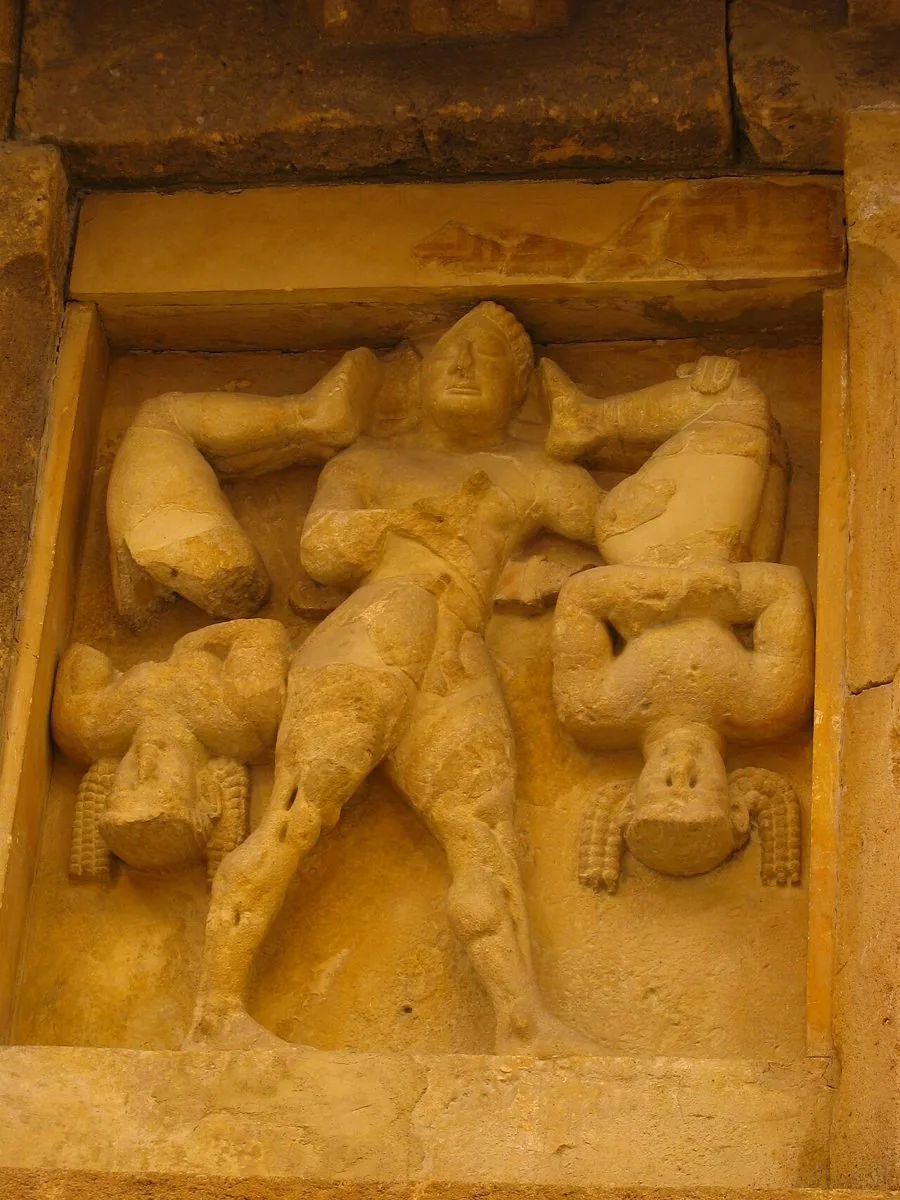
Library 2.6.3, attributed to Apollodorus, places the Cercopes in another story. During his servitude to Omphale, Heracles captures and binds them at Ephesus. This account does not tell us that Jupiter subsequently transforms those prisoners into the island creatures of Ovid's passage. It records a different situation with a different central actor. The ancient relief chosen for this article shows Heracles carrying two captured figures, making that other tradition visible. It should not be described as an image of Aeneas meeting monkeys. Text and artwork can be related without pretending they represent the same moment or preserve every detail of one fixed plot.
Why the short version matters
The two accounts make different uses of the Cercopes. One supplies a deed within a hero's difficult period of service; the other gives an island a remembered population and makes false speech part of its imagined past. Neither needs to replace the other. Keeping them apart also prevents a misleading universal ending in which all tricksters must suffer the same fate. Ovid's brief detour asks readers to notice the small stories carried by the places between famous destinations. A hero's route can connect those places, but the lives and transformations attached to them do not exist only to explain his achievements.