An admired weapon carries an unknown history
Book 7 of the Metamorphoses leaves Cephalus on Aegina as an envoy. Phocus notices his javelin and asks about its beautiful, unfamiliar wood. A companion explains that the weapon always strikes its appointed target and returns by itself. The listener admires its power, while its owner begins to cry. Cephalus starts telling the story of his wife Procris, who gave him that very weapon. An object apparently inviting praise becomes an entrance into a painful memory. Hitting reliably does not ensure that the person throwing it knows who the target is. Following the question, we discover distances between giving, possessing, and judging, and hear grief narrated by the person who caused the injury.
The same word enters two different relationships
Cephalus says he often hunted alone, then rested in the shade and waited for cooling air. He called the breeze aura, inviting it affectionately to enter his breast and relieve the heat. Someone who overheard him imagined a nymph named Aura and reported a supposed affair to Procris. She was distressed, then unwilling to believe it without seeing for herself. The messenger turned words actually heard into a particular interpretation; the next listener received information already shaped by that explanation. The poem lets us know what breeze means, while its characters act from fragments available to them. This unequal knowledge gradually turns a comfortable invitation into danger. We can follow its movement without treating the messenger’s guess as a discovered relationship.
The familiar voice comes after the javelin has flown
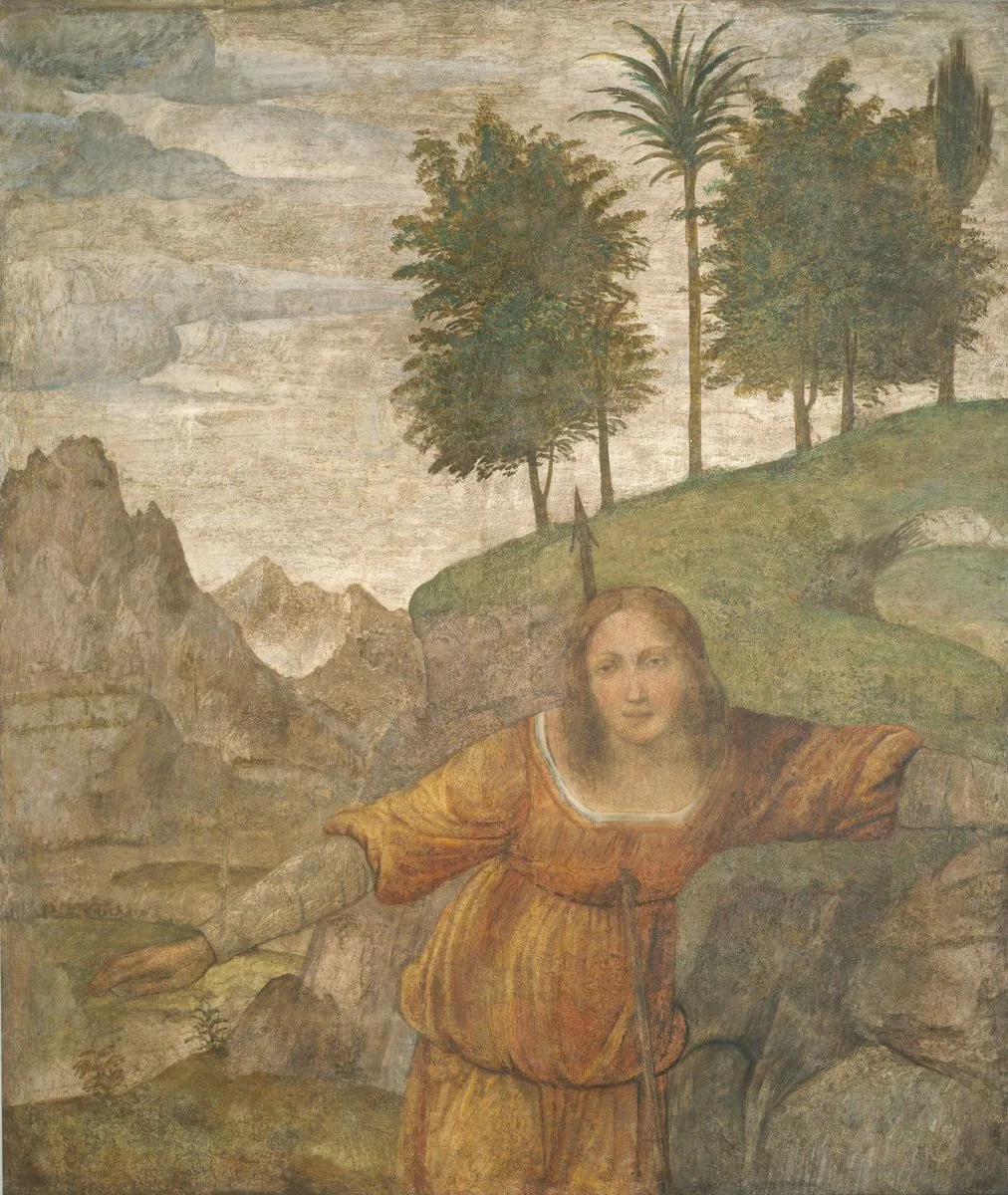
Next morning Cephalus again calls the breeze in the woods. He hears a low lament without understanding it. Then something moves in the bushes; thinking it an animal, he throws the javelin. Procris’ cry tells him whom he has struck. He runs to her, holds her wounded body, and tears his clothes to stop the bleeding. Dying, she begs him not to let Aura replace her. Only now does he fully understand the misunderstanding and explain that he was calling the breeze. Ovid allows the explanation to arrive, but does not restore the injured body. Cephalus thinks her expression looks comforted; this remains the survivor’s observation. The weapon his wife once gave him can return accurately, yet cannot bring back the life it has just taken.
His own suspicion had already injured their life together
Cephalus’ account also takes us further back. Aurora, the Dawn, had carried him away, but he continued longing for his wife. Allowed to return, he was troubled by the goddess’s words and doubted Procris’ fidelity. With his appearance changed, he tested her through increasingly costly gifts until she hesitated, then revealed his identity. Angry, she left. Later he admitted his fault and obtained reconciliation; she brought him the hound and javelin. Reading this before the misunderstanding about Aura reveals an earlier fracture of trust. The poem does not make her death a punishment she deserved. Its narrator admits creating a test, and we can observe concern turning, through experiments and reported words, into suspicion that leaves neither partner at rest.
Another hunt gives responsibility another shape
The Library attributed to Apollodorus, at 3.15.1, follows a different course. Procris accepts a golden crown and sleeps with Pteleon; discovered by Cephalus, she flees to Minos. This account gives Minos as the source of the hound and javelin. She later returns to Athens, reconciles with her husband, and hunts with him. Pursuing game in a thicket, she is struck by Cephalus, who does not know she is there. No message mistakes the breeze for a lover. The ending instead records the Areopagus condemning him to permanent exile. The works share a wife killed by her husband’s javelin, while arranging relationships, gifts, and aftermath differently. Keeping those differences lets us ask where each places attention: how speech is understood, how a weapon is used, and what remains to be faced after irreversible harm.