A doorway opened before recognition
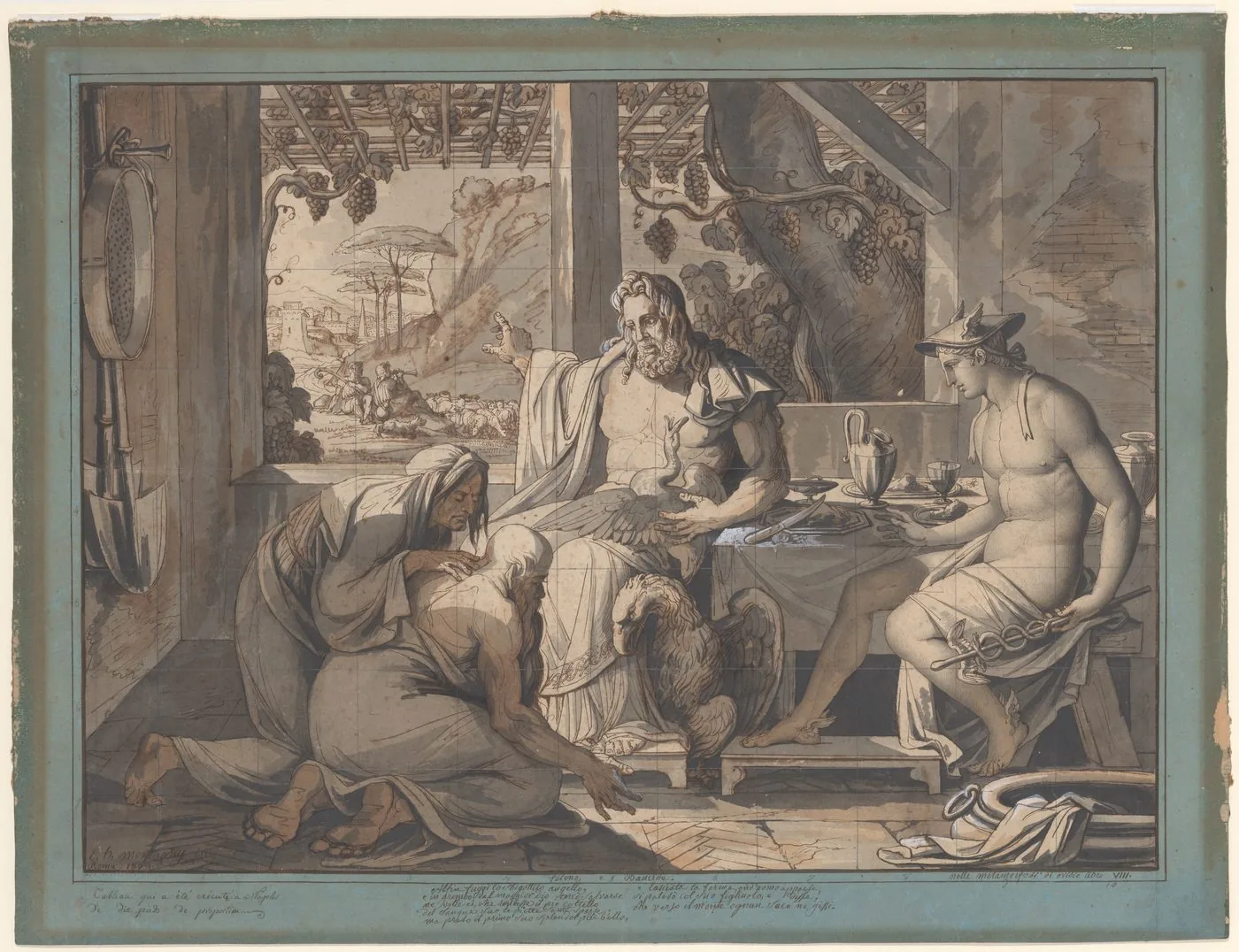
In Book Eight of Ovid’s Metamorphoses, Lelex answers a guest who doubts the gods’ power to change bodies. His evidence is a story attached to two trees in Phrygia. The visitors are Jupiter and Mercury, the Roman counterparts of Zeus and Hermes, travelling in human disguise. A thousand doors refuse them before Baucis and Philemon receive them in their small, low-roofed cottage. The couple have grown old together there, living with little and without servants. Their welcome begins before they discover who the strangers are. This order matters: the offered place to rest is not a payment made after divine identity has been proved. Ovid lets a modest household provide what grander houses have withheld, making room itself a meaningful action.
The work that makes a welcome real
The poem slows down over the meal’s preparation. Baucis revives the hearth; Philemon fetches vegetables and cuts a little from their stored bacon. Conversation fills the waiting time. A short table leg is steadied with a potsherd, and mint freshens the surface. Earthenware and wooden cups hold food and drink that the hosts can actually offer. These objects keep hospitality close to labour: someone must notice discomfort, prepare warmth, and make the table usable. Their poverty does not magically disappear at the threshold. Nor does the narrator require a lavish banquet before generosity can count. The care already present in the house becomes visible through small adjustments, and the visitors are treated as bodies needing food and rest before they are recognised as gods.
A goose does not have to become a sacrifice
Recognition arrives when the wine replenishes itself. Alarmed by the marvel, the couple pray and apologise for their simple provisions. They then try to catch their only goose to offer a better meal. The bird escapes toward the visitors, who stop the pursuit and forbid its killing. That interruption deserves attention. The welcome has already been accepted; it does not need to become an anxious surrender of everything the household possesses. The National Gallery of Art describes Rembrandt’s later painting as a quiet revelation at the table, with Jupiter sparing the goose. That artistic choice brings the divine response into a domestic gesture. It is a later interpretation of Ovid, rather than a surviving picture of an ancient encounter, and need not illustrate every stage of the poem.
A reward surrounded by loss
The gods announce punishment for the neighbourhood and lead the elderly pair uphill. Looking back, Baucis and Philemon see the surrounding country covered by water while their own cottage becomes a temple. They mourn their neighbours. Keeping this sorrow in the story prevents the transformation from becoming a simple display of winning and losing. Their rescue does not mean that the destruction around them feels joyful. Ovid places divine generosity beside a frightening exercise of power, and readers can remain troubled by that closeness. The new marble and golden roof change the couple’s dwelling, but the poem has already located their worth in an earlier, poorer room. Splendour follows their welcome; it is not what made that welcome possible or valuable in the first place.
The wish that grows into two trees
Asked to choose a gift, Philemon first consults Baucis. They request care of the temple and death in the same hour, so neither must bury the other. They continue living as its keepers; the change into trees comes after further years, not immediately after dinner. At last each sees leaves appearing on the other, and they exchange farewells while speech is still possible. Lelex identifies an oak and a linden growing together and recalls garlands on their branches. Within the narrative, these are remembered signs; they are not independent proof that the events occurred. The ending preserves the shape of the couple’s shared wish without promising ordinary human life forever. A house once opened to strangers becomes a place where later visitors pause and remember its hosts.