A host who first listens
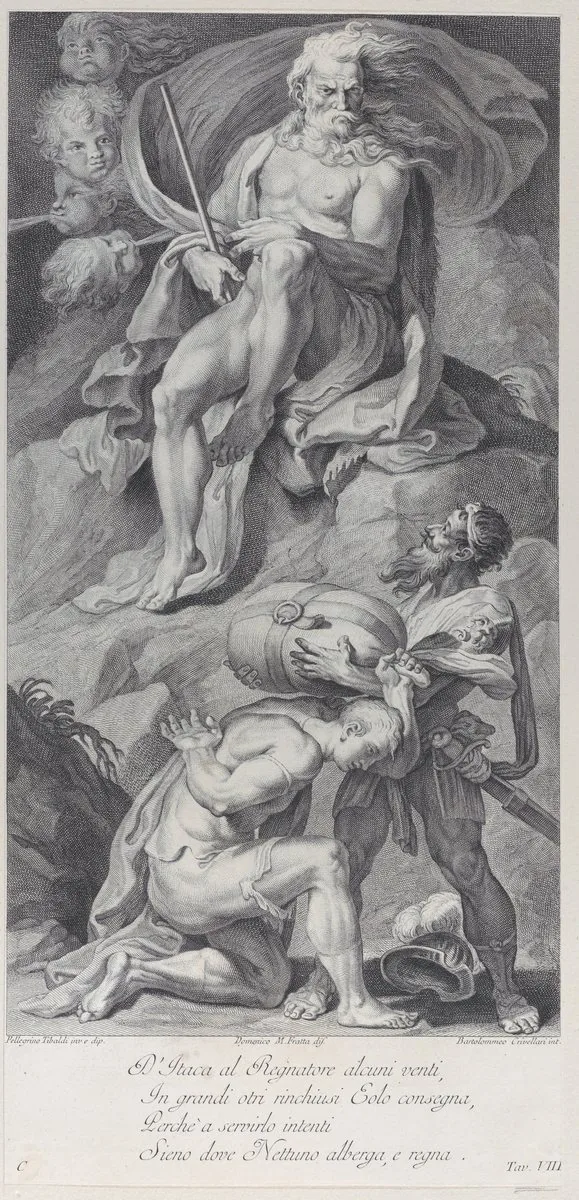
In Book 10 of the Odyssey, Aeolus receives Odysseus on his sea-girt island for a month, asking about Troy, the fleet, and the homeward voyage. The visitor tells his past before the host helps him depart. Homer calls Aeolus the son of Hippotas and says Zeus appointed him keeper of the winds, able to quiet or release them. This authority is an entrusted office; it does not make him one of the twelve Olympians. Nor should people sharing his name automatically become one family history. This host is initially generous. He does not arrange the coming gift in order to make the sailors fail. Remembering that beginning makes the change at his doorway more startling.
One bag, two kinds of value
Aeolus encloses the obstructing winds in an oxhide bag, tightly secured with silver, leaving the west wind to carry the ships home. The bag is portable, but its contents are forces that must remain restrained. Its worth lies in safe arrival, rather than metal that might be divided after opening it. The companions gradually supply another explanation: everywhere Odysseus receives honor and presents, while they return empty-handed; surely this bag contains more gold and silver. The poem lets us hear their discussion without naming a single sailor as solely responsible for opening it. Nor does it establish that Odysseus deliberately lied about treasure. Suspicion and resentment are enough to recast something everyone needs as wealth reserved for the leader.
Sleep within sight of home
After nine days and nights, the homeland and its fires become visible on the tenth day. Odysseus falls asleep exhausted: he has kept the helm himself, refusing to entrust it to anyone else, hoping to reach home sooner. Urgency meets the limits of a body. Dickinson College’s commentary asks readers to notice the hero’s controlling approach alongside his companions’ failure of restraint. We can ask how absent cooperation and trust make this voyage vulnerable without inventing an unwritten argument. Sleep is not evidence of laziness. However long one person remains vigilant, that vigilance cannot permanently replace the understanding needed by everyone traveling together.
Opening makes the distance grow
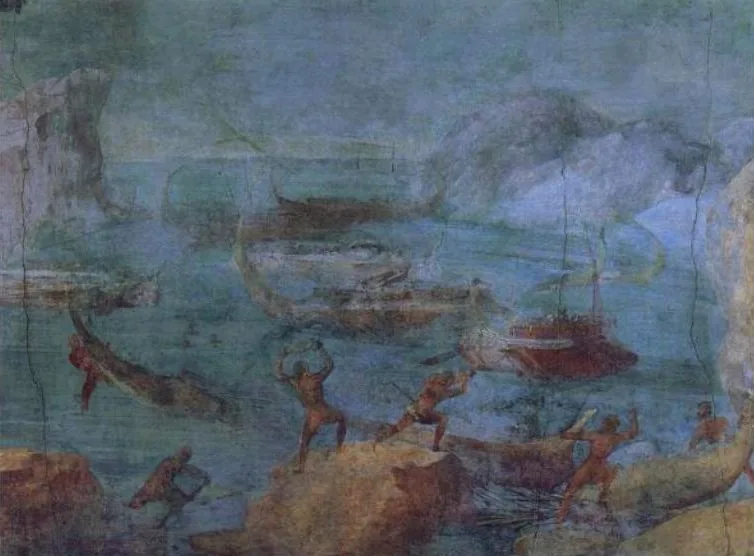
The companions untie the bag. Released winds drive the fleet away from the home it nearly reached. Waking, Odysseus considers jumping into the sea, then chooses to remain alive, covering himself and lying in the ship while his companions lament. Failure becomes more than a change of direction: it is a loss almost beyond endurance. A command does not instantly restore his strength. The storm returns them to Aeolus’s island. They take water and food, and Odysseus approaches the house with a herald and a companion. The bag does not kill the whole fleet here. Destruction in the following adventure belongs to another episode. They survive this return, but cannot simply begin again unchanged.
A different answer at the door
Aeolus asks why they have returned. Odysseus blames his companions and sleep, requesting help again; his host instead judges him hated by the gods, refuses another escort, and orders him away. This is a character’s judgment, not a verdict personally announced by Zeus. The Library, Epitome 7.10–11, later preserves a compressed sequence of gift, supposed gold, return, and rejection, without reproducing all Homer’s dialogue and exhaustion. Reading both, we can consider why assistance fails and how failure changes the way a petitioner is seen. Another attempt does not guarantee another opportunity. Beyond asking who should have left the bag closed, we might ask what shared understanding a homeward journey requires when nobody can remain awake forever. A second welcome could have extended an earlier act of assistance; rejection makes the same threshold a boundary. That contrast belongs to this scene, rather than establishing that anyone who fails must therefore be unworthy of help.