Two Arrows, Opposite Desires
The first volume of Ovid’s Metamorphoses begins with Apollo’s victory over the serpent. Apollo despised Cupid's bow, and Cupid responded with two arrows with opposite effects: a golden arrow that made Apollo ignite love, and a blunt lead arrow that made Daphne resist love. Daphne likes mountains and hunting, and is unwilling to comply with her father's expectations for marriage. The two wills were inconsistent from the start, and the young woman’s desire for independence did not lose weight because the suitor was a powerful god.
Daphne’s father regarded marriage and offspring as a future worth looking forward to, but his daughter chose freedom in the mountains and forests. Their imaginations were different. Her rejection predates Apollo's pursuit, so it is not appropriate to treat her as a mere passive instrument of Cupid's vengeance. The arrow changes the direction of the power, but the character's previous desires still help the reader understand what she is trying to preserve in the danger.
Running Until the Body Changes
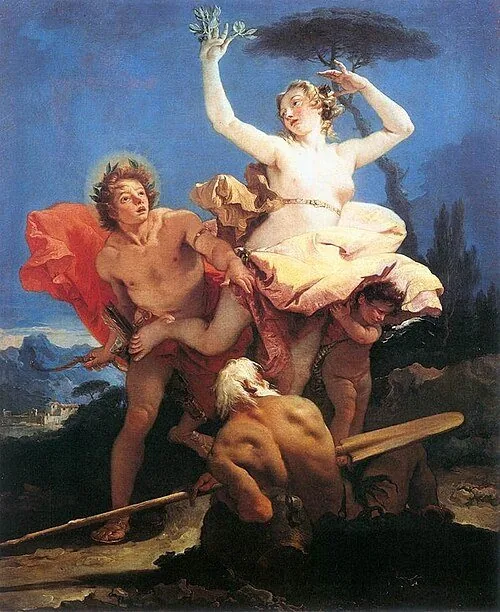
Apollo tried to convince Daphne with his identity, medical skills and prophecy, but she continued to run away. The poem describes the speed and terror of the chase, until the exhausted nymph seeks help from her father, the river god Peneus. The body began to harden, the hair turned into leaves, the arms grew into branches, and the feet turned into roots rooted in the soil. She kept her choice of not being embraced as a wife, but she also lost her original way of moving. This rescue comes at a heavy cost.
A Victory Crown and an Unended Refusal
Apollo still declared the laurel his own tree, linking it with the victory wreath, lyre and quiver. Later painters often chose the moment of transformation to juxtapose fingers and leaves. Readers can see this image alongside the text: the tree becomes a mark of honor for the gods, but Daphne's wishes are not thus recast as mutual admiration. This article uses the Roman version of Ovid; there are other Greek traditions that tell about the disguise and competition of young Leucippus, and those plots should not be forced into the origin of the two arrows.