The danger reaches their ears before their eyes
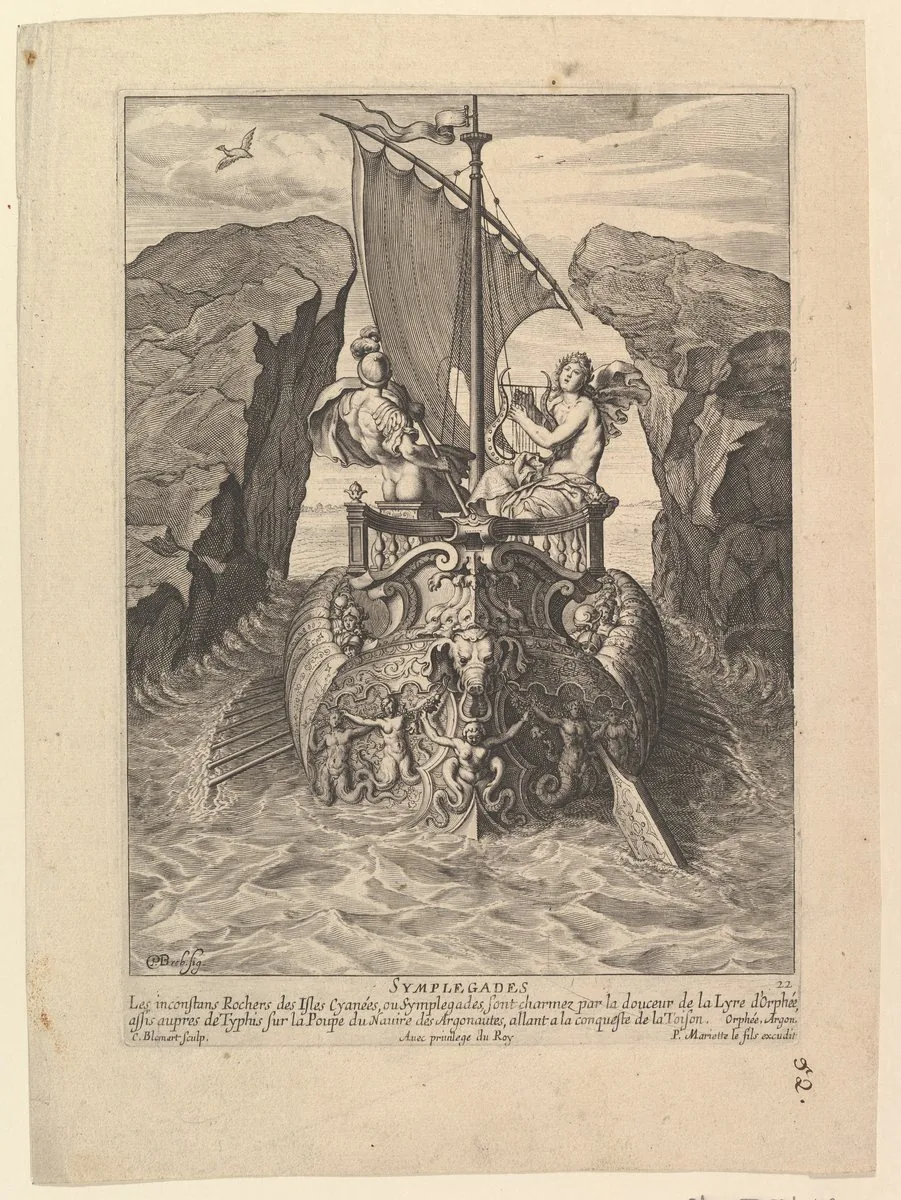
In Book 2 of Apollonius’ Argonautica, the crew approaches the Clashing Rocks with instructions from Phineus: send a dove ahead, continue if it survives, and turn back if it dies. Knowing this test does not quiet the passage. Currents circle beneath Argo, cliffs hem in her course, and the crashing sound arrives before the sailors see its cause. The poem makes waiting bodily, through listening, watching, and the effort of holding a course. Euphemus carries the trembling bird to the prow, while Tiphys directs the oarsmen. Already the decision depends on several people performing different tasks. Jason’s leadership cannot put every necessary hand in its place or make the opening stay wide. The way forward must be discovered from inside a moving, frightening scene.
A bird returns an answer with something missing
Euphemus releases the dove when the rocks open. Everyone lifts his head to watch. The bird flies through as the cliffs crash together, throwing up foam and filling the air with noise. Its body escapes, but the rocks shear the ends of its tail feathers. This is the favorable answer Phineus told them to await, rather than a promise that nothing can be damaged. The living bird supplies a reason to try; the missing feathers keep the force of the collision visible. As the rocks recoil, Tiphys calls for powerful rowing. Observation has narrowed the uncertainty, yet now the much larger wooden ship must pass through the space the dove has crossed. The watchers become workers, and the time available is already shrinking.
The oars cannot command the returning water
Apollonius gives the crossing more than a single burst of strength. A returning current drives the ship back, and a towering wave seems ready to overwhelm it. Tiphys adjusts the ship’s movement with the oars; the great wave rolls beneath the keel and lifts the stern. Euphemus moves among the crew, urging them to bend to their work. They strike the water together, their oars bending like bows, yet the ship loses more distance than their strokes gain. The precise work of a helmsman and the exertion of the rowers are both necessary, neither sufficient. The danger lies partly in water that will not obey them. Reading these changes closely gives the scene a rhythm of attempted progress, reversal, and another coordinated attempt.
Athena helps, and the stern still bears a loss
When Argo is caught between the shaking cliffs, Athena intervenes. She holds back a rock with her left hand and pushes the ship through with her right. Argo shoots forward, but the rocks clip the extreme end of her stern ornament. Her loss echoes the dove’s missing feathers without turning the ship into an untouched prize. Once a vessel carrying people has passed alive, the rocks become permanently fixed, fulfilling a divine arrangement. The passage therefore changes the danger for later travelers as well as saving this crew. Athena’s help remains a particular action in a crowded scene: Phineus’ instructions, the bird’s flight, Tiphys’ handling, and the rowers’ exhausting effort have all brought the vessel to the moment when she reaches it.
Beyond the rocks, confidence is still being made
The Library at 1.9.22 tells a shorter crossing, retaining the dove, damaged stern, and rocks that settle after the first ship passes. It names Hera as the helper; Apollonius’ visible rescue belongs to Athena. These are different tellings, not two consecutive divine interventions to join together. Apollonius then lets relief meet Jason’s anxiety. While Tiphys offers reassurance, Jason speaks of fearing for each companion and of the burden of bringing them home. Their answering encouragement renews his confidence. Escape has not made the leader incapable of fear. The episode leaves a repaired capacity to continue, carried in voices as well as oars, rather than a claim that one successful maneuver has made every remaining shore safe.