A city trying to receive its people
The closing movement of Iliad 21 brings the fleeing Trojans towards their city while Achilles presses after them. The gates become a practical boundary between exposure and temporary protection. This is not yet the later story of Troy’s sack. The immediate question is whether people still outside can get inside alive. Within that crowded retreat, Apollo encourages Agenor, a son of Antenor, to stand against Achilles. This Agenor should not be confused with Europa’s father of the same name. Keeping the parentage clear helps us see the episode as one defender’s action within the Trojan community rather than as an unrelated royal legend.
A defender considers his choices
Agenor’s courage includes thought and fear. He considers fleeing with the others, escaping across the plain to hide near Mount Ida, or confronting Achilles before the city. Each possibility has a danger. His reflection does not make him a modern strategist with complete information; it lets readers remain with someone who expects that the stronger warrior may catch him. He finally reasons that Achilles too has a mortal body. The conclusion gives him a reason to act without promising victory. The poem can honour resistance while still making the inequality between the opponents unmistakable. Courage here is a response to vulnerability, not its disappearance.
The spear and the rescue
Agenor throws his spear, but Achilles’ leg protection prevents the wound he hopes to inflict. When Achilles advances, Apollo removes Agenor from immediate danger under cover of mist. The rescue matters because the next stage of the scene involves a likeness, not the same man continuing the duel. Apollo assumes Agenor’s appearance and lets Achilles pursue him away from the city. A short retelling can easily turn this into a single prolonged chase of the Trojan. The poem instead separates the vulnerable defender from the divine decoy. That distinction explains why the pursuer cannot achieve the killing he expects.
An opponent who cannot be caught as a man
At the beginning of Book 22, Apollo reveals the deception. Achilles has been chasing an immortal while the Trojans use the interval to enter their walls. Achilles recognizes that he has lost an opportunity and turns back towards the city in anger. The god’s intervention has worked through time and attention: the strongest fighter has been directed towards the wrong target. It has not defeated him in an ordinary contest or made the whole city permanently safe. Apollo can protect a group during this particular flight, yet Hector remains outside, where another and very different encounter is about to begin.
Reading the rescue at its actual scale
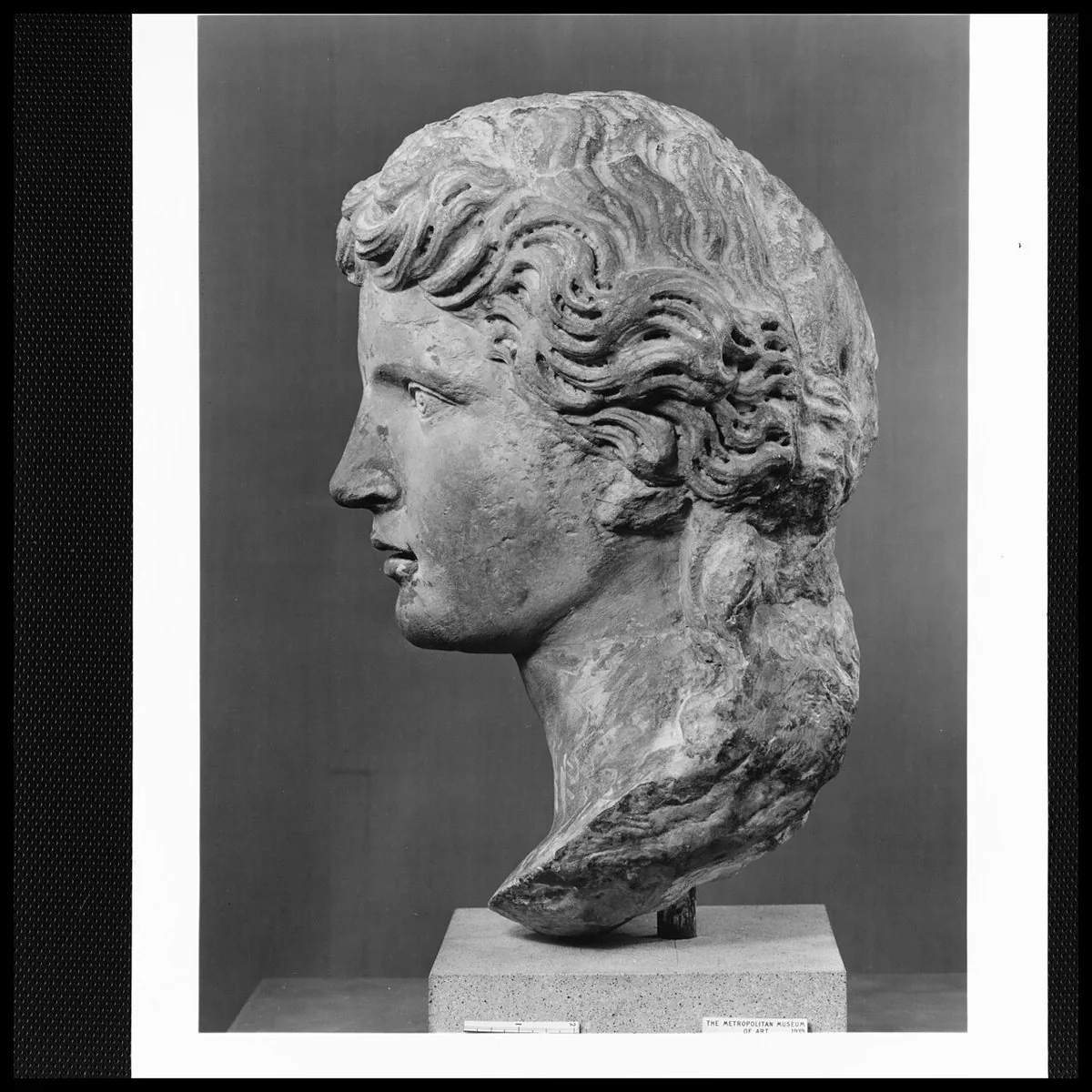
Books 21 and 22 let us trace the episode across a book boundary without enlarging it into a complete salvation of Troy. Agenor’s resistance, Apollo’s substitution, and the people’s return through the gates have related but distinct roles. Read this beside the site’s accounts of Hector and of gods helping endangered mortals. Assistance may create a short interval rather than erase the conditions that made help necessary. The accompanying marble head of Apollo introduces the divine protector without claiming to depict this exact pursuit. The narrative asks a modest but consequential question: how many lives can depend on a few moments gained for someone else?