The mover of desire is moved
Homeric Hymn 5 does not leave Aphrodite outside everyone else’s desire. After introducing her power over gods and mortals, it makes Zeus turn that power toward Anchises, a herdsman on Mount Ida. She must lose the advantage of mocking other gods for mortal attachments. Yet she acts herself: bathing and dressing at Paphos, then returning to the mountain. Even wild animals pair under her influence. Zeus’s intervention and her active preparation both belong to this particular poem. Neither should erase the other. The hymn tests what happens when a power exerted on others reaches its wielder.
An invented mortal family
Alone and playing a lyre, Anchises suspects his visitor is divine. He names possible goddesses, including Aphrodite, and offers an altar. She denies it. Claiming to be the mortal daughter of the Phrygian king Otreus, she explains her language through a Trojan nurse. Hermes, she says, carried her from a dancing company to become Anchises’s wife. This is her invented account, not the narrator’s confirmation of a family tree or an actual mission by Hermes. Anchises answers conditionally: if she is mortal and her father is as stated. Attraction exists, but the information by which he understands it is being controlled.
Knowledge comes afterward
After their intimacy, Aphrodite puts Anchises to sleep, dresses, and stands with her head near the roofbeam. Waking him, she asks him to compare her appearance now with their first meeting. He hides his face in his cloak, frightened, protesting that she concealed the truth and fearing bodily weakness after contact with an immortal. She then reassures him against harm from herself or the gods. Reassurance comes after the event; it cannot remove the earlier concealment. We need not invent a modern courtroom verdict to notice the importance of timing. Being attracted before learning the truth differs from having the same knowledge at the beginning.
The goddess fears other storytellers
Aphrodite also admits that she will face shame among the gods. Once she mocked their mortal attachments; now she carries a mortal’s child and loses that speaking advantage. Her distress concerns divine standing and self-understanding, not a sudden discovery that Anchises lacks beauty. She continues praising his appearance without making their conditions of life equal. The embedded example of aging Tithonus has its own article on this site. Here, notice instead how its teller has herself been changed. Directing desire does not provide permanent immunity from its embarrassment and consequences. Her words reveal what matters to her within the divine audience.
Who raises the child, who names the mother
Mountain nymphs will raise Aeneas. Aphrodite promises to bring him to his father around his fifth year, after which Anchises should take him to Troy. Their future is not simply a shared household: care falls to other beings. Asked about the mother, Anchises must name a mountain nymph. Boasting of intimacy with Aphrodite will bring Zeus’s thunderbolt, she warns. The hymn does not go on to narrate that punishment actually happening. At first, invented parents hide the goddess; finally, the child’s father must conceal her name. Kinship has been established without equal authority to tell its story publicly.
From a bedside print to a mother in battle
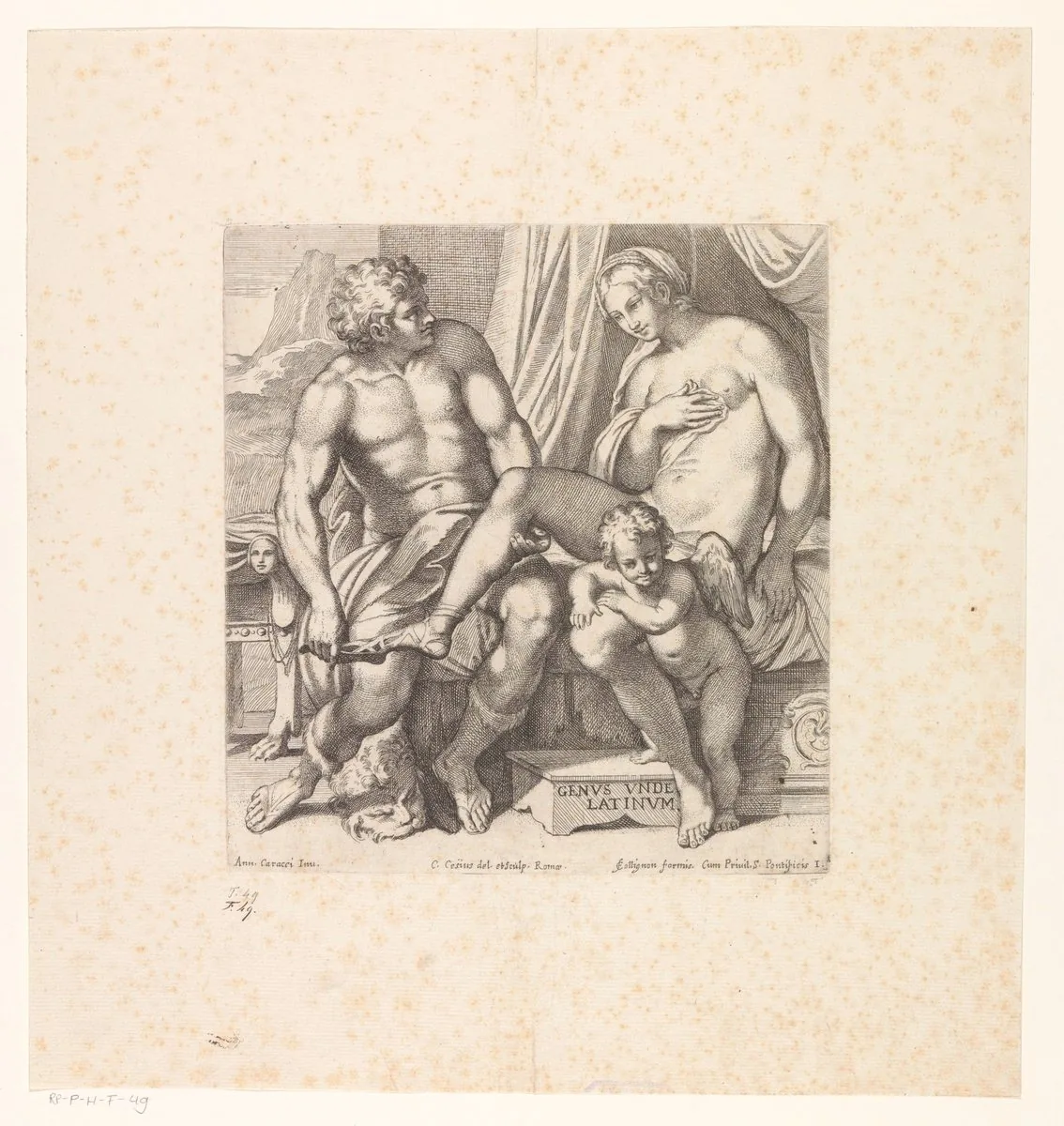
A Rijksmuseum print by Carlo Cesio after Annibale Carracci, dated 1656 by the museum, seats Venus and Anchises beside a bed with Amor in front. This later composition does not place that child-god inside the hymn’s scene. Iliad 5 offers another viewpoint: Aphrodite lifts the injured Aeneas, Diomedes wounds her, and Apollo takes over his protection. Aeneas is already a warrior there; these passages are not a continuous, year-by-year sequel to the hymn. Reading across the works reveals kinship continuing after desire. A divine mother can reach toward danger for her child, yet still require help from another god.