News the traveller did not know
When Anticlea appears in Book 11 of the Odyssey, Odysseus discovers a loss that occurred beyond his knowledge. He had left his mother alive when he sailed to Troy. Seeing her among the dead is therefore not simply a reunion in an unusual place; it is also the moment he learns that a reunion at home has become impossible. His tears interrupt a journey undertaken to consult Tiresias. The episode makes distance more than a problem of sailing. While the traveller struggles to return, the household continues to change without his knowing what has happened.
Waiting before speaking
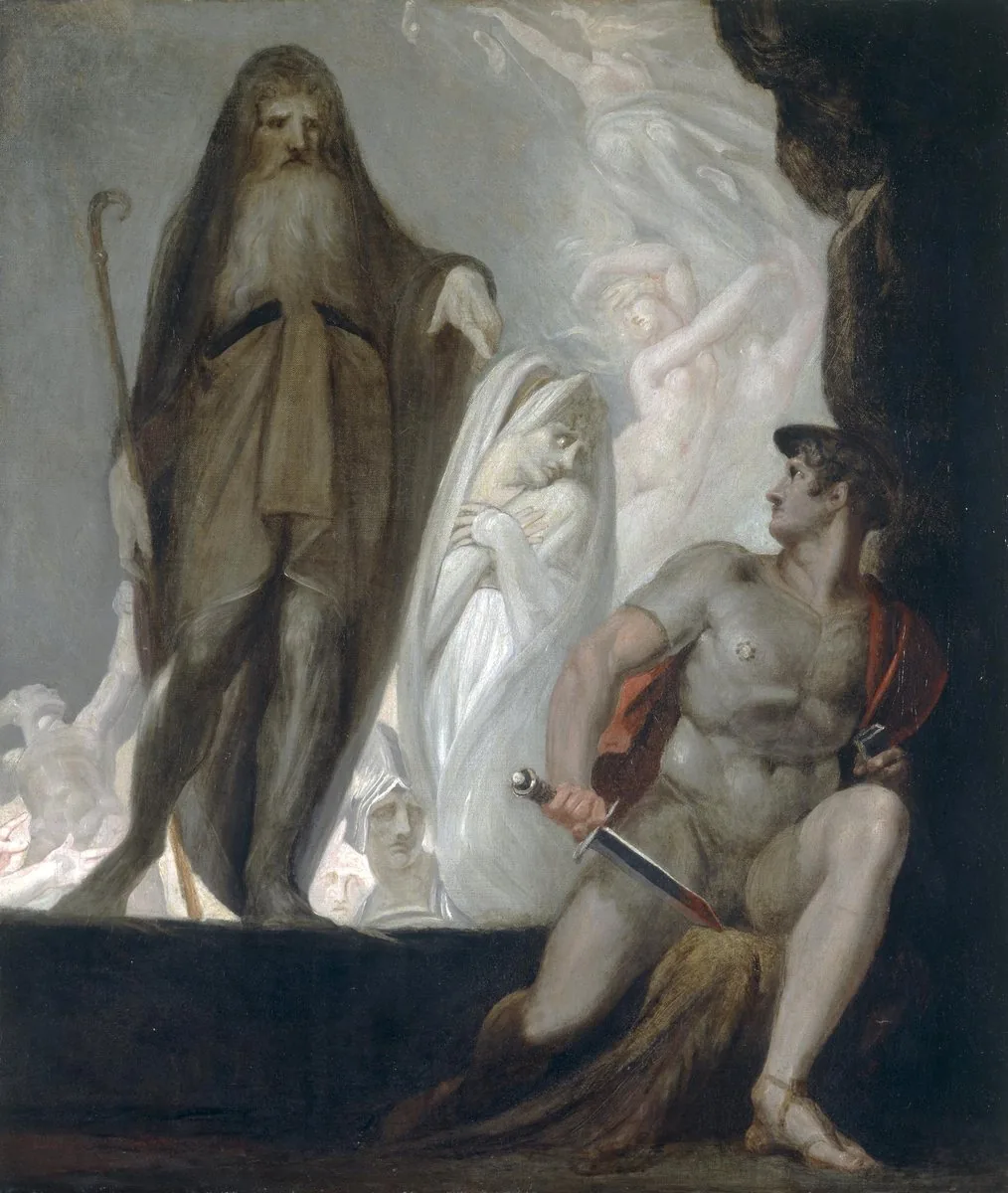
Odysseus initially keeps even his mother away from the blood until Tiresias has given his prophecy. Afterwards, following the prophet's explanation, he lets her approach and drink. She recognizes him and asks how a living man has reached this dark place, wondering whether he is still wandering from Troy rather than reunited with his family. Their conversation is shaped by unequal knowledge. He needs news of the home he has not seen; she encounters the son whose absence has dominated her final years. The sequence is specific to this encounter and should not be turned into an exhaustive rulebook for every shade in every Greek account of the dead.
Questions about a household
Odysseus asks how she died, how his father and son are living, and whether Penelope remains at home. Anticlea describes the wife still grieving, Telemachus' position, and Laertes' withdrawal to the countryside. About her own death, she rejects the possibilities her son has raised and attributes it to longing and affection for him. This is the mother's account of her suffering, not a modern medical diagnosis. The exchange connects the hero's years of adventure to those who could only wait. He is learning not just whether his property survives but what absence has done to the people whose lives gave that property meaning.
Three attempts, no embrace
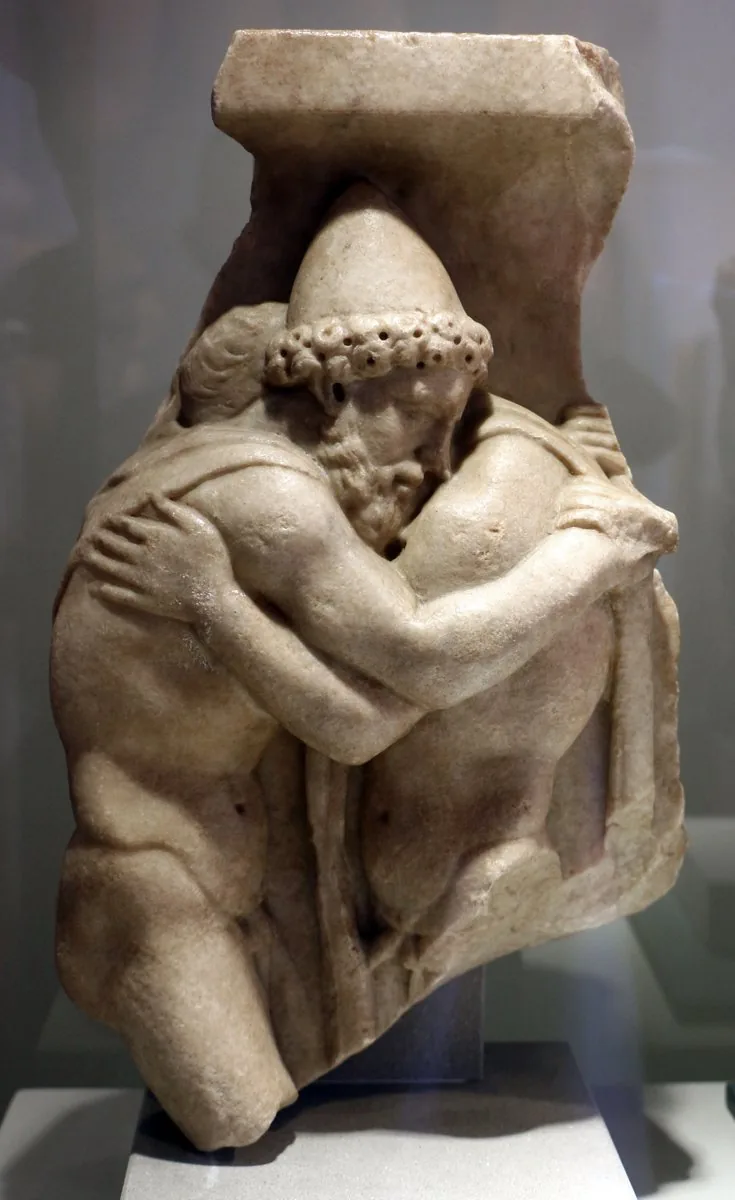
Odysseus tries three times to hold his mother, and three times her shade slips away like a dream. He asks whether Persephone is deceiving him with an image. Anticlea explains that this is the condition of mortals after death: the living body's bonds no longer hold, and the soul moves as a dreamlike presence. The failed embrace is not evidence that the mother refuses him. Nor is it a puzzle solved by a stronger grip or better technique. Words remain possible, but the bodily comfort he seeks cannot be recovered. She urges him back toward daylight, carrying what he has learned to his wife.
An image beside the text
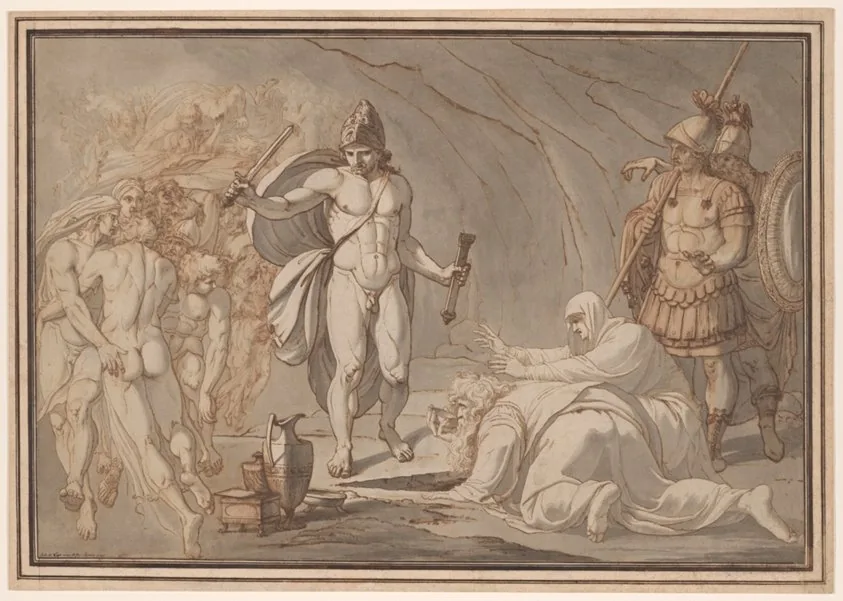
A 1785 drawing by Johann Heinrich Lips, held by the Art Institute of Chicago, is titled Odysseus, at the Doors of Hades, Meets the Shades of Tiresias and Anticlea. The museum identifies its medium as pen and ink with washes and makes the image available through its public-domain collection. It brings the prophet and mother into a single visual encounter, but it should not replace Homer's sequence of separate exchanges. Read beside the poem, the image offers another way to approach the scene's central limit. Odysseus can receive knowledge and recognize affection among the dead; he cannot turn that recognition into the physical reunion he once expected at home.