A request to enter
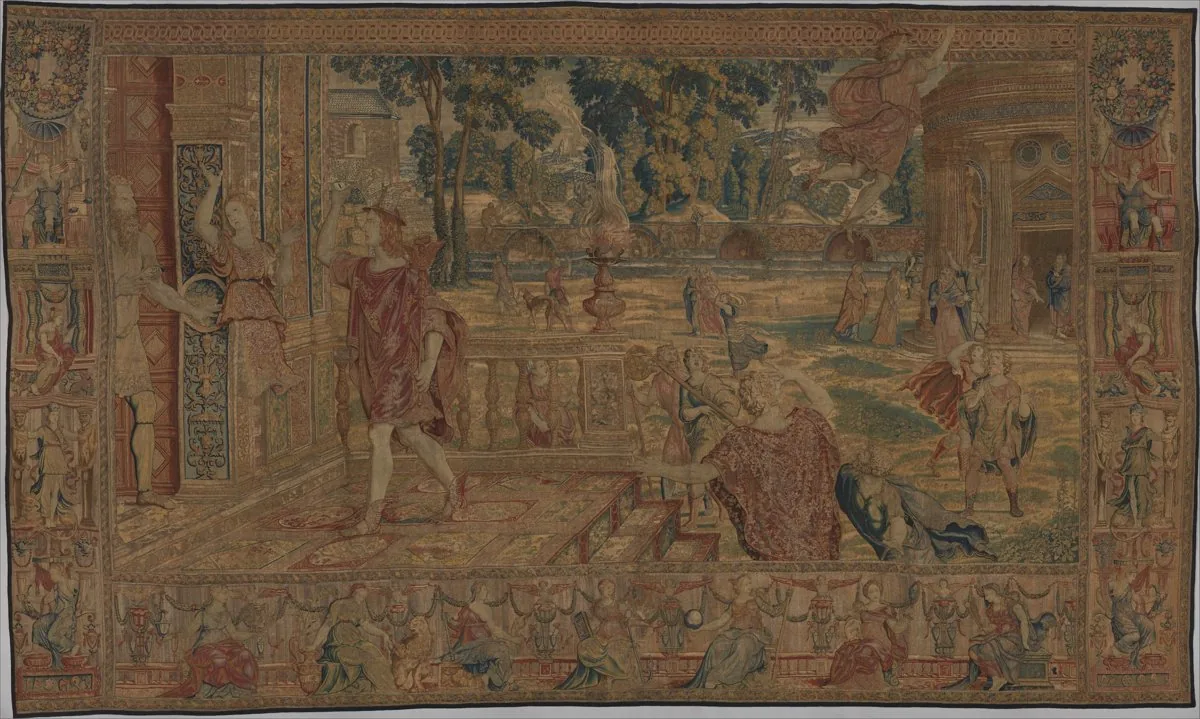
In Book 2 of the Metamorphoses, Mercury sees Herse among the young women returning from offerings to Minerva. He approaches the place where she and her sisters live. Aglauros meets him first and asks who he is and why he has come. He identifies himself and seeks help in winning Herse's affection. Aglauros demands a large payment before allowing him inside. Her position at the entrance makes her an intermediary who can turn access into a bargain. Ovid does not yet present the scene as a simple obstacle overcome by two lovers whose equal wishes have both been fully explained. This Roman poem uses Mercury and Minerva, corresponding here to Hermes and Athena in Greek tradition.
A goddess commissions envy
Minerva watches Aglauros and remembers an earlier offence: opening the container in which the goddess had concealed Erichthonius. But the new episode does not merely repeat the discovery of that child. Minerva goes to the dwelling of Envy and orders the personified power to poison Aglauros. The goddess who judges the woman also helps create the emotional condition that will consume her. This makes the usual moral label incomplete. Aglauros' demand for gold is her action, but the resentment that follows is deliberately intensified through divine intervention. The narrative distributes agency across several figures instead of locating everything inside one supposedly defective personality.
Another person's happiness as injury
Envy enters Aglauros' room and makes her imagine Herse's happiness with Mercury as even more splendid than reality. She cannot rest because her sister's good fortune appears intolerable. The description gives jealousy an invasive, bodily quality: thoughts repeatedly return to the same comparison, and the imagined scene becomes a source of pain. This is poetic personification, not a clinical account of a modern condition. It shows how attention can become trapped around another person's imagined advantages. At the same time, the reader knows who ordered the invasion. The suffering cannot be detached from the goddess's purposeful action without changing the story.
The threshold becomes permanent
Aglauros sits in the doorway and refuses to move until Mercury leaves. The god opens the door with his wand, while her body grows heavy and rigid. Cold and hardness spread until she is stone and cannot speak. The position she chose as a barrier becomes fixed beyond her ability to change it. Ovid links the material's dark appearance with her mind, an image belonging to the poem's judgement rather than an objective rule about colour or character. The transformation ends resistance through superior power. We can understand the scene's symbolic precision without assuming that its punishment is proportionate or that Herse's own perspective has suddenly become fully available.
A name with other traditions
Pausanias, in Description of Greece 1.18.2, mentions a sacred precinct of Aglaurus in Athens and tells the story of the forbidden container with a different ending: two sisters open it, become mad, and leap from the Acropolis. He does not append Mercury's stone transformation as another later event. The sanctuary and the divergent account remind us that Ovid's Aglauros is not a complete biography shared by every source. Reading the doorway episode on its own terms reveals a troubling chain of bargaining, divine resentment, manufactured envy, and silenced resistance. It offers more questions about responsibility than a single instruction to stop being jealous.