A broken chariot changes the encounter
Near the beginning of Book 6, Adrestus loses his chance to escape when his horses become entangled in a tamarisk and the chariot is damaged. He falls beside it, and Menelaus approaches with a spear. This Adrestus is a Trojan captive in the Iliad, not simply every figure whose similar name appears in Greek myth. The poem gives little space to his earlier life, yet it gives enough to show that capture follows a particular accident. He does not choose to stop as an equal challenger. A failure of equipment leaves his body available to another man's decision before any negotiation begins.
Wealth is still imagined as a route home
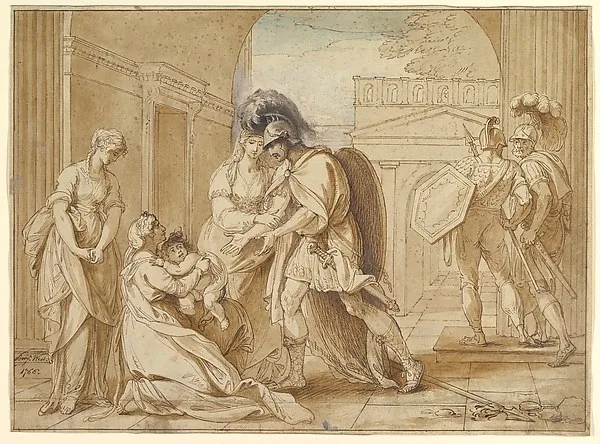
Adrestus grasps Menelaus' knees and offers ransom. He describes the gold, bronze, and worked iron stored in his father's house, expecting that family wealth can be exchanged for his living return. The argument depends on keeping him alive long enough for a message and payment to become possible. It is a proposed future sequence, not treasure already lying between the two men. The plea also preserves a household outside the immediate battlefield. His father need not appear in person for the request to make that relationship audible. A captive's value as property and his wish to live become entangled within the same offer.
Menelaus is close to agreeing
The narrator says that Menelaus is inclined to accept and hand Adrestus to an attendant for transport to the ships. This moment matters even though the story ends differently. The killing is not presented as the only imaginable response from the first instant. Someone with power considers another course. Reading the hesitation keeps the possibility of survival inside the scene without inventing a promise that has already been secured. Ransom is neither a universal rule protecting all prisoners nor an empty concept that no warrior can recognize. It is an available arrangement whose acceptance remains vulnerable to decisions made by stronger people.
Agamemnon redirects the choice
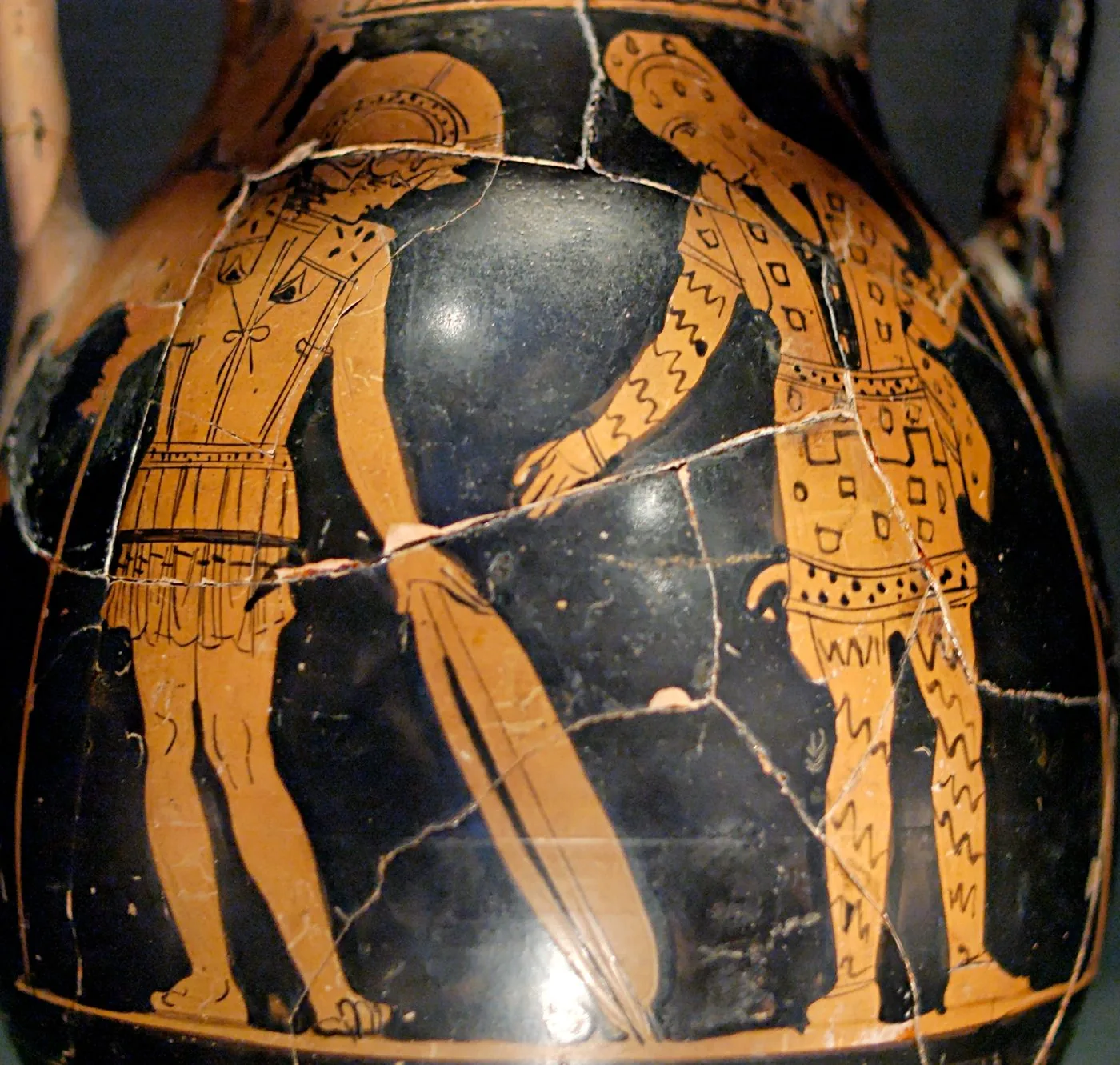
Agamemnon arrives and rebukes his brother for showing mercy, invoking Trojan injuries to their household and demanding destruction rather than selective release. Menelaus yields, and Agamemnon kills Adrestus. The brief scene therefore shows authority moving through a family relationship as well as a military hierarchy. The captive's plea has not changed, but the person directing the outcome has. A retelling can identify this violence plainly without reproducing the poem's graphic conclusion. We should also distinguish the characters' arguments and the narrator's approving language from our own judgment. Reporting what an ancient scene endorses does not require turning its endorsement into modern advice.
A personal grievance becomes a wider demand
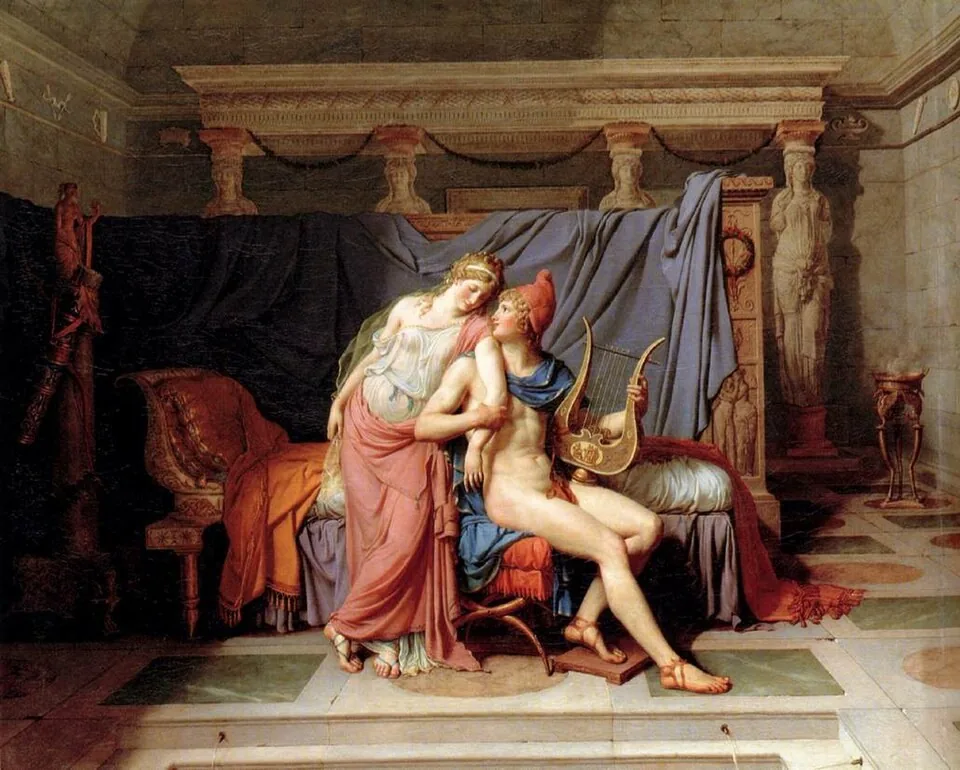
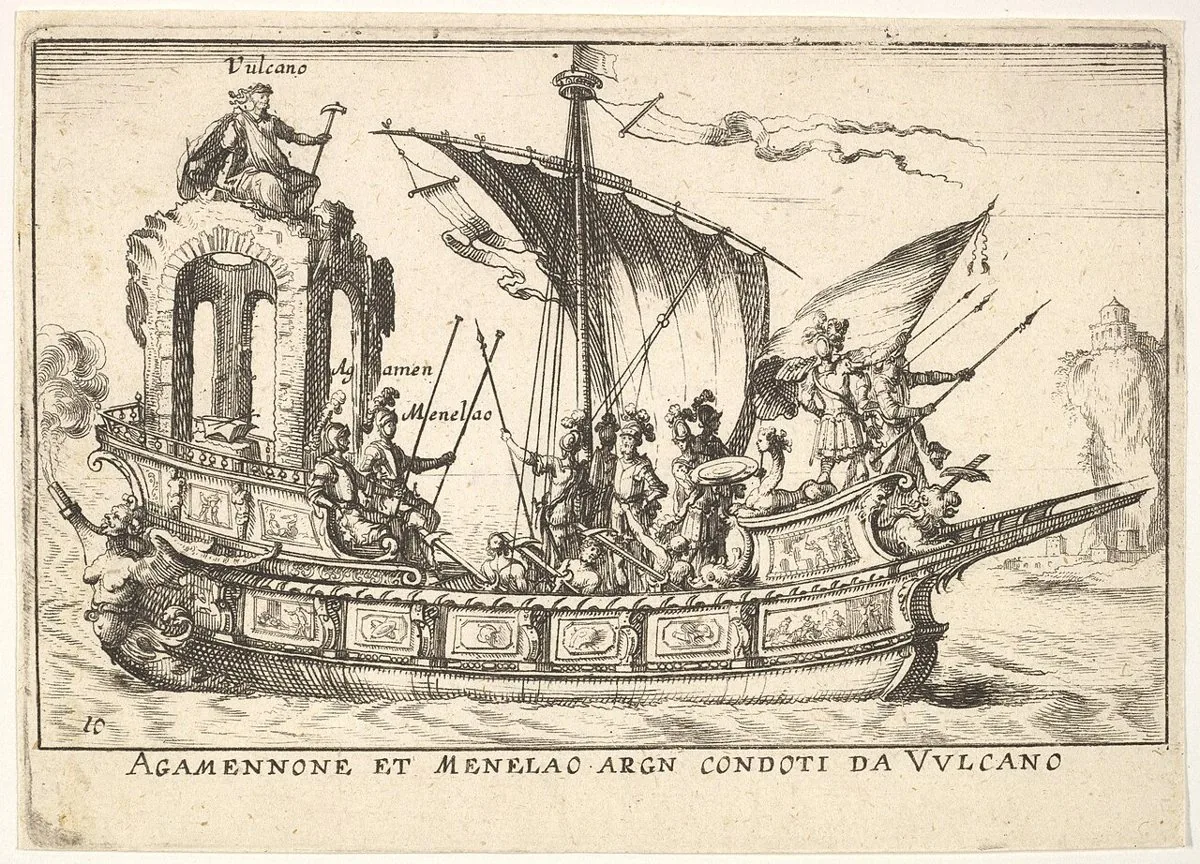
Book 3 places Menelaus opposite Paris in a proposed duel connected with Helen and the property carried away from his house. That context helps explain the grievance Agamemnon invokes in Book 6, without making Adrestus responsible for Paris' individual actions. Moving between the books reveals a dangerous enlargement: a dispute associated with particular people can be used to refuse another person's plea. The illustration shows Agamemnon and Menelaus together in a boat, not Adrestus' capture. It keeps the brothers visible while leaving the episode's setting to the text. The decisive question is how their shared cause changes what one of them was nearly willing to allow.