Galatea becomes the storyteller
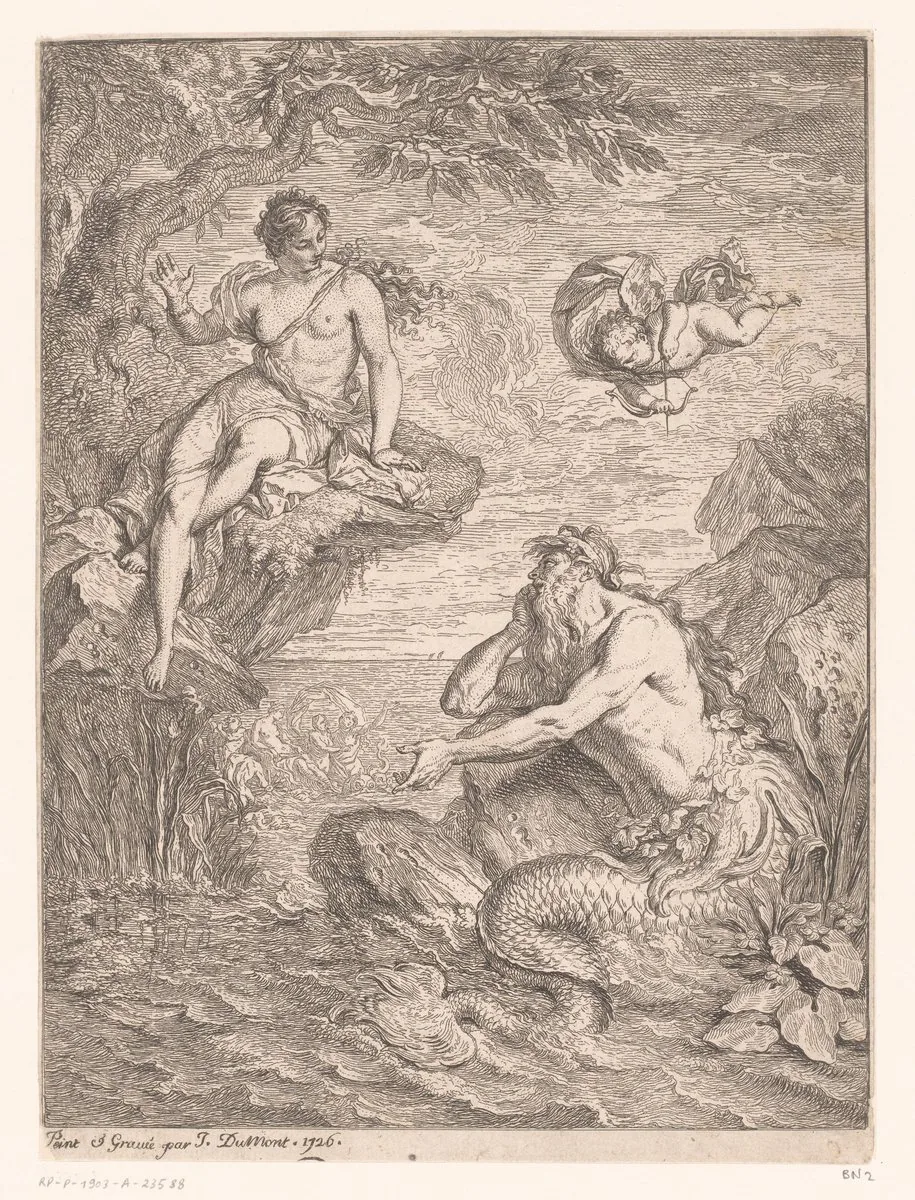
In Book 13 of Ovid's Metamorphoses, Galatea speaks to Scylla about the love that has caused her grief. This matters before the familiar triangle of names appears. The sea nymph is not merely the beautiful object at the centre of someone else's song: she remembers, chooses, and explains what she has suffered. She loves Acis, the son of Faunus and the nymph Symaethis. Polyphemus pursues her, but she does not return his desire. These relationships should remain distinct. His attraction to her does not cancel her attachment to another person, and her refusal does not make her responsible for what he later chooses to do.
A song cannot promise consent
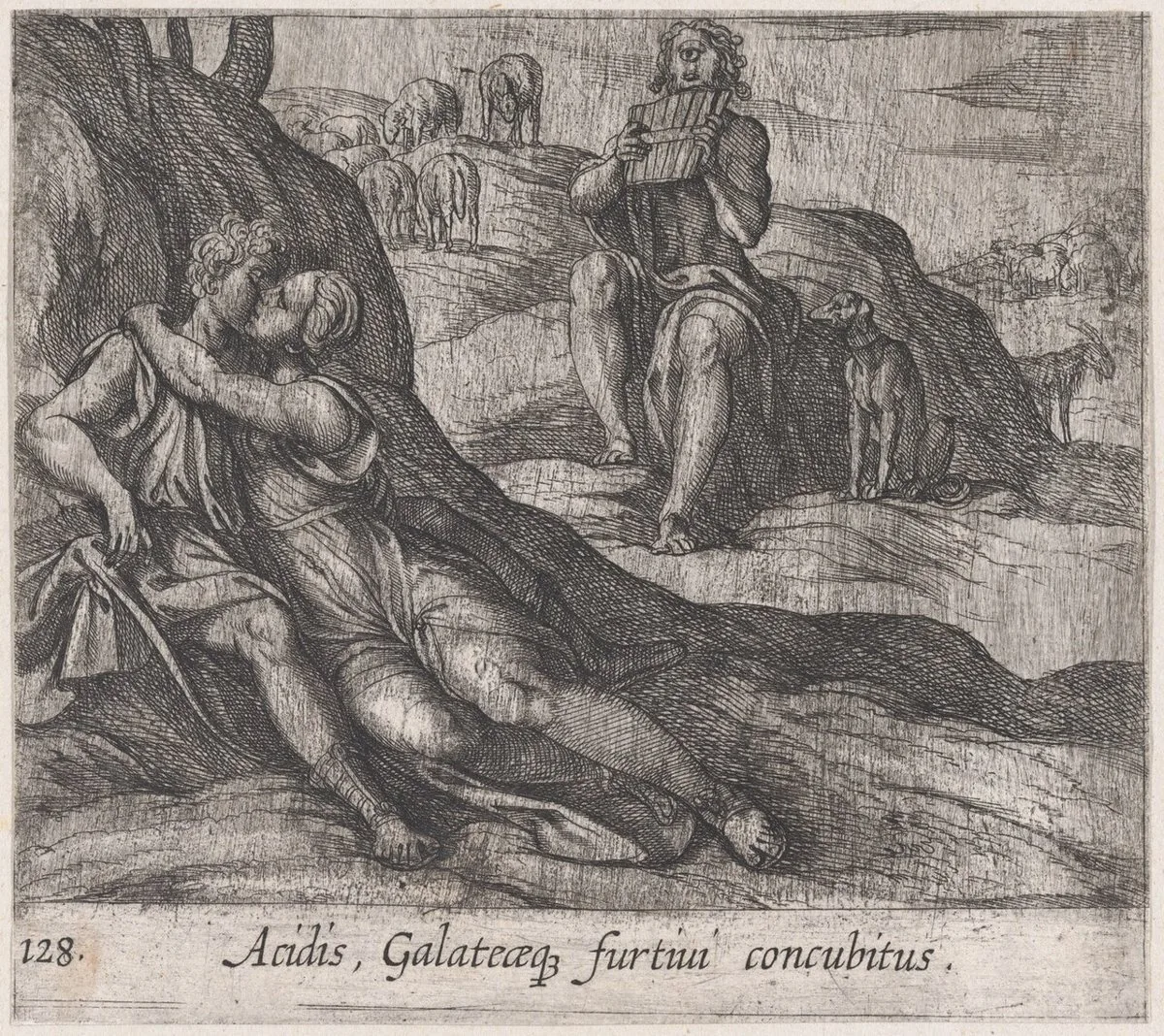
Ovid gives the Cyclops a long song in which he praises Galatea, lists his possessions, and presents his own appearance as attractive. He tries to imagine what would persuade her to share his world. The scene can be funny and unsettling at once, but its conclusion is not that enough possessions or eloquence must earn affection. Acis and Galatea hear the song together while hidden. The difference between the singer's imagined future and the listeners' actual relationship gives the performance its tension. Galatea has already told us where her affection lies. The reader does not need to wait for the loudest voice to define it for her.
The force of the thrown rock
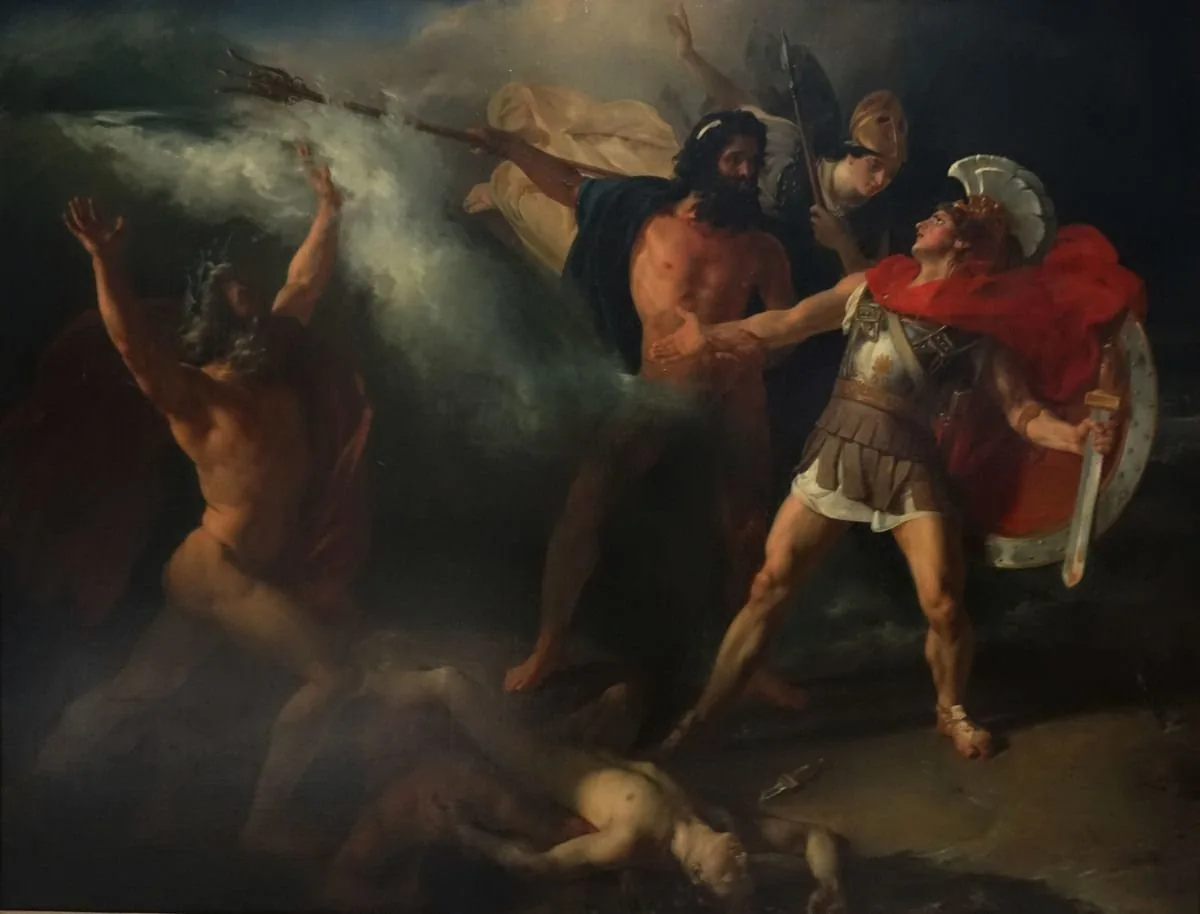
When Polyphemus sees the pair, he threatens them. Galatea escapes into the sea, while Acis runs and calls for help. The Cyclops tears a piece from the mountain and throws it, burying the fleeing young man beneath it. This act should not be softened into a necessary expression of passion. It is an attack carried out by someone who cannot accept another person's choice. The landscape, earlier part of a pastoral setting of caves, animals, and music, becomes a weapon through the giant's strength. Ovid allows the change from courtship to violence to transform how we understand the space around the lovers.
What the nymph can still do
Galatea says she does what the Fates permit: she allows Acis to take on his ancestral river nature. The blood beneath the rock gradually becomes clear water, the stone opens, and a river deity emerges with reeds about his horns. His features remain recognizable despite their altered colour and greater stature. The stream retains his name. This is a rescue of identity through transformation, but not a return to the couple's former life. Galatea's action answers the loss within limits. She cannot simply prevent what has already happened, and the flowing water does not make the violence that produced it harmless or deserved.
A different Cyclops in Theocritus
Theocritus' Idyll 11 also presents Polyphemus singing about his love for Galatea. Its frame recommends song as a remedy for desire, and the young Cyclops eventually turns toward advice about his own ordinary work. The poem does not end with Acis crushed under a rock. We should not treat Ovid's later violence as a missing last chapter of that idyll. The two works use the singing lover differently. Reading them together makes room for both the comic work of managing one's own feelings and the darker consequences of refusing another person's freedom. Galatea's voice in Ovid ensures that the river is remembered from the side of those who bore those consequences.