First, a division at a sacrifice
In Hesiod’s account, Prometheus tests Zeus with two deceptively presented portions of an ox. The useful meat is hidden, while the bones are covered with tempting fat. The scene explains why certain parts of a sacrifice are burned for the gods and others are eaten by humans. It also marks the boundary between the two.
Fire returns to humanity
Zeus withholds fire, but Prometheus conceals it inside a hollow fennel stalk and brings it back to humanity. Works and Days places this gift within the hardships of human life. Possessing fire does not end those troubles: the story of Pandora that follows continues to explore work, suffering and hope.
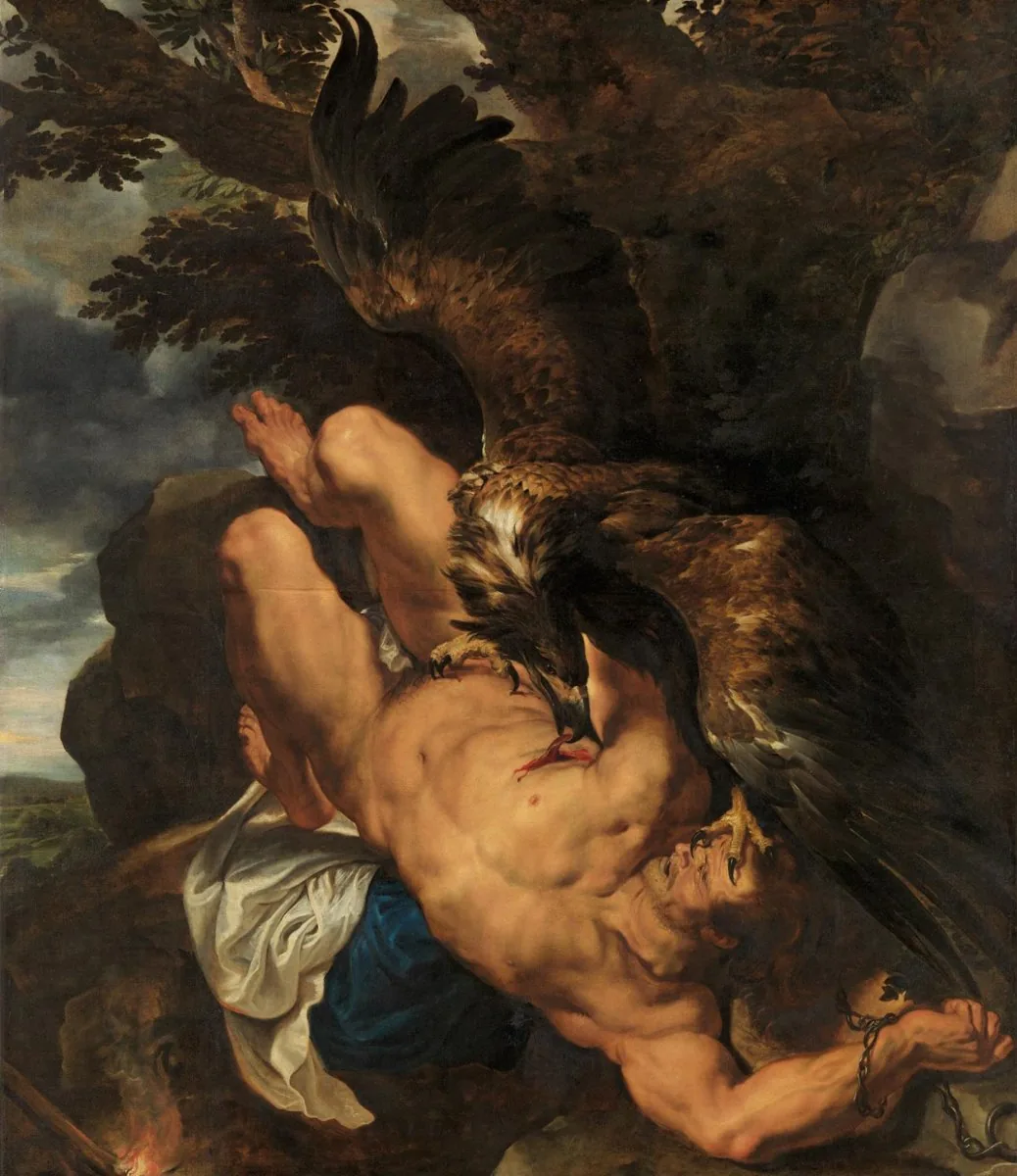
The Theogony also describes Prometheus bound while an eagle eats his liver, which grows back at night. Heracles later shoots the eagle and releases him from this torment. An enduring body makes repeated suffering possible. Divine immortality does not remove the ability to feel pain.
Tragedy gives the punished a voice
In Prometheus Bound, the audience hears the punished figure defend himself directly. He connects fire with many skills and stresses his help to humanity. Hephaestus, too, hesitates as he carries out the punishment. The dramatic perspective brings the conflict between authority and sympathy into sharper focus.
The questions a gift leaves behind
The works do not offer a single judgment. Hesiod considers divine order and the human condition; tragedy places the rebel’s voice at its center. Readers today may find questions about knowledge, creation and responsibility here. Those are responses to reading, rather than conclusions jointly stated by all ancient authors.