Twelve is a group, not the total
The ancient Greeks honored far more than twelve gods. “The twelve” names a valued grouping, rather than implying that other deities do not exist. Zeus, Hera and Athena are familiar names, but divine importance also depends on cities, local sanctuaries, festivals and particular traditions. A single ranking cannot explain them all.
Art preserves different rosters
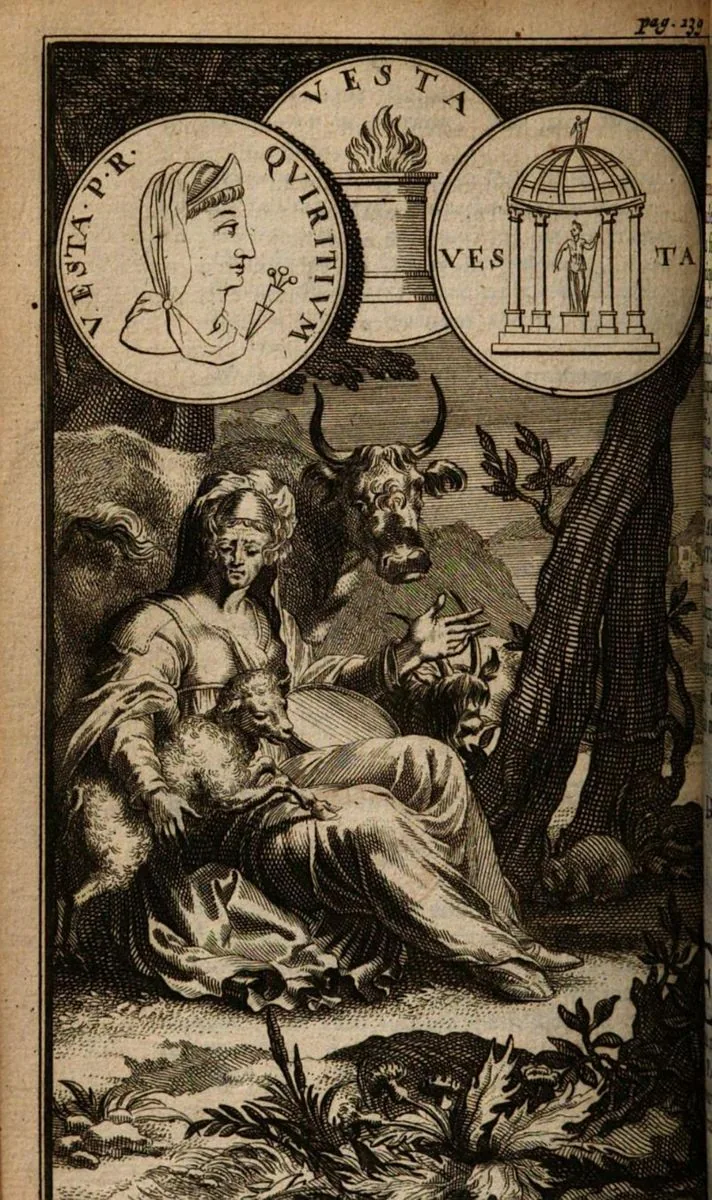
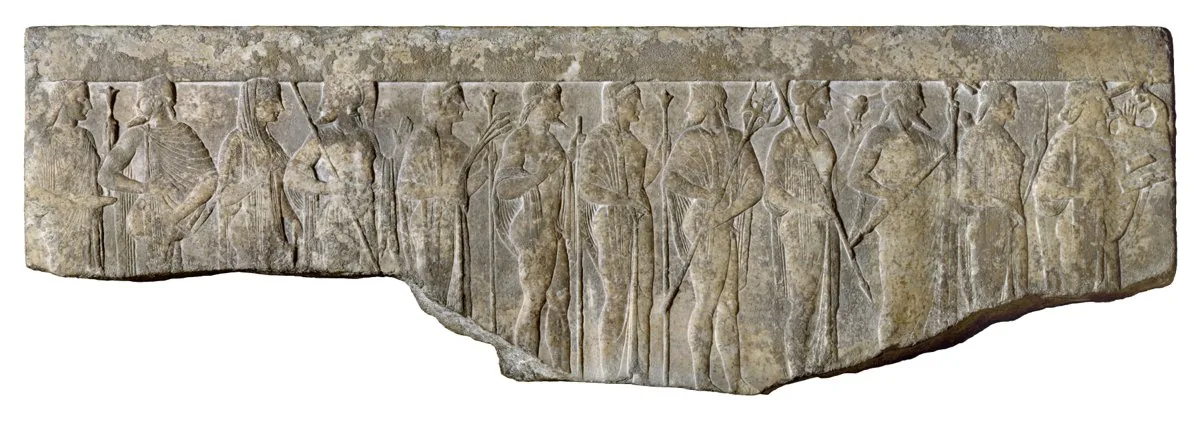
The procession of twelve gods in the Walters Art Museum includes Hestia, while Dionysus is absent from that group. The hearth goddess is therefore not an arbitrary thirteenth figure added by later readers. Her scepter stands alongside other gods’ weapons, ears of grain and instruments, representing a divine world made up of different domains.
The gods on the Parthenon’s east frieze include Dionysus, as well as Demeter, Ares, Hermes and others. These different groupings remind us that ancient images are evidence for traditions. The variation deserves explanation, rather than the hasty removal of a figure to make the lists agree.
The hearth and the underworld
Plato’s Phaedrus describes Hestia remaining at the gods’ dwelling during their heavenly procession, reflecting her connection to the household’s center. Hades governs the dead below ground and is usually outside today’s most familiar Olympian twelve. His importance is not diminished by that position.
The selection used here
This site adopts a common group of twelve that includes Dionysus, and presents Hestia and Hades separately for comparison. The popular modern account of Hestia voluntarily giving up her place should not be treated as a proven ancient explanation. Mythology has no single definitive original: a god’s name must be read alongside the work, period and place that give it meaning.