A coastal road and a sanctuary
In the first book of his Description of Greece, Pausanias takes the reader from Marathon towards Rhamnous. His account places houses by the coast and the sanctuary of Nemesis a little inland. This location makes her more than a modern word for an opponent: she is a deity with a local sanctuary and an image. He then tells how invaders, certain they would capture Athens, brought Parian marble for a victory monument. After their defeat, the stone became an image of the goddess instead. Notice the arrangement of time: before the outcome is settled, people treat the future as their possession. This is a commemorative tradition recorded by Pausanias, not independent historical confirmation that an army actually transported that cargo.
An image and its surviving fragment
The account gives the statue a crown decorated with deer and small Victories, an apple branch, and a cup. Pausanias credits Pheidias; the British Museum attributes a head fragment from the temple of Nemesis to Agorakritos, dating it around 430–420 BCE. These attributions should not quietly become one certain answer. The catalogue records holes for attaching a crown, a material feature that can be observed. They cannot restore the missing body or every object once held. Text, fragment, and modern research have different explanatory limits. In particular, we should not add familiar wings or weighing equipment to this head, as though every representation of Nemesis followed a single compulsory identification chart. Recognising what is absent is part of looking carefully.
When departure is the frightening action
Hesiod offers another approach. The Theogony places Nemesis among the children of Night, a different kind of explanation from the history of a local image. Works and Days imagines a deteriorating world of hostile relatives, broken oaths, and admired violence. There, Aidos and Nemesis cover themselves in white garments and leave humanity for the immortals, leaving mortals with suffering against which there is no defence. Aidos is often rendered as shame or respect; Nemesis here involves indignation at improper conduct. The frightening prospect is not a goddess forever chasing every individual. It is the departure of restraints on injury within shared life. The warning therefore concerns what a community is prepared to praise as well as what it condemns.
Measure is a reading, not a punishment machine
Read together, these materials suggest a way of thinking about excessive possession, unwarranted certainty, and disproportionate honour. That is an interpretive thread, not a declaration that every ancient cult shared one systematic doctrine. The marble story turns presumed triumph into a memory of defeat; Hesiod asks what disappears when people cease to feel indignation at abuse. Neither proves that every successful person is arrogant or every misfortune a deserved punishment. Treating suffering as evidence of guilt skips circumstances, other people’s actions, and chance. Stories about the goddess can prompt reflection on the scale of our judgements. They cannot release us from investigation or sympathy, and they do not supply a timetable promising that everyone will immediately receive precisely what they deserve.
One name, another body
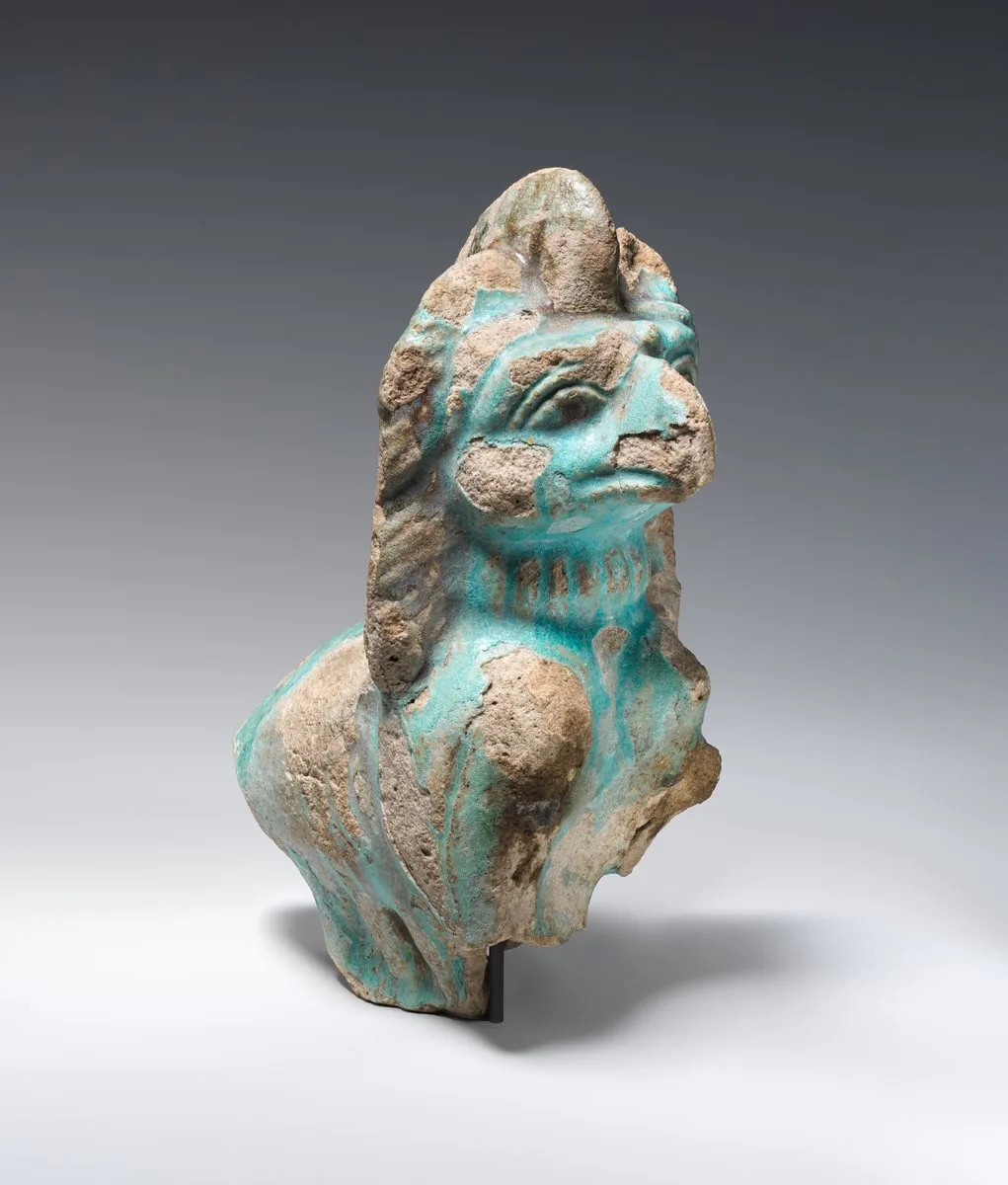
A faience statuette from Egypt in the Metropolitan Museum presents Nemesis as a griffin and dates approximately to the first through third centuries CE. This is a Roman Egyptian representation, not a reconstruction of Rhamnous. The museum connects this deity with fate and escorting the dead, explaining that complete statuettes of the type often show a paw resting on a wheel representing fate. That is a description of a type, not permission to claim that every missing detail survives on this particular object. Beside an anthropomorphic Attic image, the griffin shows a name moving across regions and periods while acquiring different functions. We can ask where an image comes from and what remains before interpreting it. Nemesis need not become one identical expression of revenge everywhere; interpretation, too, needs to respect its limits.