Knowing the route does not provide a meal
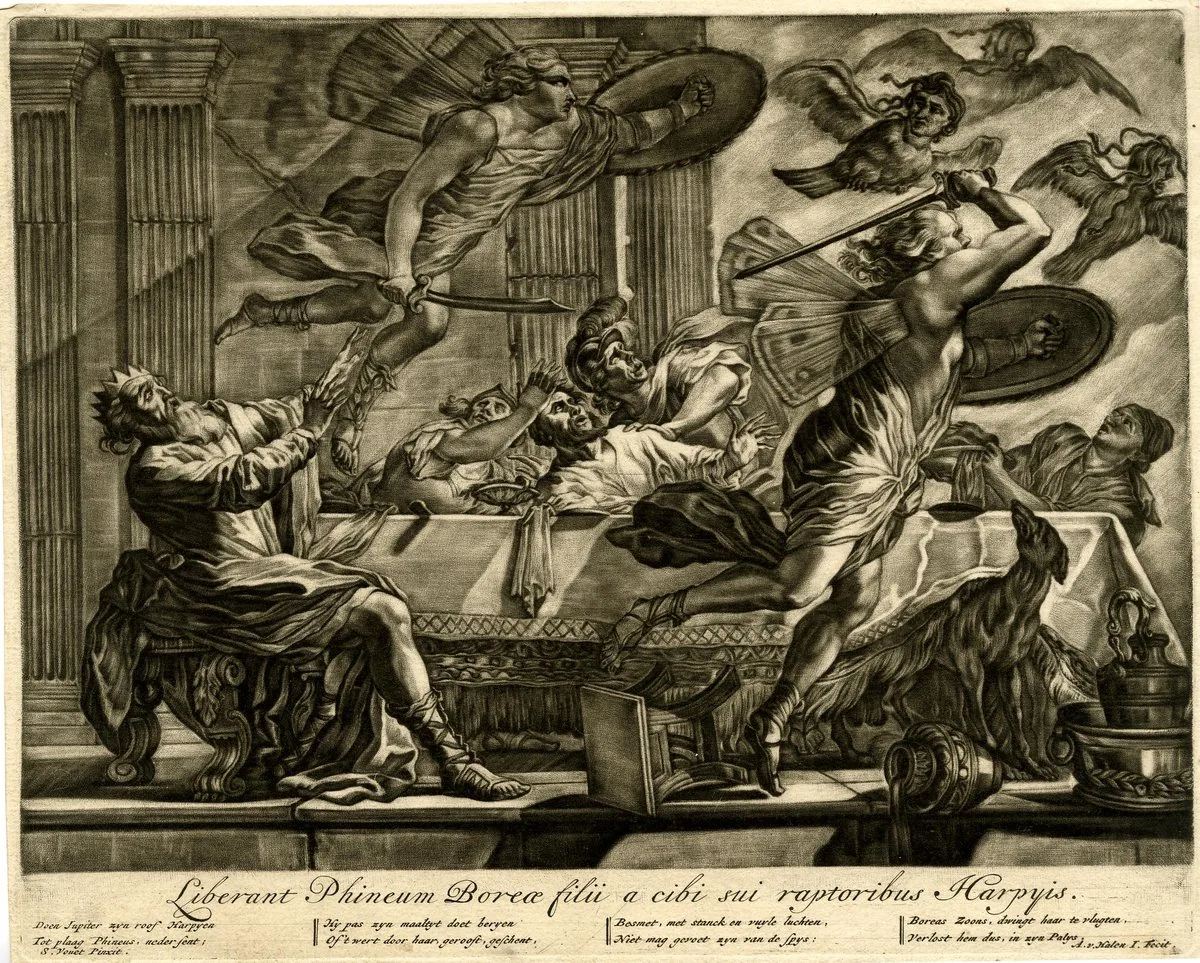
In Book 2 of Apollonius of Rhodes’ Argonautica, the crew meets the coastal prophet Phineus before continuing toward Colchis. Old, blind, and weak, he hears visitors, feels his way along the wall, reaches his doorway, and collapses. The poet attributes his suffering to punishment for revealing Zeus’ purposes too fully. Yet his predicament is not a lack of food deliveries. Neighbors bring questions and keep supplying meals; the Harpies snatch food from his hands and mouth, leaving remnants that stink unbearably. Knowing other people’s futures cannot sustain his daily life. What needs restoring is not a treasure but food already within reach, which he has been prevented from safely enjoying. Help therefore cannot be measured only by what enters a house: the recipient must actually be able to use it. Hands unable to keep their food reveal the distance between a delivered gift and a life that the gift truly supports.
Help begins with a question about its limits
Phineus recognizes the visitors from Argo, including Zetes and Calais, sons of Boreas, the north wind. As he explains in the poem, he married their sister Cleopatra: these are not unrelated strangers. The brothers weep at his suffering, but drawing swords is not their immediate answer. Zetes fears that opposing powers sent by gods may provoke divine anger. He asks Phineus to swear that helping will not bring punishment upon them. Only after the old man guarantees this do they prepare to act. The pause does not cancel compassion. It makes compassion consider the conditions of intervention: to end somebody’s torment, they must first understand what sustains it and how far they may change it.
Catching them does not require killing them
The younger crew members set out food as a final bait. Phineus scarcely touches it before the Harpies swoop shrieking, consume it, and flee across the sea. The sons of Boreas pursue with swords, receiving tireless strength from Zeus. As they approach their quarry, Iris descends and forbids them to kill Zeus’ agents. She offers another outcome: swearing by the water of Styx, she guarantees that the Harpies will never approach Phineus’ home again. The brothers accept and turn back. The pursued creatures survive and retreat to a cave in Crete. This poem completes a rescue with an oath, without requiring every enemy to become a corpse. Knowing when to stop is part of the heroes’ action.
Washing and eating come before directions
Meanwhile the crew left in the house carefully washes the old man, offers sacrifice, and prepares a generous supper. They sit and eat together. Phineus finally enjoys enough food, feeling a happiness almost like a dream. The spectacular chase does not replace this quieter care: ordinary life returns through water, nourishment, and time spent at a shared table. After eating, he explains the journey beside the hearth, but says he will not again disclose every divine intention. They should send a dove through the Clashing Rocks: if it passes safely, row hard; if it dies, turn back. Knowledge requires observation and labor, and preserves the possibility of retreat. Somebody who has received care can help others again.
A rescue can be real and incomplete
When the brothers return with news of the pledge, Jason rejoices and wishes that Phineus could also regain his sight. The old man answers that this cannot be undone. One safe meal has not erased every bodily injury. The next morning neighbors return; the poet explains that Phineus helps visitors regardless of wealth, and they have continued caring for him. Book 1 of the Library collects different explanations for his blindness and accounts involving a Harpy falling and pursuit ending in exhaustion. It also notes Apollonius’ unharmed survivors. Those alternatives should not become successive stages of one chase. Following the epic’s lowered swords and shared table, we find a concrete, limited rescue that restores participation in mutual support.