Water for an evening meal
The Argonauts land on the Mysian coast to prepare supper and a night’s rest. In Book 1 of Apollonius’ Argonautica, Heracles has broken his oar and enters the woods to find a replacement tree. Hylas takes a bronze pitcher to a spring, hoping to have the meal ready before his return. A routine errand begins the episode; danger does not first appear as a battle. The poet also supplies a difficult history: Heracles killed Hylas’ father, Theiodamas, carried the child away, and raised him. Their shared life contains care alongside an earlier act of taking. Keeping that history visible gives the water bearer an existence beyond the great hero’s sorrow, while acknowledging the unequal circumstances underlying their closeness.
Hands reaching from below the surface
Hylas reaches the spring called Pegae. Nymphs are celebrating their nightly dances, and one water nymph sees the boy in moonlight and is overcome by desire. He bends to dip his pitcher; water rings against the bronze as it fills. She puts one arm around his neck, catches his elbow with her other hand, and pulls him into the eddy. This is a forcible taking of his body. The poem supplies no conversation in which Hylas accepts marriage or chooses to remain. A fellow voyager then hears his cry. Water, which should enable a shared meal, becomes an entrance through which someone is removed from shared life. The nymph’s desire is narrated; it does not automatically speak for the boy’s wishes.
Hearing a cry does not reveal the whole event
The listener is Polyphemus, son of Eilatus, a fellow hero rather than the Cyclops of the Odyssey who shares his name. He runs to the spring and searches with a drawn sword, fearing beasts or robbers. Readers know what happened in the water; he possesses only a cry. That gap accompanies his urgent attempt to help. Meeting Heracles on the path, he reports several frightening possibilities. Heracles throws down the pine he has uprooted, runs, pauses, and shouts. Hands capable of pulling a tree from the ground now lack a target upon which to act. He has not lost a contest against a stronger opponent. He cannot turn the information reaching him into a route that leads to the missing person.
The argument begins after the ship departs
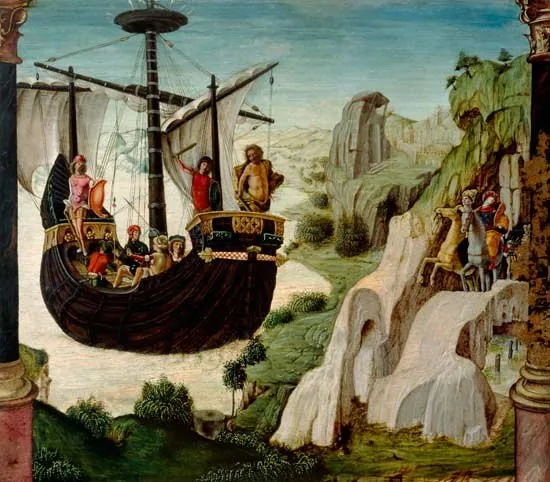
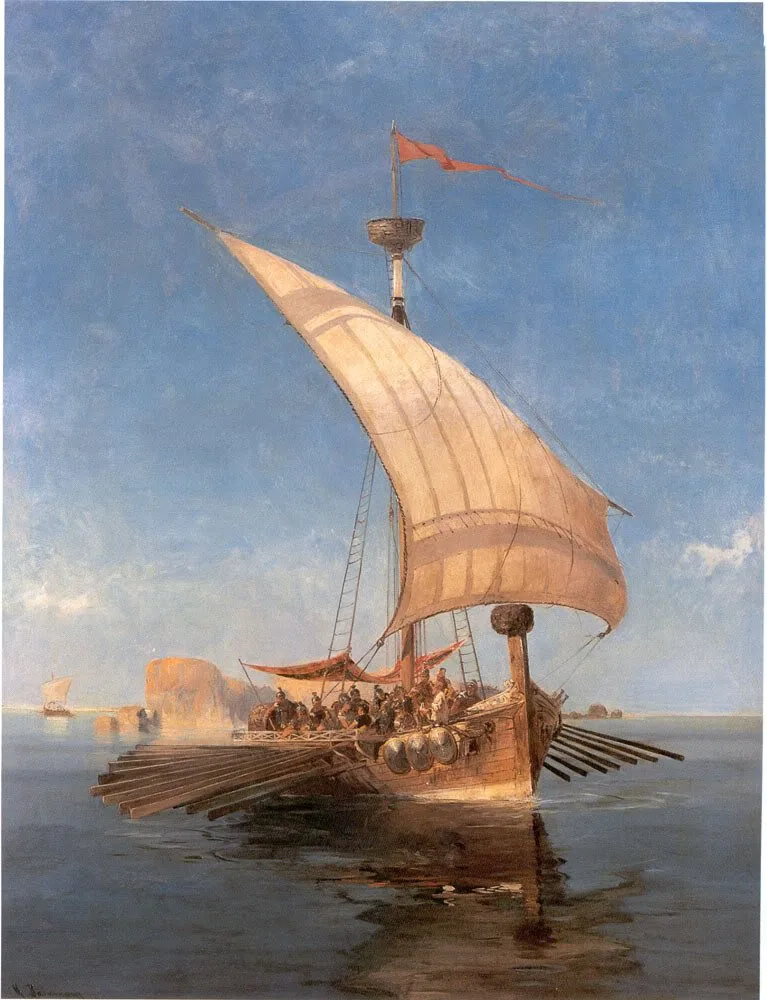
As morning approaches, the crew catches the wind and sails, only later discovering that it has unintentionally left companions behind. Telamon angrily accuses Jason of envying Heracles’ fame; Jason sits silent in grief. The accusation belongs to an argument, rather than proving a departure plotted against a rival. The sea god Glaucus appears and declares that Heracles must return to Eurystheus’ labors, that Polyphemus has a separate city-founding destiny, and that a loving nymph has made Hylas her husband. This divine announcement ends the shipboard dispute without recovering the boy or supplying his agreement. Telamon and Jason reconcile, and the voyage continues. The reconciliation restores order aboard; the search ashore still has not brought Hylas back.
Another poet lets a voice return from the water
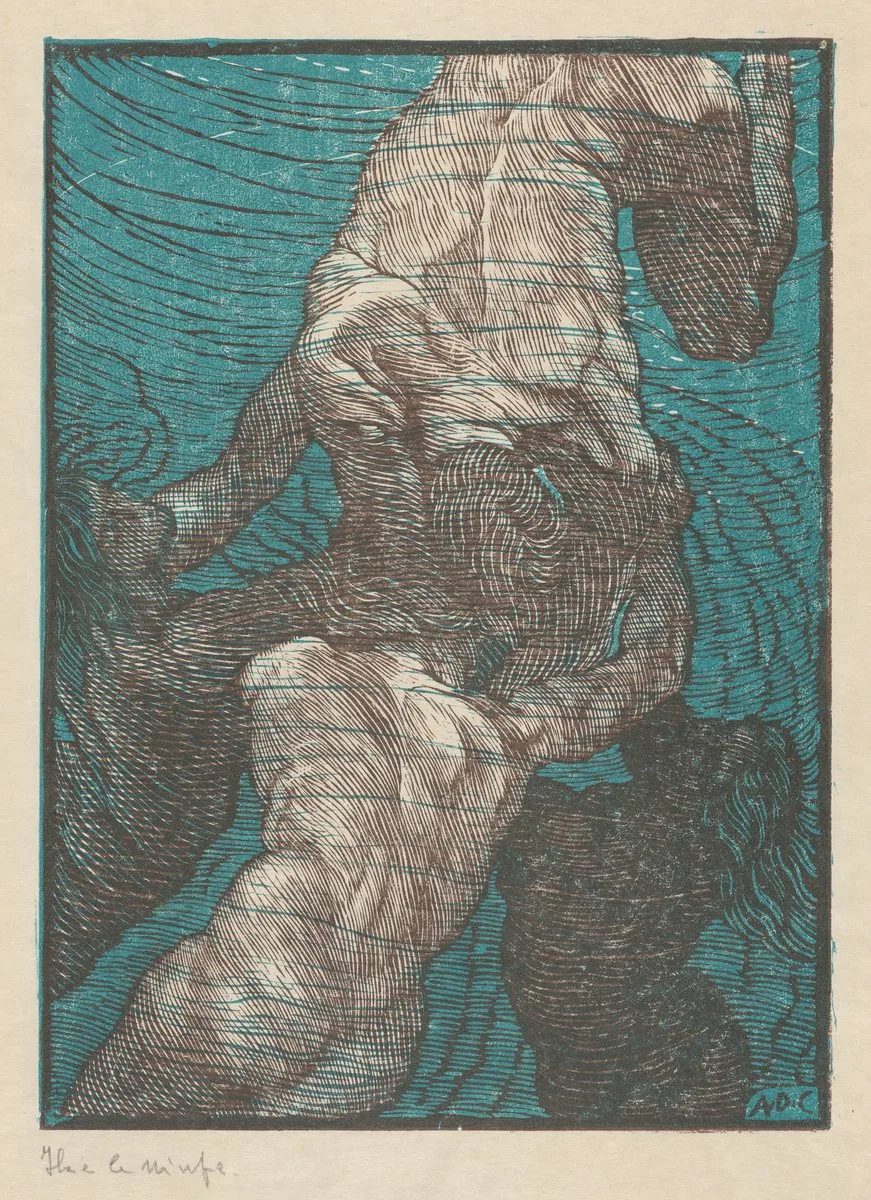
Theocritus’ Idyll 13 gives the disappearance another sound. Three nymphs together seize Hylas’ arm, then comfort the weeping child on their laps. Heracles calls three times; three faint answers rise from the water, making someone nearby seem far away. The heroes wait through the night, and the poem finally says Heracles reaches Colchis on foot, unlike Apollonius’ return to the labors. Adolfo De Carolis’ 1916 Hylas and the Nymphs reimagines the subject in a teal and black woodcut: an image can pause beside the water while poetry follows the loss through the whole ship. Read separately, both endings preserve a troubling distance. Someone leaves on a small task that sustains ordinary life and suddenly cannot return; even the loudest call may fail to close the gap.