The person missing from the celebration
In Metamorphoses 7, Jason’s return brings celebration, but his father Aeson is too weakened by age to join it fully. Ovid moves the reader’s attention from the successful expedition to the household receiving its hero. A recovered treasure does not remove every form of vulnerability at home. Jason sees that contrast and asks Medea for help. The scene makes room for affection within a story often remembered for betrayal and revenge. It also introduces a different kind of transformation from the changes into animals, plants, or stones found elsewhere in the poem: the person will remain himself, but his age will change.
Jason’s offer and Medea’s answer
Jason asks whether part of his own remaining life can be given to Aeson. His request imagines years as a limited possession that one loved person might surrender to another. Medea refuses to achieve the result by diminishing Jason’s life and promises a greater act of renewal instead. The distinction is essential to Ovid’s scene. A brief summary saying only that Jason sacrifices years would reverse what actually happens. The emotional generosity of the request remains, but the planned magic no longer follows its proposed exchange. Medea becomes the person who claims that this apparent limit can be crossed without imposing that particular loss.
A night of gathering and invocation
Ovid gives considerable space to Medea’s preparations. Night, the moon, Hecate, and the powers of the natural world frame her movement beyond ordinary household care. Her collection of ingredients enlarges the poem’s geography and presents knowledge as something gathered from many places. The sequence builds expectation through its length and atmosphere rather than supplying practical evidence. Its plants and extraordinary substances belong to literary magic. Reading them as a usable treatment would miss their narrative role. They make Medea’s proposed action seem immense, mysterious, and precariously close to forces that other people cannot command or fully understand.
The branch that turns green
Before Aeson’s renewal is complete, an old olive branch used in the preparation puts out fresh growth. The surrounding ground also responds with new vegetation. These small transformations let the reader see renewal before it appears in a human body. Aeson subsequently regains the appearance and strength of an earlier age, and his memory connects the changed body with his own past. He is not replaced by a different person. The episode links rejuvenation with the poem’s wider language of growth while leaving the method within the realm of supernatural storytelling. Its wonder depends on the violation of ordinary expectations about aging.
A different ancient fate
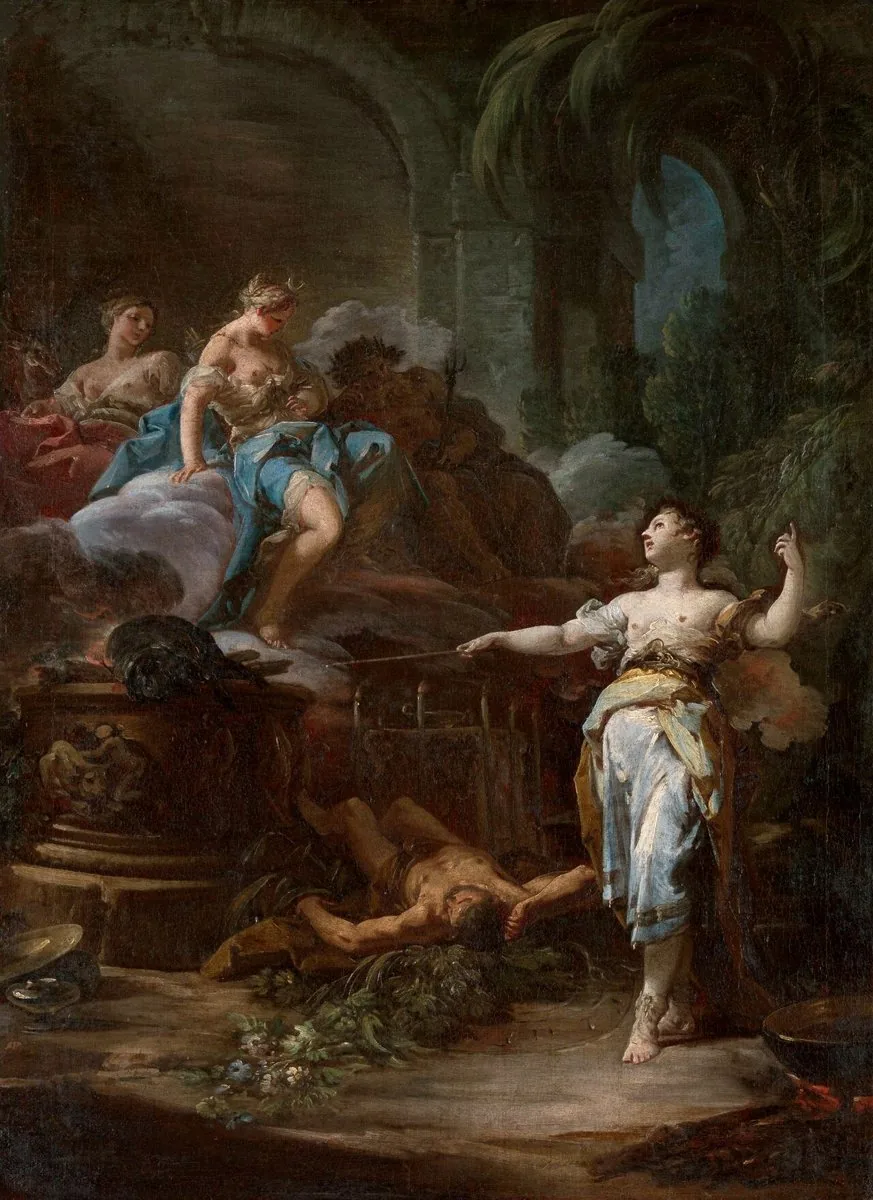
Apollodorus, Library 1.9.27, gives Aeson a different end: he dies under Pelias’ threat while Jason is still away. That account cannot simply precede Ovid’s successful restoration as though both writers were recording successive events in one agreed biography. Greek myth survives through such differences. Comparing the texts clarifies what is distinctive about Ovid’s choice to bring father and son back into relation through Medea’s power. Corrado Giaquinto’s painting accompanying the article is a later interpretation of the rejuvenation. Read it as part of the story’s artistic afterlife, then return to the sources to distinguish the wish, the refusal of a life-transfer, and the transformation that Ovid actually narrates.